Fontana Pretoria
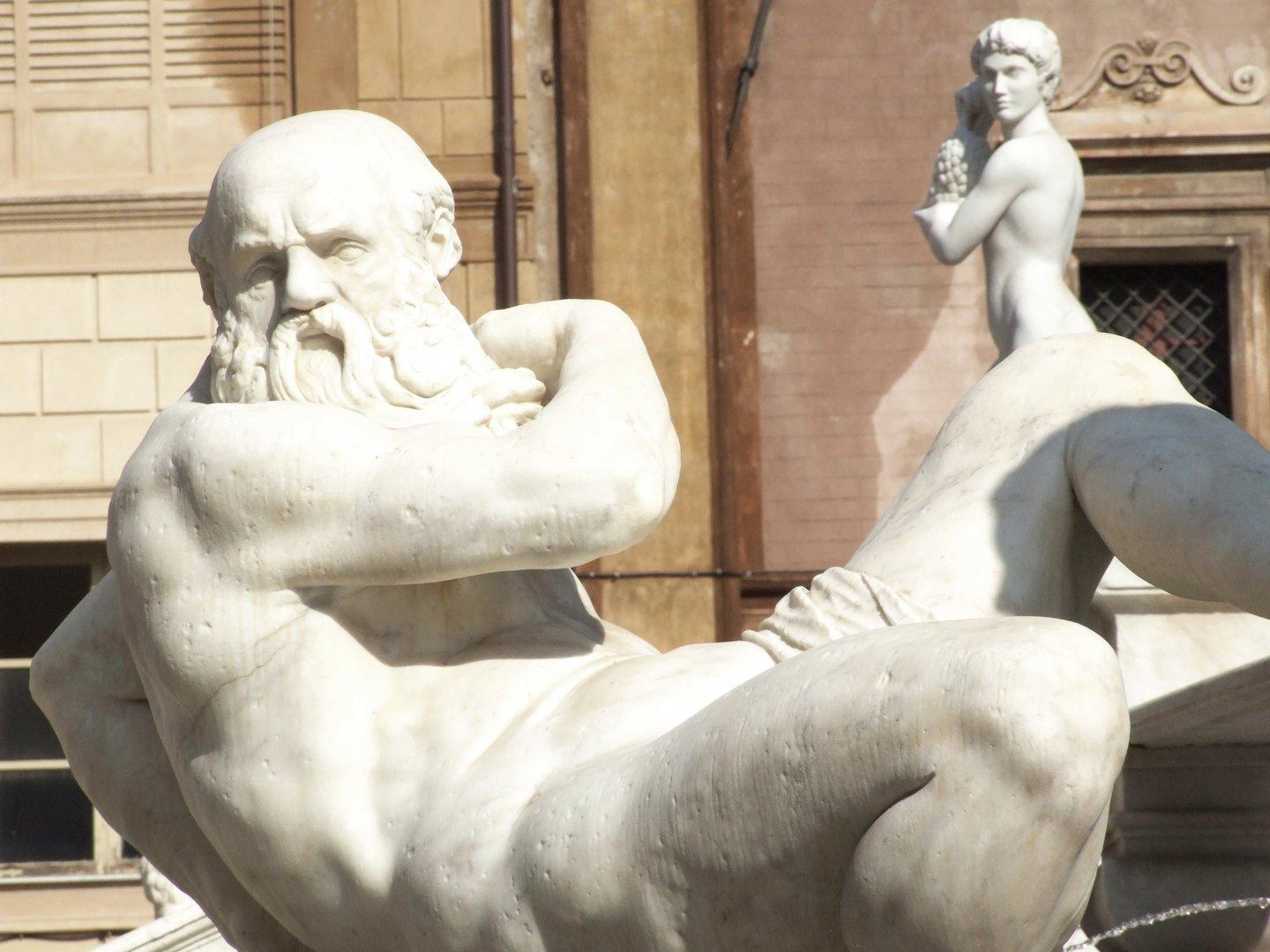
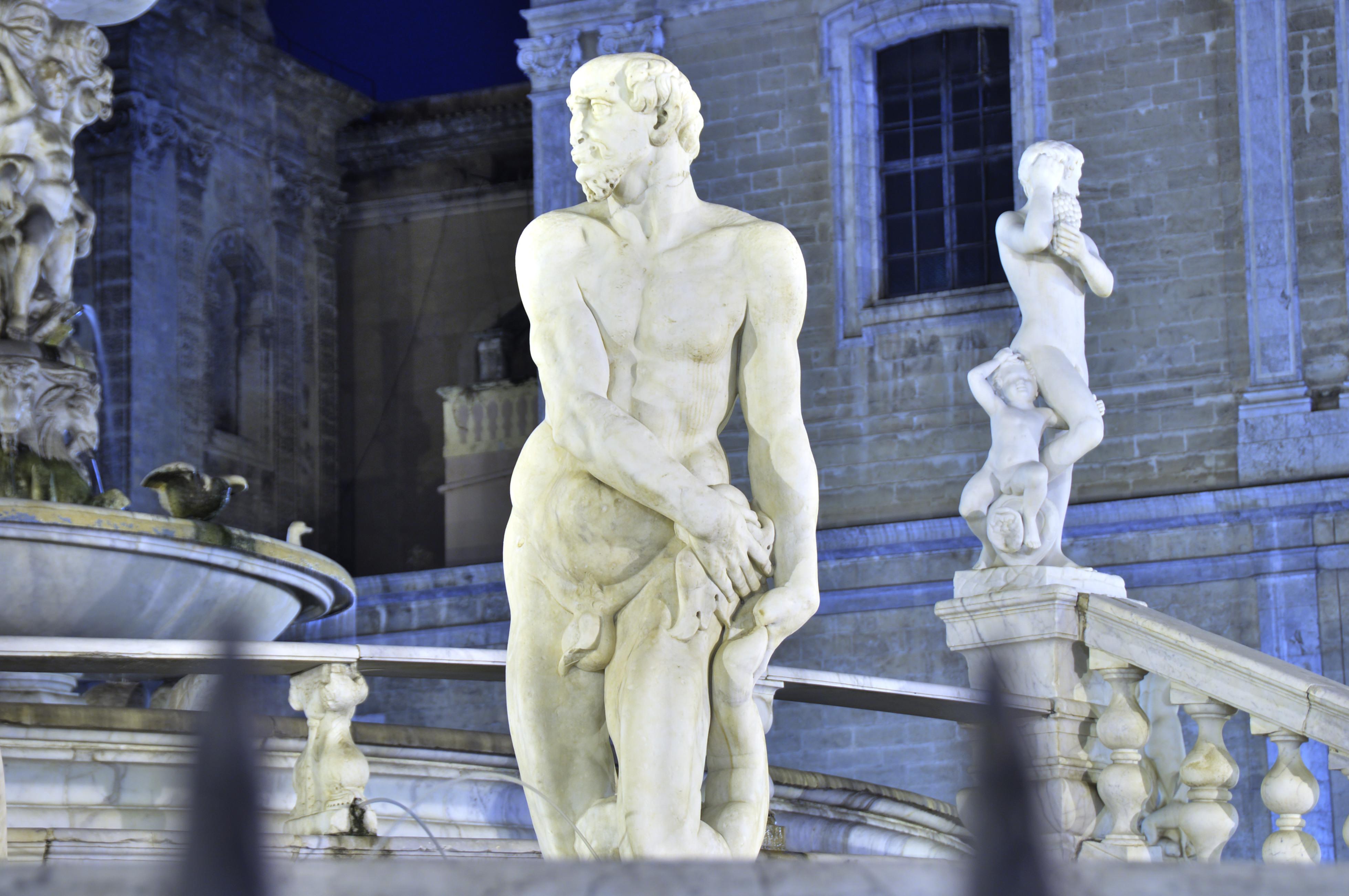
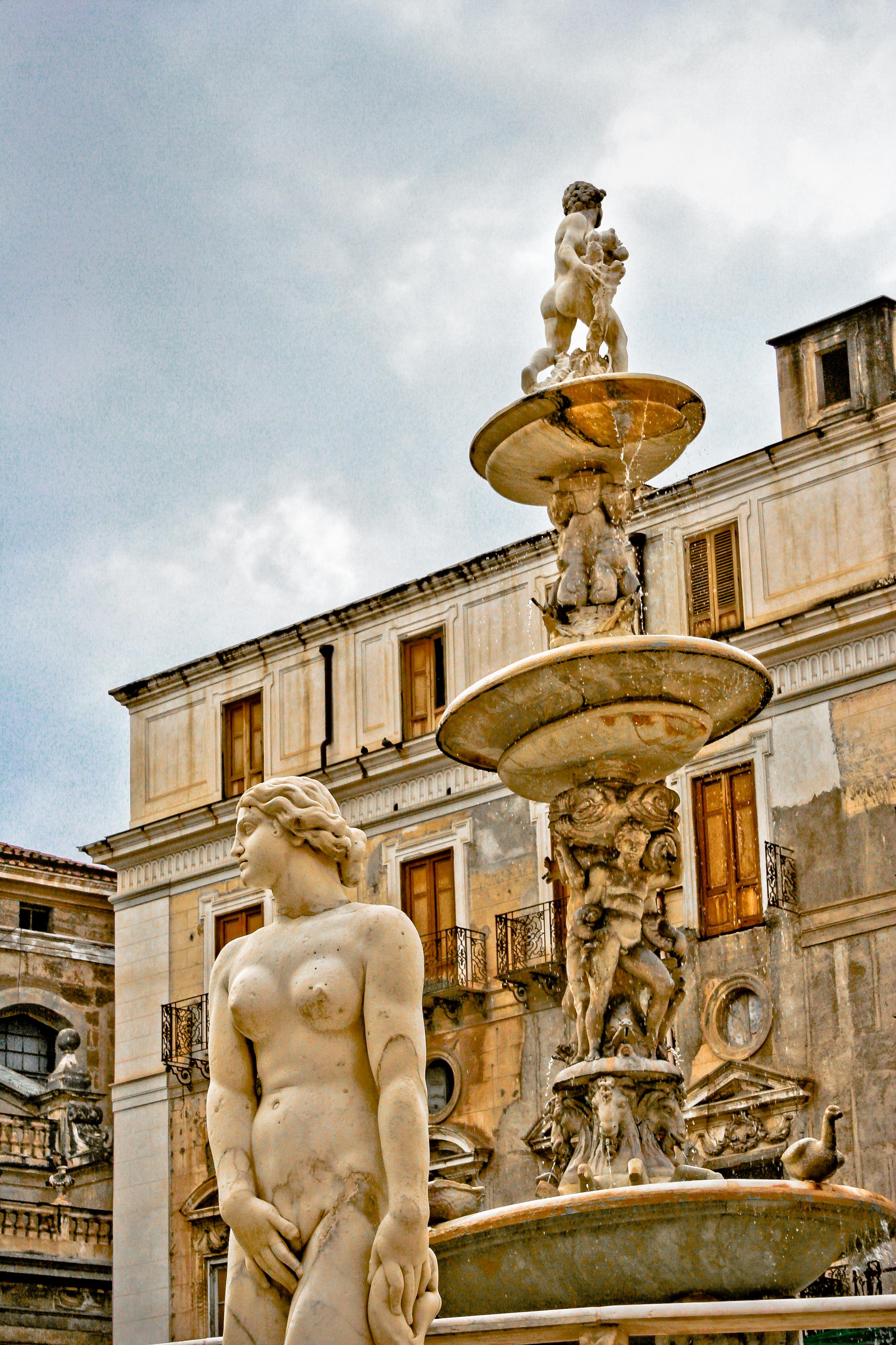
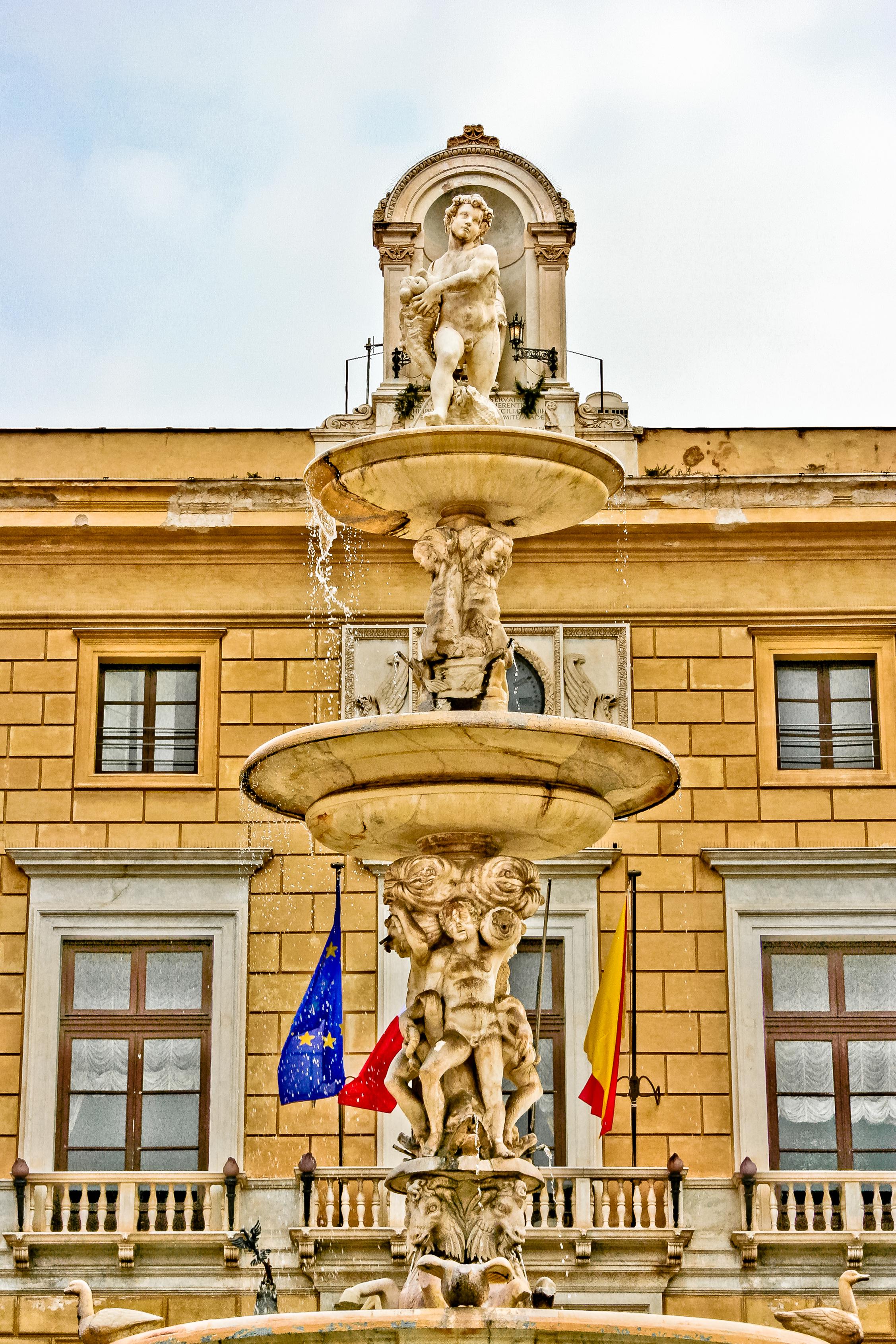
Fontana Pretoria rises in the heart of Palermo's historic centre, a twelve-metre cascade of stone on its own elliptical square. Concentric basins climb in three tiers, joined by staircases, and the ring runs 133 metres around. More than fifty statues and reliefs crowd the whole structure: harpies, sirens, tritons, the four seasons, the twelve Olympian gods. Behind you stands the dome of San Giuseppe dei Teatini. The Quattro Canti crossing and the town hall sit a few steps away.
Francesco Camilliani carves the fountain in the mid-sixteenth century for the gardens of a Tuscan villa. Its first owner, Don Pedro Álvarez de Toledo, serves as Spanish Viceroy of Naples. After his death in 1553, his son Luigi sells the fountain on. Palermo buys it in 1574 for about thirty thousand scudi and reassembles the 644 pieces on what becomes Piazza Pretoria. Camillo Camilliani, the sculptor's son, adapts the layout to the new setting and departs from the original plan. The nude figures scandalise the Palermitans, and the fountain soon answers to Fontana della Vergogna, the Fountain of Shame. The cost stings too, a waste of public money while many in Palermo go hungry. Crowds shout shame at the senators who approved the purchase, and rumour taints the water with syphilis. Even Goethe comes to look in 1787 and reportedly recoils at the sight. Vandalism brings an iron fence, designed by Giovan Battista Filippo Basile, in 1858. The railings carry the Genius of Palermo, Saint Rosalia and the eagle of Pretoria. The fountain undergoes restoration at the end of the twentieth century.
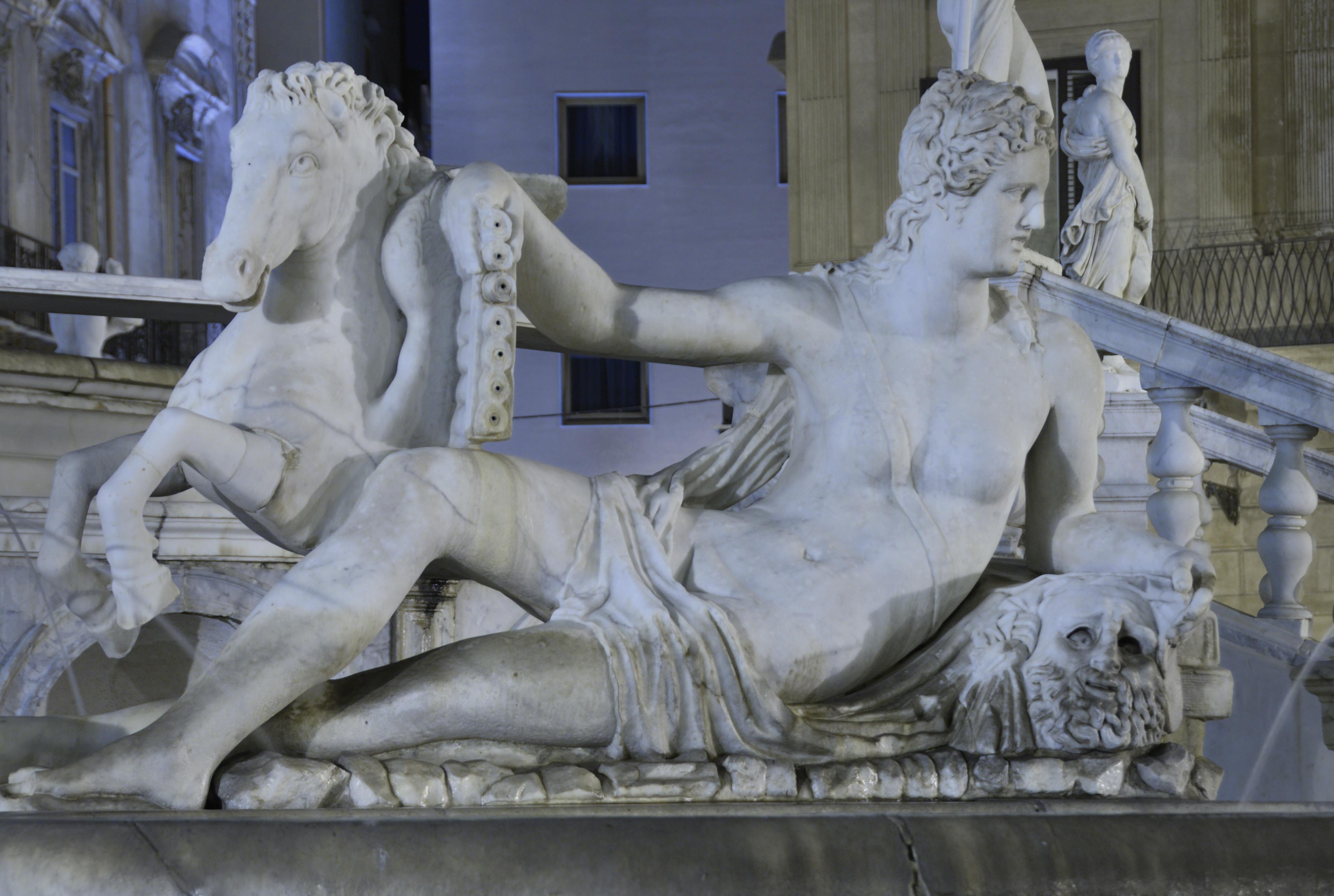
Photographers circle the basins for the carving and the life of the piazza. Look for the reclining figures that bear the names of Palermo's four rivers. The Oreto, the Papireto, the Gabriele and the Maredolce all lie there in stone.
- City
- Palermo
- Content updated
Take this page with you
The myTuur app is free, and once you are standing at a spot its story starts by itself.


Spots like this one are the stops myTuur strings into tours through Palermo. In the app, each story begins where you stand: walk up to a spot and it starts, read it on screen or listen as you go, then follow the route to the next one.
What is myTuur?
myTuur is a free city-guide app. Its tours are built from spots, and each spot carries a story that starts when you get there, to read or to listen to as you like.