Transit
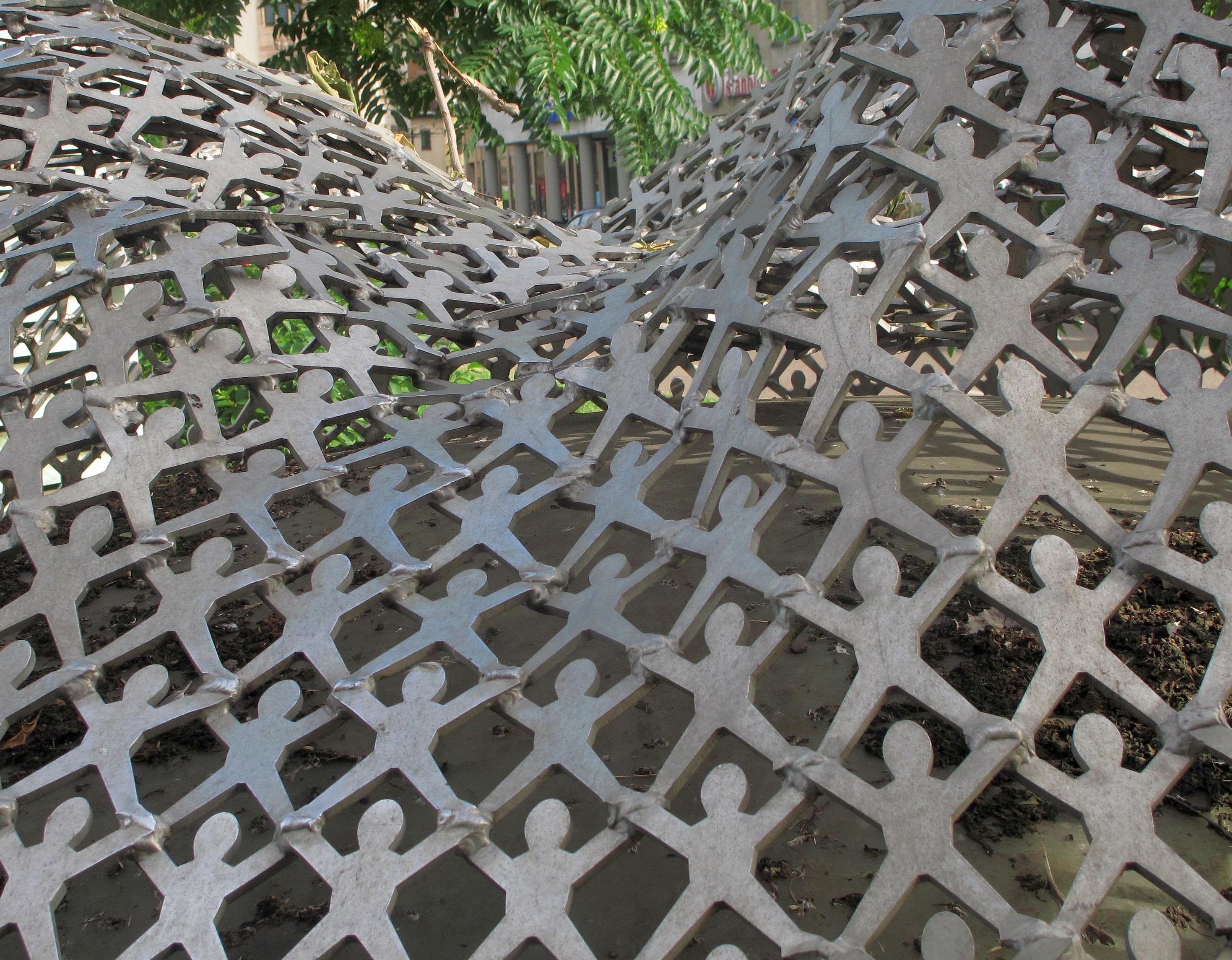
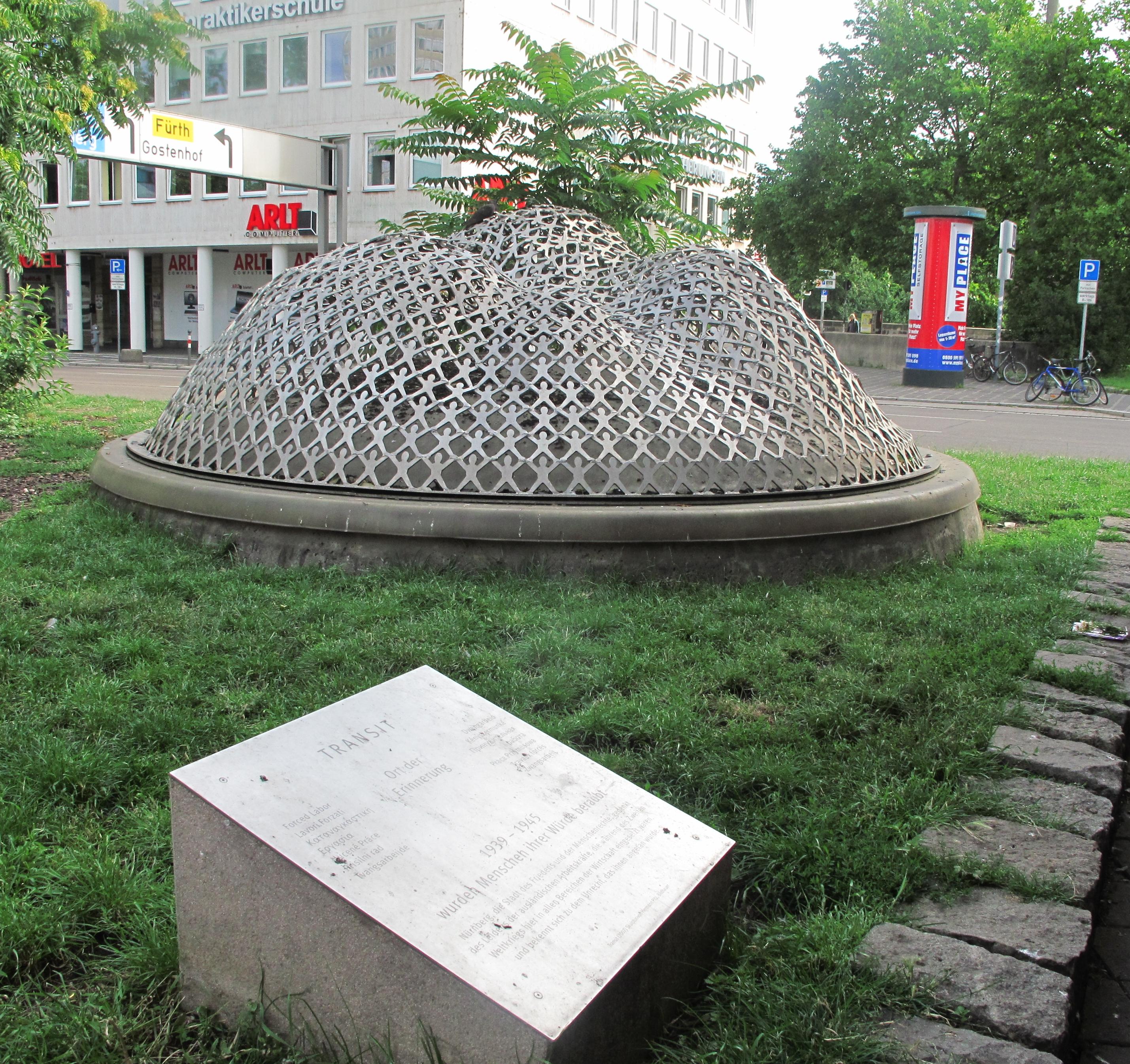
Transit stands at Plärrer, Nuremberg’s major traffic junction outside the city wall, where street level meets the subway distribution floor. A six-metre funnel rises above the station’s light dome. Three thousand aluminium figures hold hands symbolically, their feet connecting the sculpture into one dense human form. You can see it from the street and underground.
Between 1939 and 1945, about 100,000 forced labourers from more than 40 countries worked across roughly 150 Nuremberg companies. Armaments factories employed many of them. Others worked in retail and city administration, including rubble clearance after bombing raids, while Plärrer served as a discreet meeting point. A two-decade process led from the city council’s 1987 decision to a 2005 design competition won by Munich sculptor Hermann Pitz.
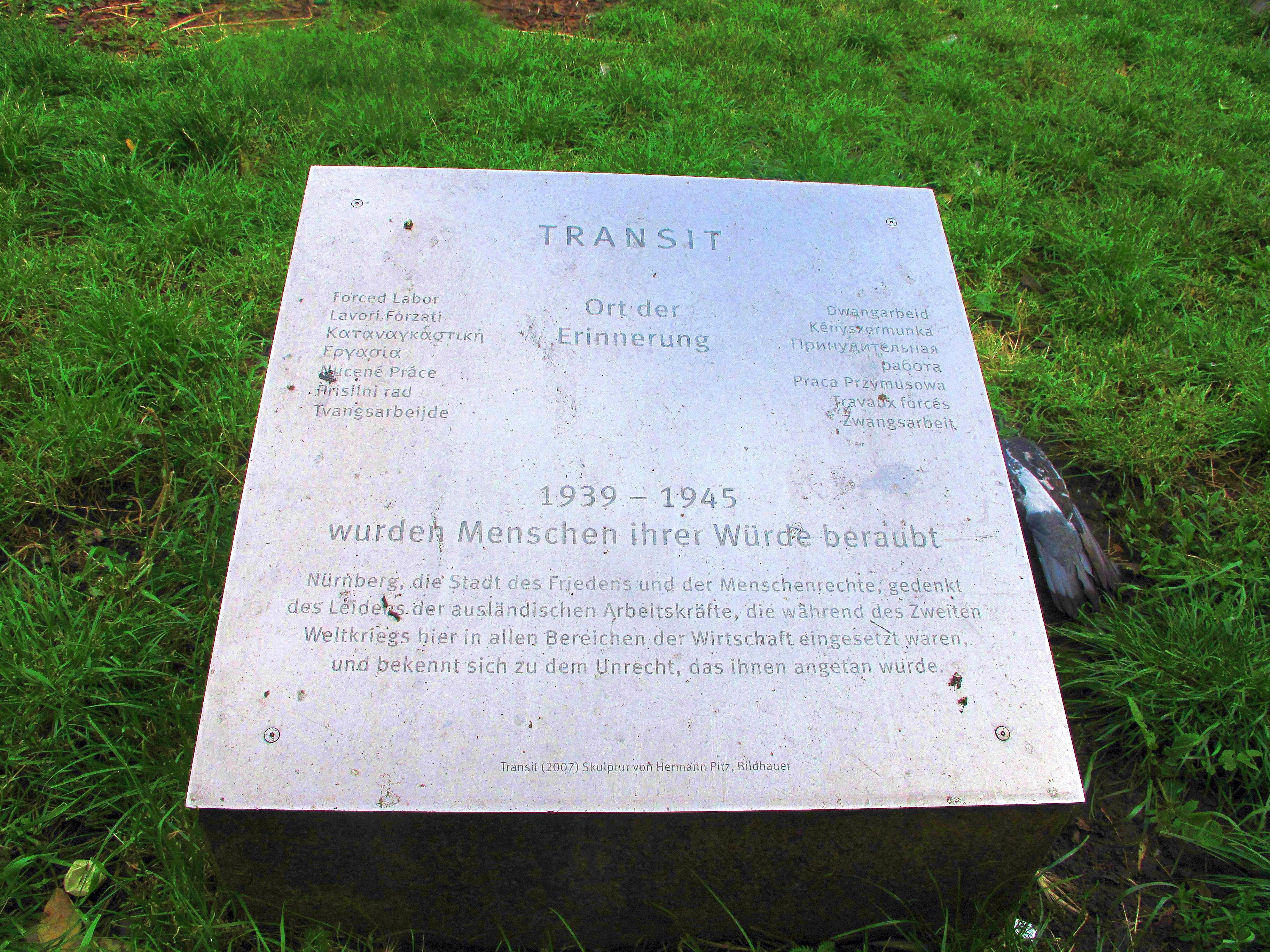
Three panels use the words “forced labour” in twelve languages and acknowledge the injustice suffered by these workers. The city spent €50,000 on the memorial. Former forced labourers from the Netherlands, Poland and Ukraine attended its inauguration, giving the place a direct connection to surviving witnesses.
- City
- Nuremberg
- Content updated
Take this page with you
The myTuur app is free, and once you are standing at a spot its story starts by itself.


Spots like this one are the stops myTuur strings into tours through Nuremberg. In the app, each story begins where you stand: walk up to a spot and it starts, read it on screen or listen as you go, then follow the route to the next one.
What is myTuur?
myTuur is a free city-guide app. Its tours are built from spots, and each spot carries a story that starts when you get there, to read or to listen to as you like.