Palais de Marbre
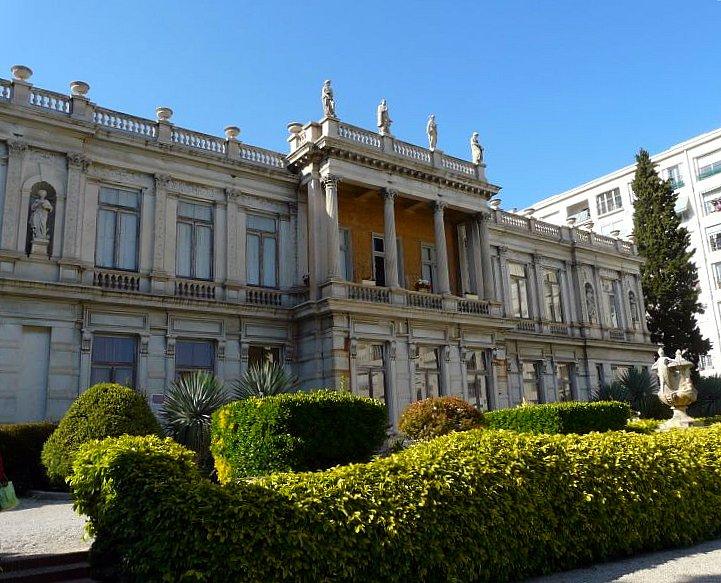
The Palais de Marbre, also known as Villa Les Palmiers, is a nineteenth-century villa in Nice. Carrara marble covers the villa’s exterior and gives the building its distinctive name. Its design combines Italian Renaissance inspiration with neoclassical details and belongs to the Palladian tradition. Architect Sébastien-Marcel Biasini designed the villa for receptions and art displays. The surrounding grounds preserve traces of an exotic park, including palms, araucarias, eucalyptus, cedars, ponds, cypresses, and an artificial grotto. Some mature trees still stand in the grounds. The gardens changed from an English landscape design to a more formal French arrangement. A verse by John Keats appears on the south façade. Napoleon III, Empress Eugénie, and Tsarina Alexandra Feodorovna all visited the estate. The villa later became a filming location for Lola Montès and Cela s’appelle l’aurore. Nice’s municipal archives have occupied the main building since 1963. The archives preserve documents, plans, and images connected with the city’s heritage. The villa, park, and garden decorations entered the supplementary inventory of historic monuments in 1993. Today, the Palais de Marbre connects Riviera architecture with changing gardens and civic memory.
- City
- Nice
- Content updated
Take this page with you
The myTuur app is free, and once you are standing at a spot its story starts by itself.


Spots like this one are the stops myTuur strings into tours through Nice. In the app, each story begins where you stand: walk up to a spot and it starts, read it on screen or listen as you go, then follow the route to the next one.
What is myTuur?
myTuur is a free city-guide app. Its tours are built from spots, and each spot carries a story that starts when you get there, to read or to listen to as you like.