Old Slave Tree Memorial
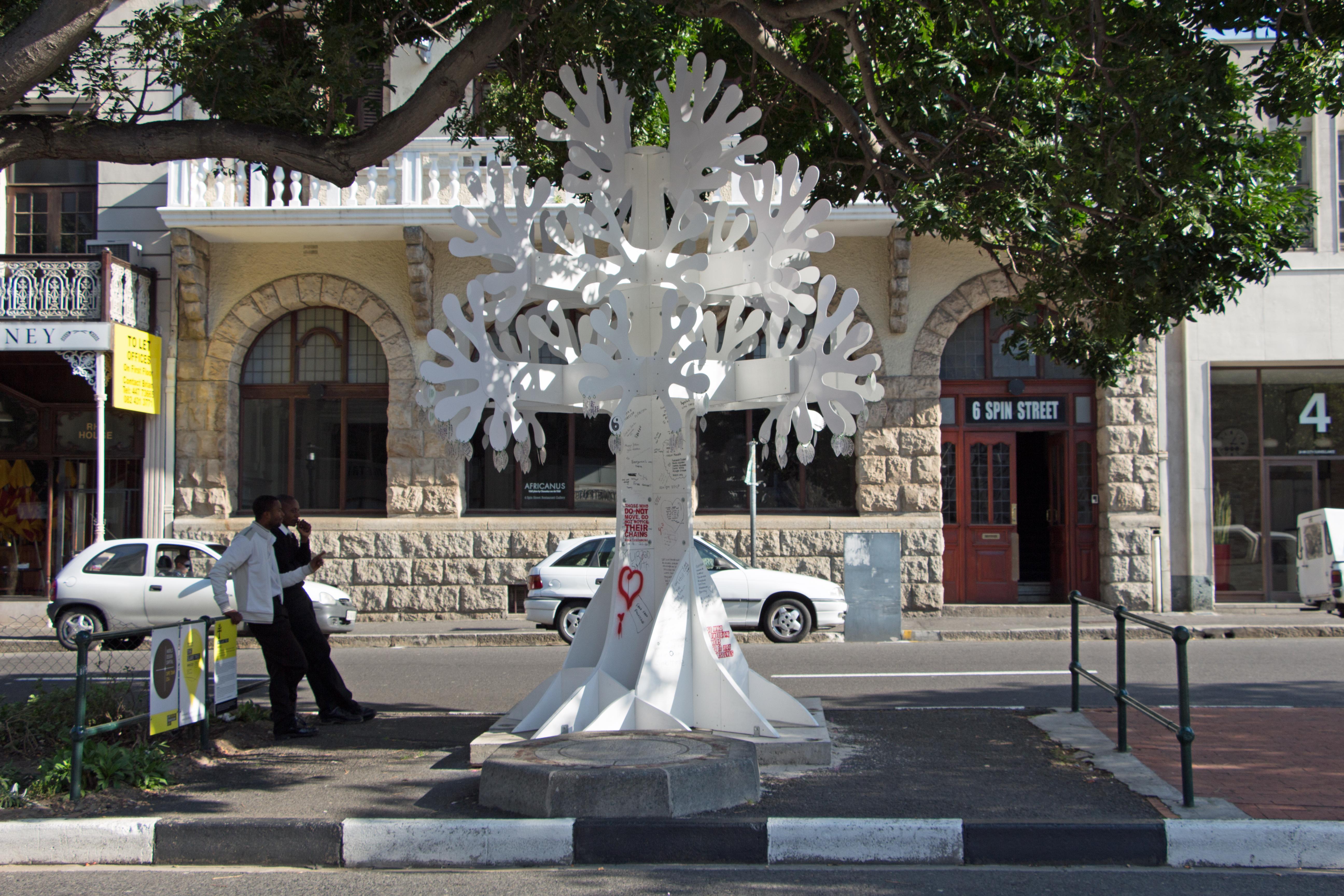
On a traffic island in Cape Town, the octagonal Old Slave Tree Memorial marks where a fir tree once stood. Slave sales took place beneath its branches, and most of the people sold there came from Africa and Asia. The tree served another purpose too: enslaved people who were not allowed to enter churches gathered in its shade.
The tree came down in 1916, and street widening claimed its last remnants in 1951. The nearby Slave Lodge serves as a further memorial to the history of slavery. Slavery took root in Cape Town within the first fifty years of colonisation, when enslaved people formed the majority of the population. Enslaved people counted as valuable property, second only to land and buildings. The Dutch East India Company shipped many of them from East Africa, Madagascar and Mozambique. Transactions often happened in private homes or aboard ships rather than in public spaces.
The idea of marking a sale site with a tree reaches beyond South Africa: memorial trees stand in Zambia and Ghana too. The memorial drew attention during Cape Town's World Design Capital year in 2014. Today you pass an island where people were once bought and sold. A plaque carries a single sentence: on this spot stood the old slave tree.
- City
- Cape Town
- Content updated
Take this page with you
The myTuur app is free, and once you are standing at a spot its story starts by itself.


Spots like this one are the stops myTuur strings into tours through Cape Town. In the app, each story begins where you stand: walk up to a spot and it starts, read it on screen or listen as you go, then follow the route to the next one.
What is myTuur?
myTuur is a free city-guide app. Its tours are built from spots, and each spot carries a story that starts when you get there, to read or to listen to as you like.