Benno Rosenbaum
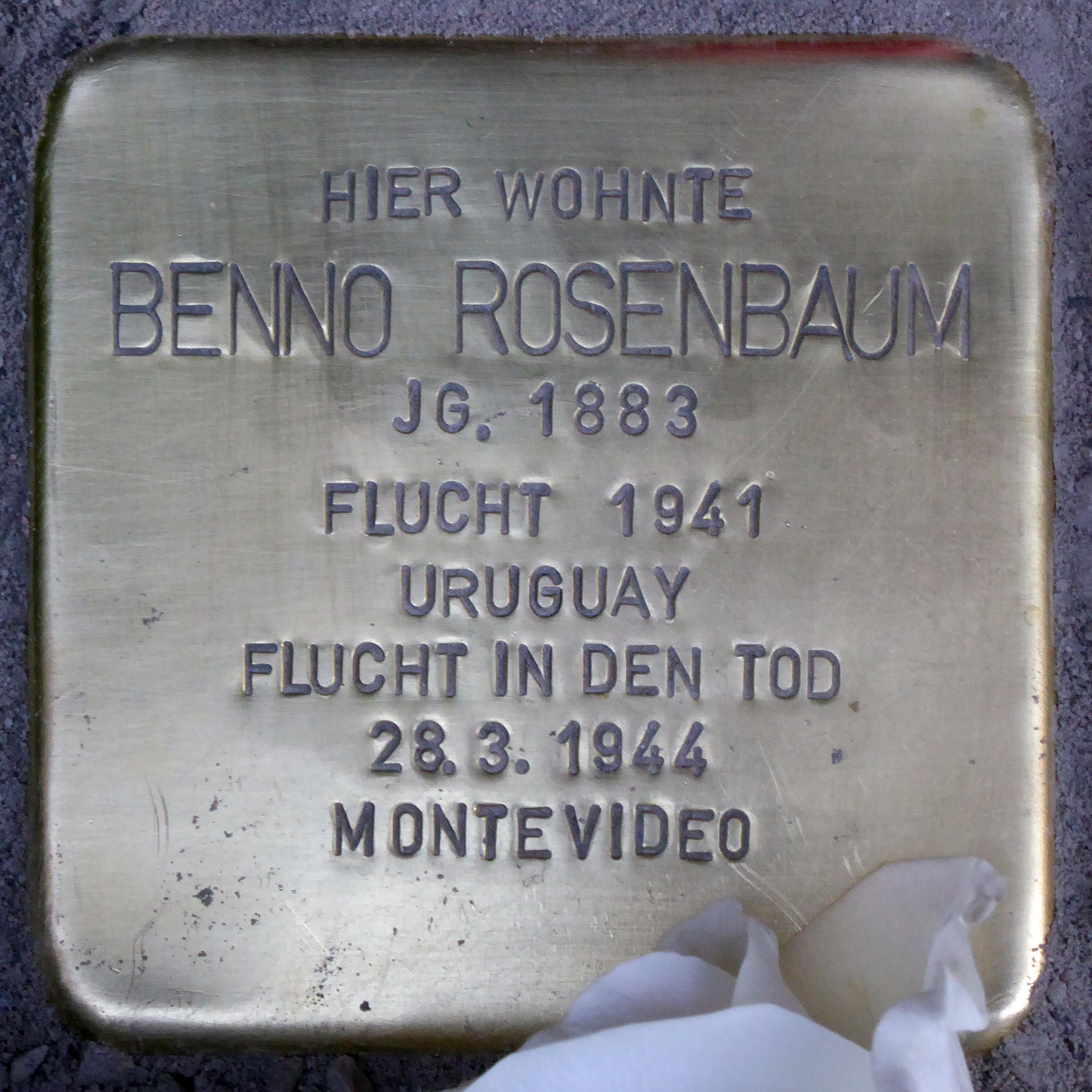
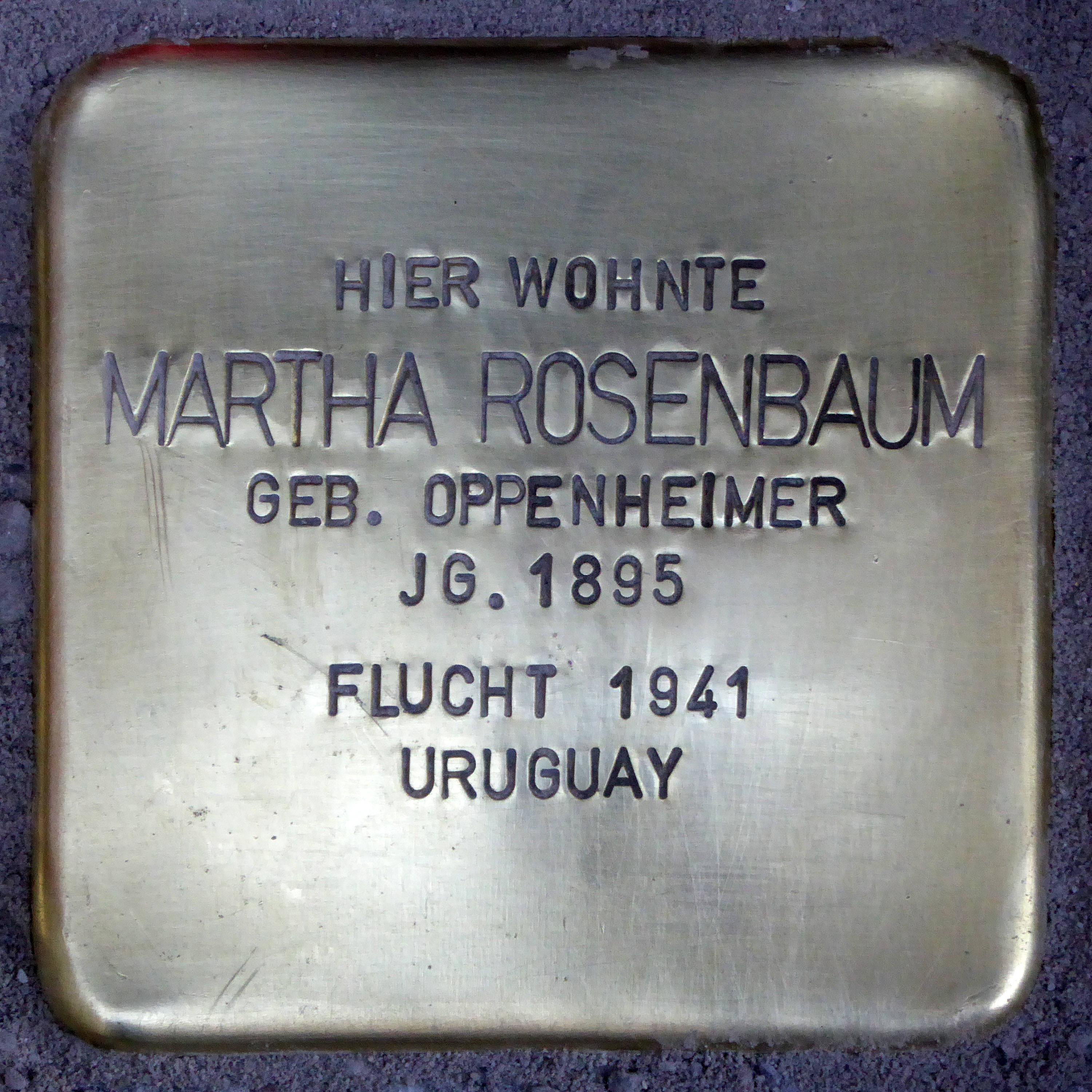
Kalchstraße 11 in Memmingen looks like any doorway until you notice the brass squares set into the pavement outside it. They are stolpersteine, stumbling stones, laid for Benno Rosenbaum and his wife Martha outside the home they had to leave. Benno was a Jewish resident of the city, born in 1883, and the Rosenbaums ranked among its best-known families.
Benno's brother Wilhelm ran one of the largest cheese wholesale businesses in the region, a prominence that made the family a target. In 1921 antisemitic riots, remembered ever since as the Rosenbaum Riots, accused Wilhelm of fraud he had not committed. After 1933, with Jewish businesses boycotted, the authorities imprisoned Wilhelm and later sent him to the Dachau concentration camp. He survived and reached Palestine with his wife. Benno and Martha fled to Uruguay in 1941, but the cost of exile followed them. Benno died in 1944, three years after leaving the city where he was born.
The stones at his doorstep come from a project by the artist Gunter Demnig, who has set them into pavements across Europe. Each plaque carries a victim's name and a short biography, so anyone who passes reads a life rather than a statistic. Bend down at Kalchstraße 11 and the two names sit in brass, level with the street where their story began.
- City
- Memmingen
- Content updated
Take this page with you
The myTuur app is free, and once you are standing at a spot its story starts by itself.


Spots like this one are the stops myTuur strings into tours through Memmingen. In the app, each story begins where you stand: walk up to a spot and it starts, read it on screen or listen as you go, then follow the route to the next one.
What is myTuur?
myTuur is a free city-guide app. Its tours are built from spots, and each spot carries a story that starts when you get there, to read or to listen to as you like.