Thingstätte
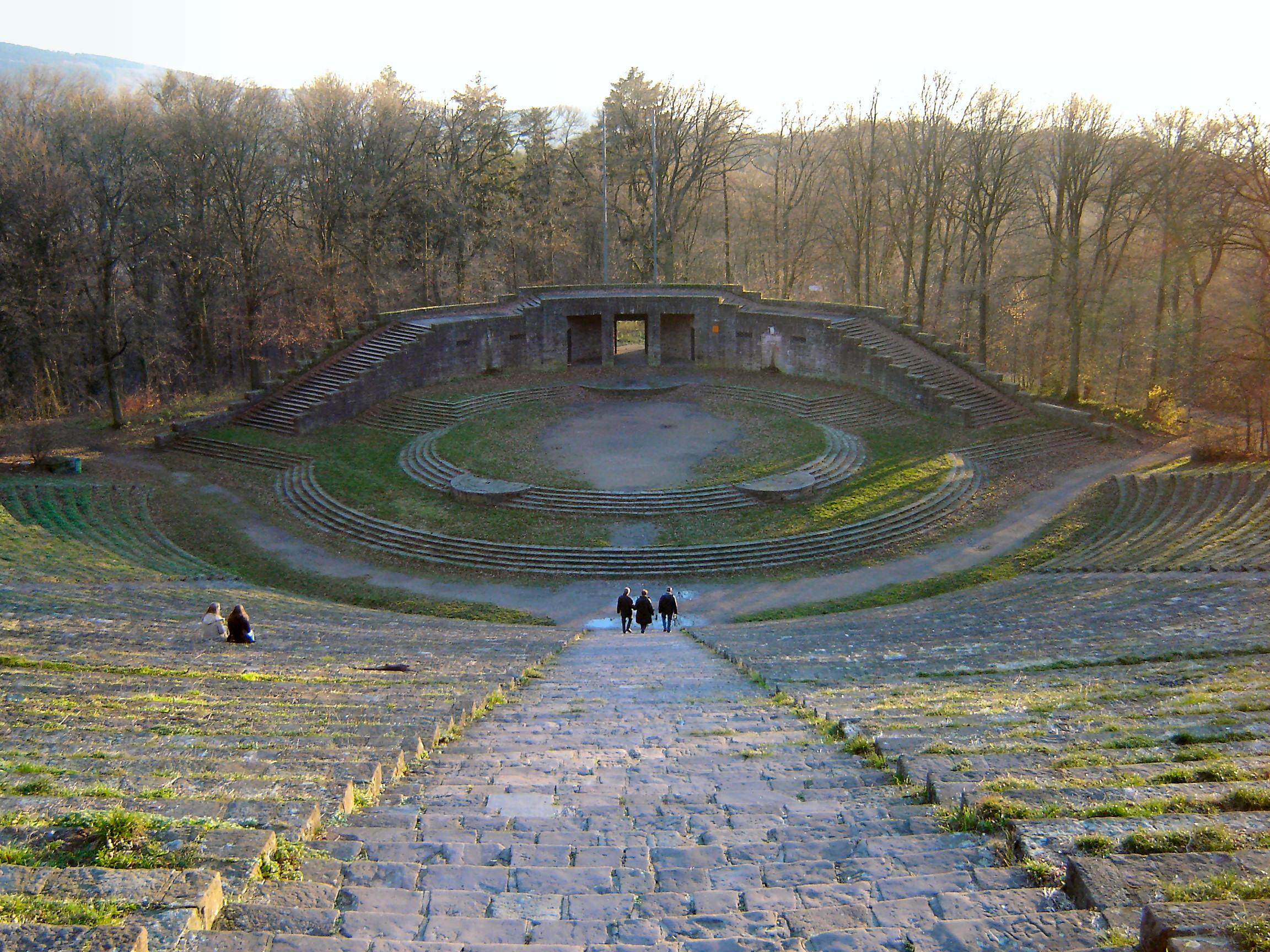
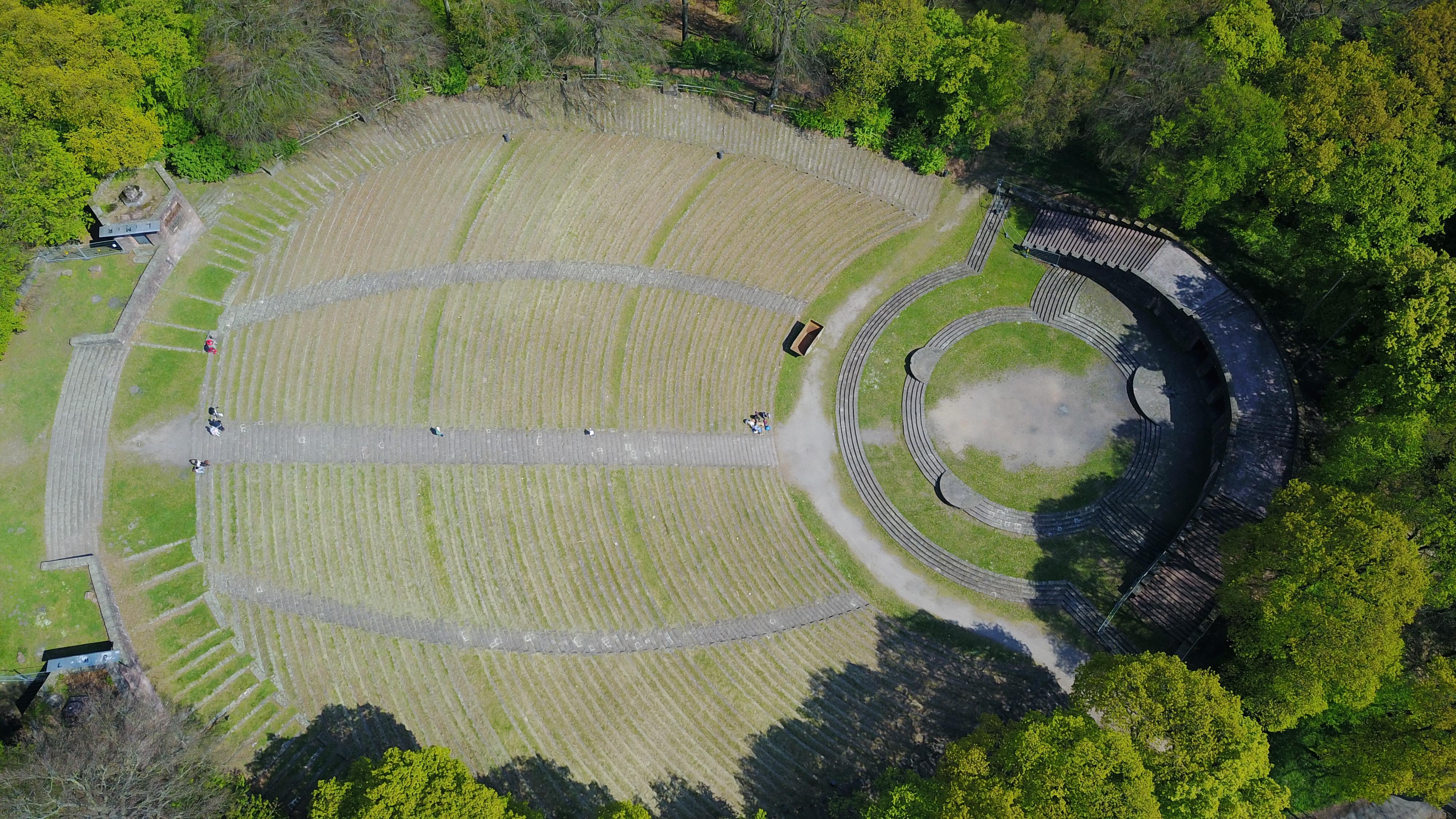
On the Heiligenberg, one of the hills above Heidelberg, the Thingstätte spreads its egg-shaped ring of stone tiers. The form borrows deliberately from the amphitheatres of ancient Greece, which the builders of the 1930s admired. You can reach it on foot or by the Sunday and holiday bus the city introduced in 2014.
Hermann Alker designed it for the Thingspiel movement, the Nazi bid for ritual mass gatherings in the open air. Building began at the end of April 1934 and finished in June 1935. The first plan was grander still: over ten thousand seats, twenty thousand standing places, a dance ring behind the stage. The finished theatre holds about eight thousand seated, or fifteen thousand with standing room. At the dedication on 22 June 1935, some twenty thousand people attended, and Joseph Goebbels called the place "National Socialism in stone". Greek models offered no help with the acoustics, so seventeen microphones went on the stage and seven loudspeakers around the arena.
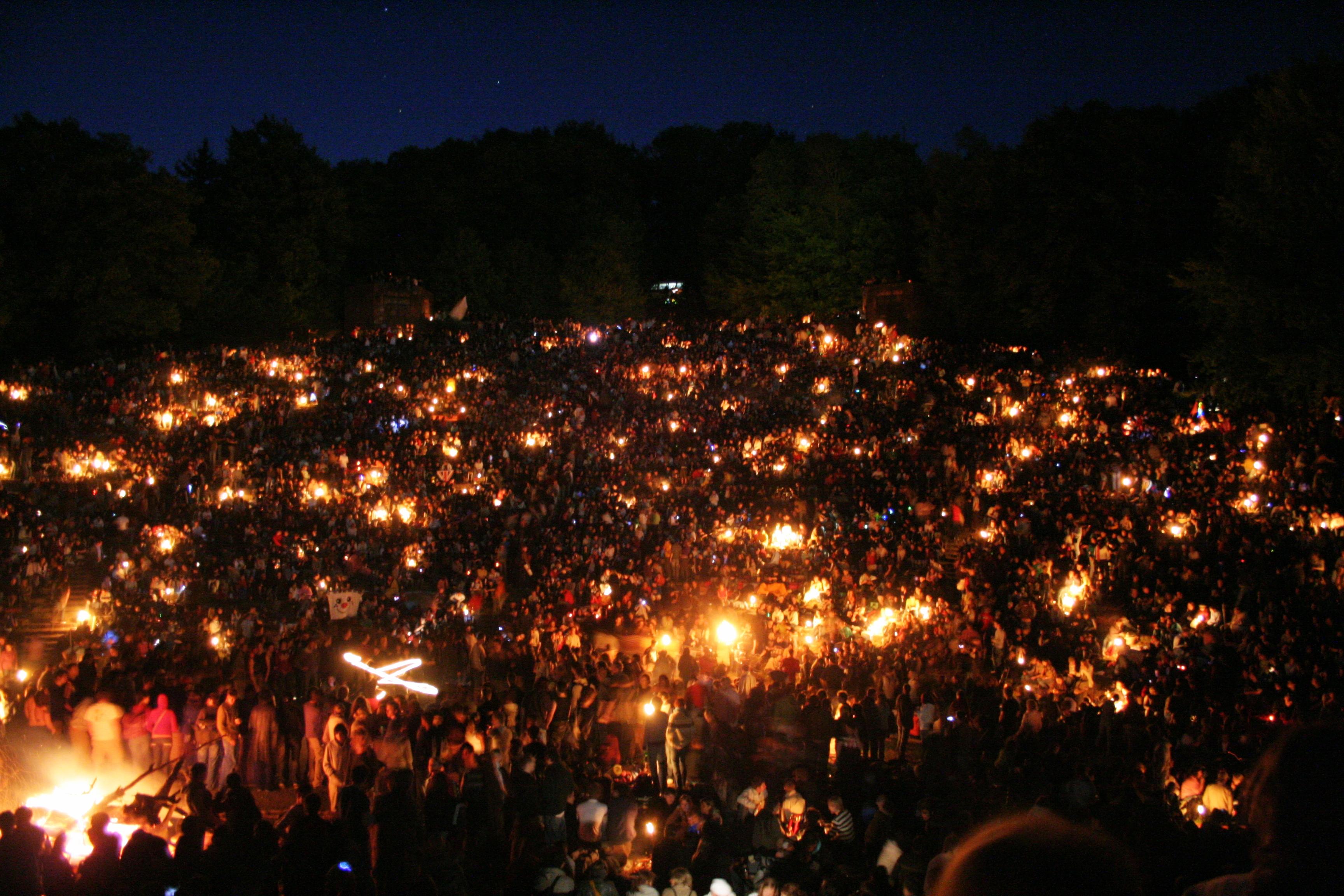
The Thingspiel wave ebbed quickly: the city renamed the site Feierstätte in 1936 and Heiligenberg-Anlage in 1945. Over time people drifted back to the old name. American forces later filled it with jazz concerts and, in 1947, an Easter service to which they invited Germans. The amphitheatre belongs to the city and enjoys protection as a cultural monument, while the Schutzgemeinschaft Heiligenberg maintains it. From the late 1980s to 2017, Walpurgis Night brought fire-dancers and jugglers, at times fifteen thousand strong. A forest fire and a serious injury that year ended the custom: the city banned the celebration and fenced the tiers. Attempts to stage performances again stumble on the site's missing services: it has no electricity. Plans exist to fell some of the trees on the mountain and reopen the view of Heidelberg from the top rows.
- City
- Heidelberg
- Content updated

Take this page with you
The myTuur app is free, and once you are standing at a spot its story starts by itself.


Spots like this one are the stops myTuur strings into tours through Heidelberg. In the app, each story begins where you stand: walk up to a spot and it starts, read it on screen or listen as you go, then follow the route to the next one.
What is myTuur?
myTuur is a free city-guide app. Its tours are built from spots, and each spot carries a story that starts when you get there, to read or to listen to as you like.