Stefaniewarte
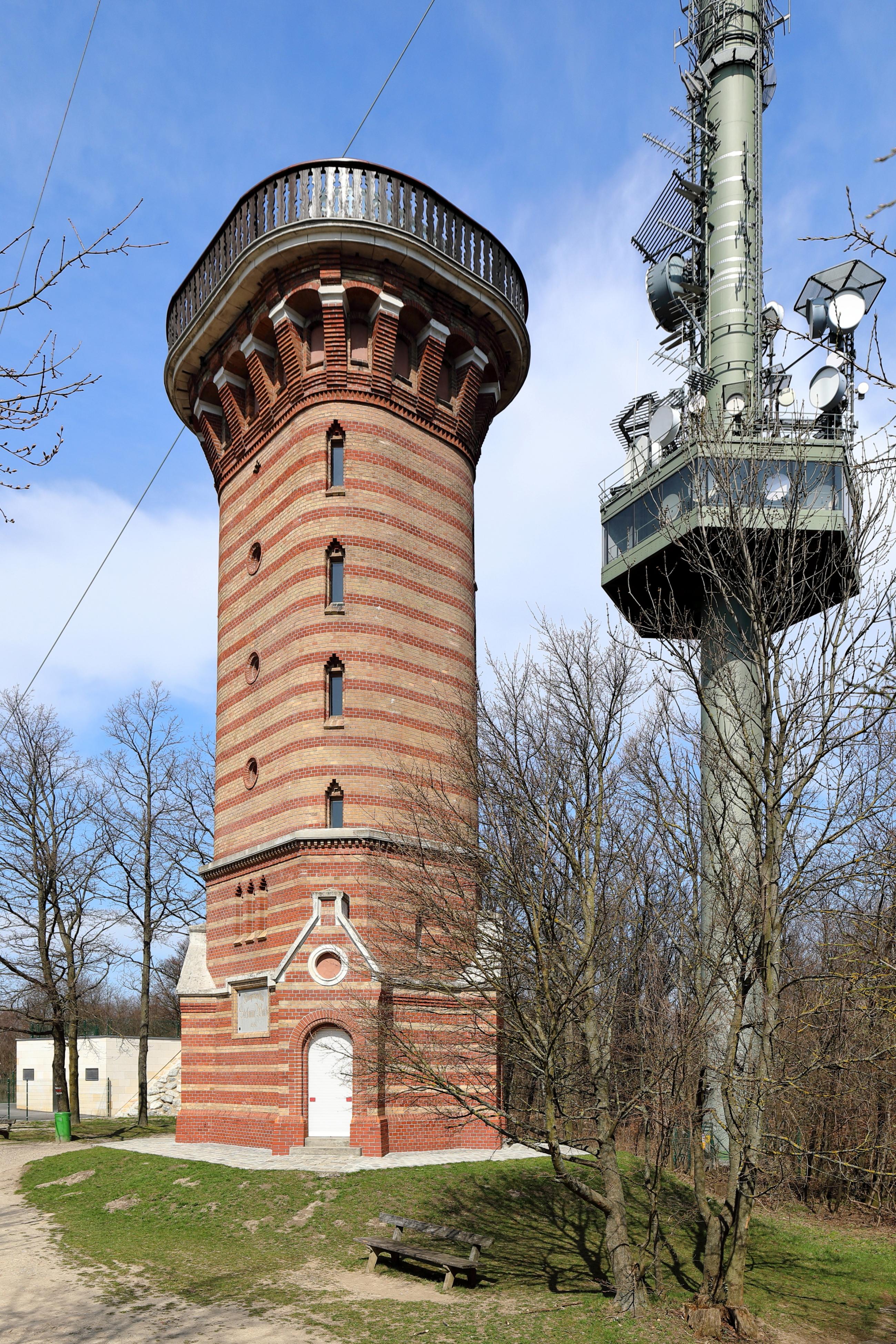
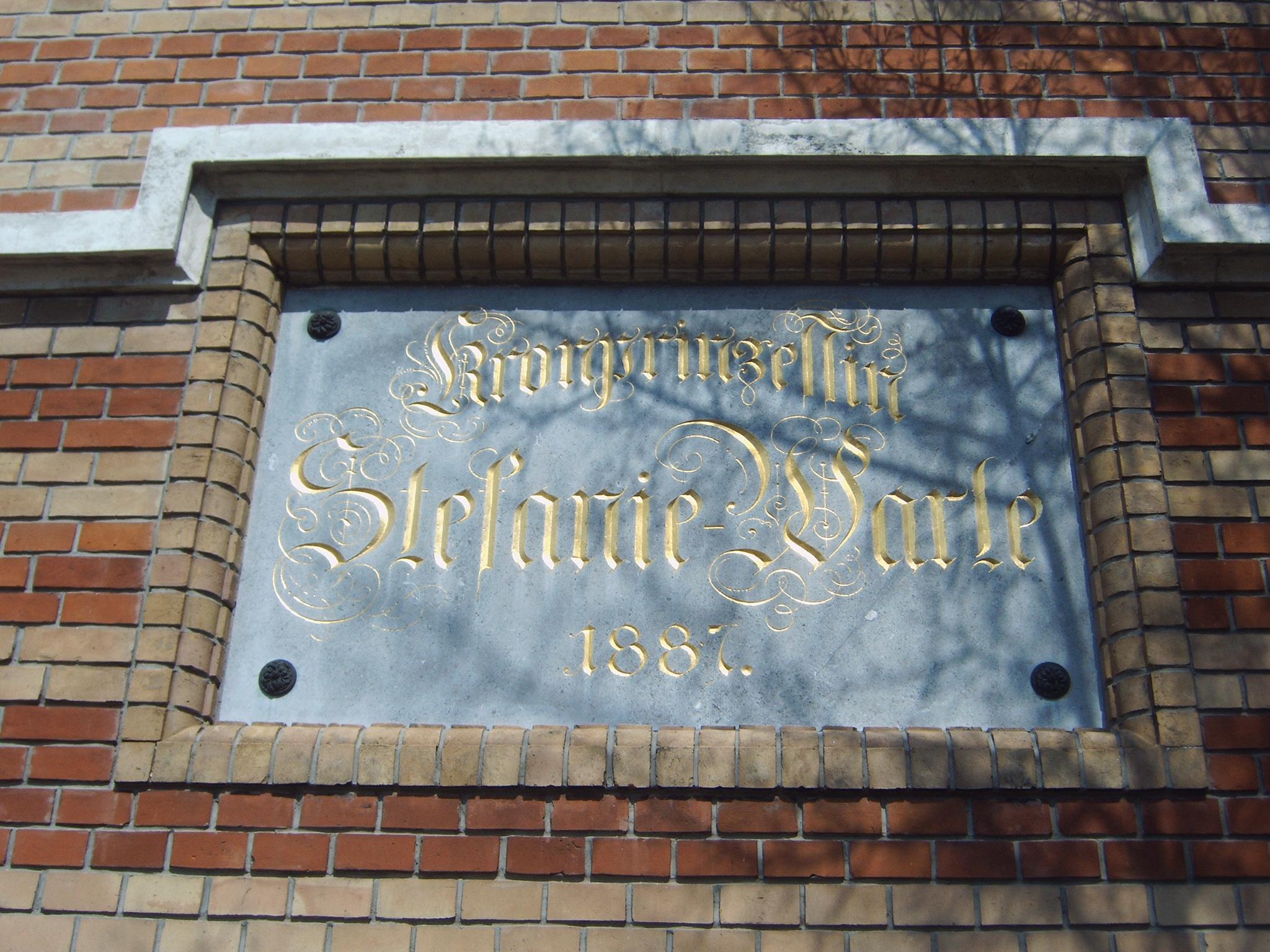
The Stefaniewarte stands on the summit of the Kahlenberg, a 484-metre hill in Vienna's nineteenth district, Döbling. Crown Princess Stephanie, wife of Crown Prince Rudolf, commissioned it in 1887. The architects Ferdinand Fellner and Hermann Helmer were known for their theatres across the Danube monarchy. Vienna's Ronacher and Volkstheater count among their works. Construction accompanied the extension of the Kahlenbergbahn, a rack railway that once carried visitors up the hill. Some bricks even came from the old machine house of the Leopoldsberg cable railway, shut down in 1876.
The structure itself is rectangular, twenty-two metres high, with a viewing platform of roughly sixty square metres at the top. A wooden railing runs around the whole platform. Expecting crowds, the builders planned two separate staircases of 125 steps each, one up and one down. Only one of them is open to the public. The city of Vienna took the tower over in the 1980s. A full renovation from 1990 to 1992 added a glass canopy over the staircase exit. The Döbling branch of the Naturfreunde looks after it.
The hill has a technological story of its own. In the late nineteenth century, some of Austria's first wireless telegraphy experiments sent signals from here to the Votivkirche. During the 1950s the tower carried antennas for Austrian broadcasting and hosted the country's first FM transmitter. Austria's first provisional television broadcast went out from here in August 1955. Since 1974 a 165-metre transmitter mast has shared the summit. From the top, almost 300 metres above the Danube, you look across the Vienna Basin, the Vienna Woods and the Danube Valley. The baroque Kahlenberg Church stands nearby, and a path leads down to the wine villages of Grinzing, Nussdorf and Kahlenbergerdorf. On clear days the view reaches the Schneeberg, the closest mountain above two thousand metres, about seventy kilometres to the southwest.
- City
- Vienna
- Content updated
Take this page with you
The myTuur app is free, and once you are standing at a spot its story starts by itself.


Spots like this one are the stops myTuur strings into tours through Vienna. In the app, each story begins where you stand: walk up to a spot and it starts, read it on screen or listen as you go, then follow the route to the next one.
What is myTuur?
myTuur is a free city-guide app. Its tours are built from spots, and each spot carries a story that starts when you get there, to read or to listen to as you like.