Westerländer Roland
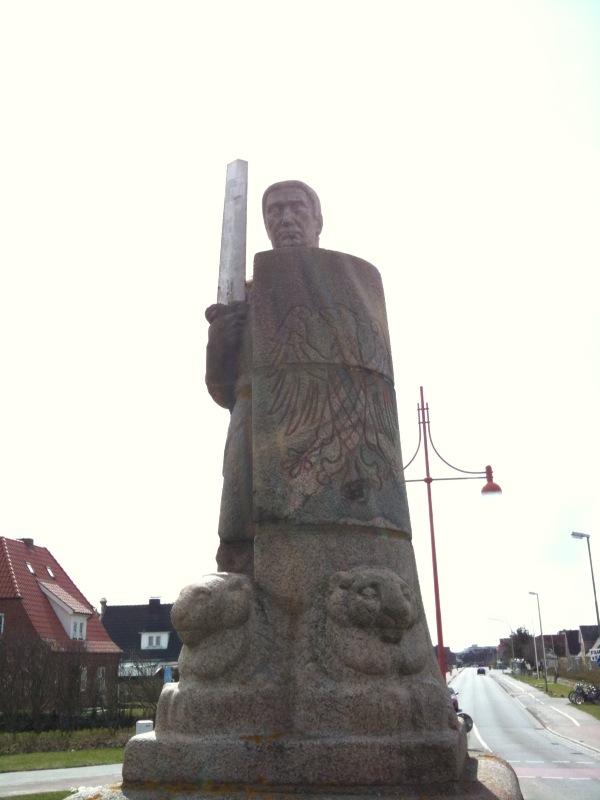
The Westerländer Roland stands at a roundabout on Norderstraße, in Westerland on the North Sea island of Sylt, Germany. The stone figure belongs to the island’s public art.
Wilhelm Rex carved the statue from local boulders between 1917 and 1918, near the end of World War I. Colonel Jachmann proposed the work. Rex was both a sculptor from Hamburg-Altona and a soldier stationed on Sylt during its creation. The original design intended the figure for a fountain. Around 5,200 soldiers presented it to Westerland as a gesture of gratitude during a difficult period. The unveiling took place in 1918 outside the Hotel Royal, which then served as Westerland’s town hall.
The statue remained there until 1964, when workers dismantled it and placed it in storage. A new sword by Flensburg artist Uwe Appold accompanied its return to the townscape in 1993. Its later reinstallation prompted debate because Roland figures can suggest war memorials, freedom and justice. The inscription remembers Germany’s hardest times.
- City
- Sylt
- Content updated
Take this page with you
The myTuur app is free, and once you are standing at a spot its story starts by itself.


Spots like this one are the stops myTuur strings into tours through Sylt. In the app, each story begins where you stand: walk up to a spot and it starts, read it on screen or listen as you go, then follow the route to the next one.
What is myTuur?
myTuur is a free city-guide app. Its tours are built from spots, and each spot carries a story that starts when you get there, to read or to listen to as you like.