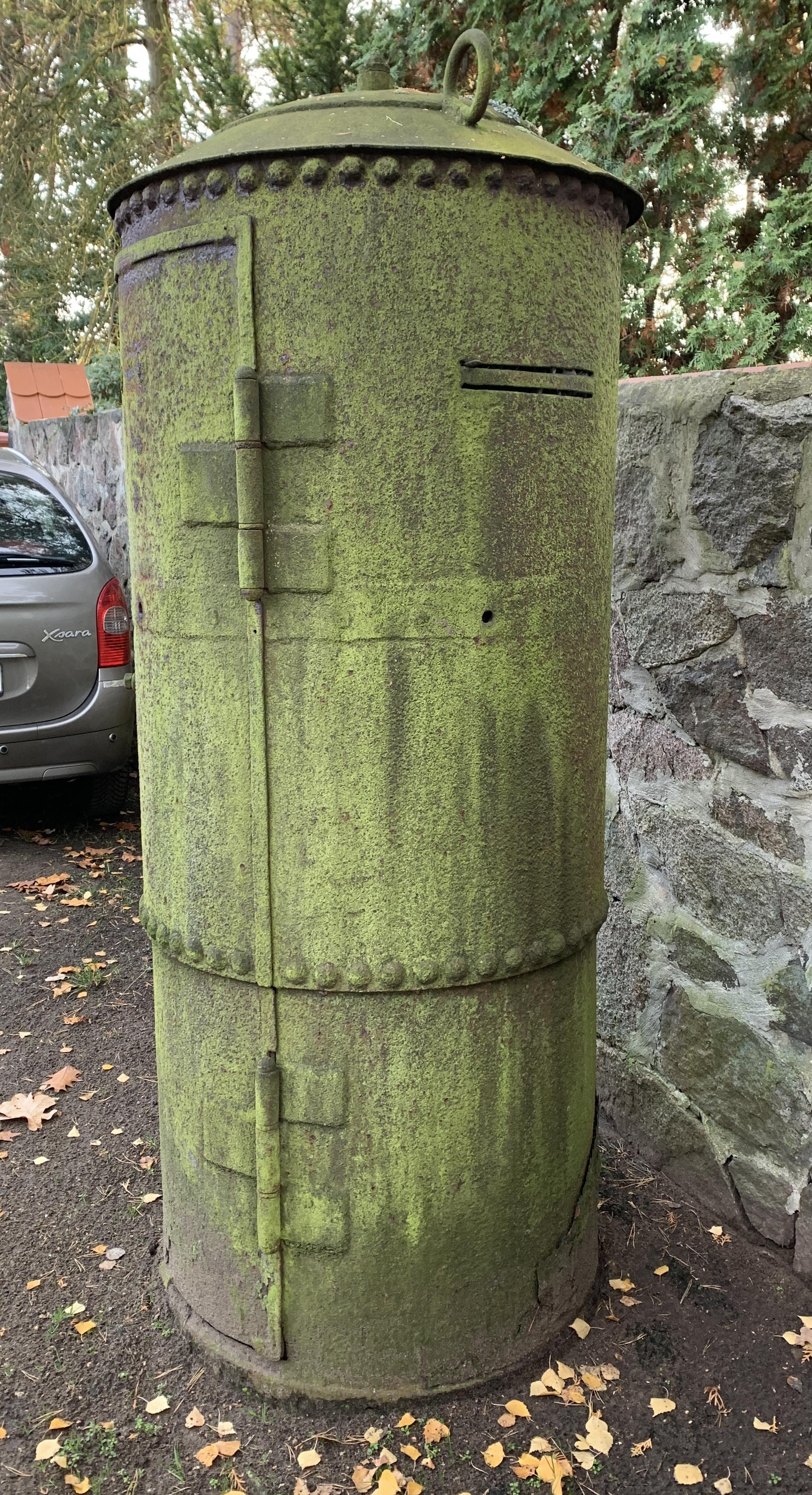
Splitterschutzzelle
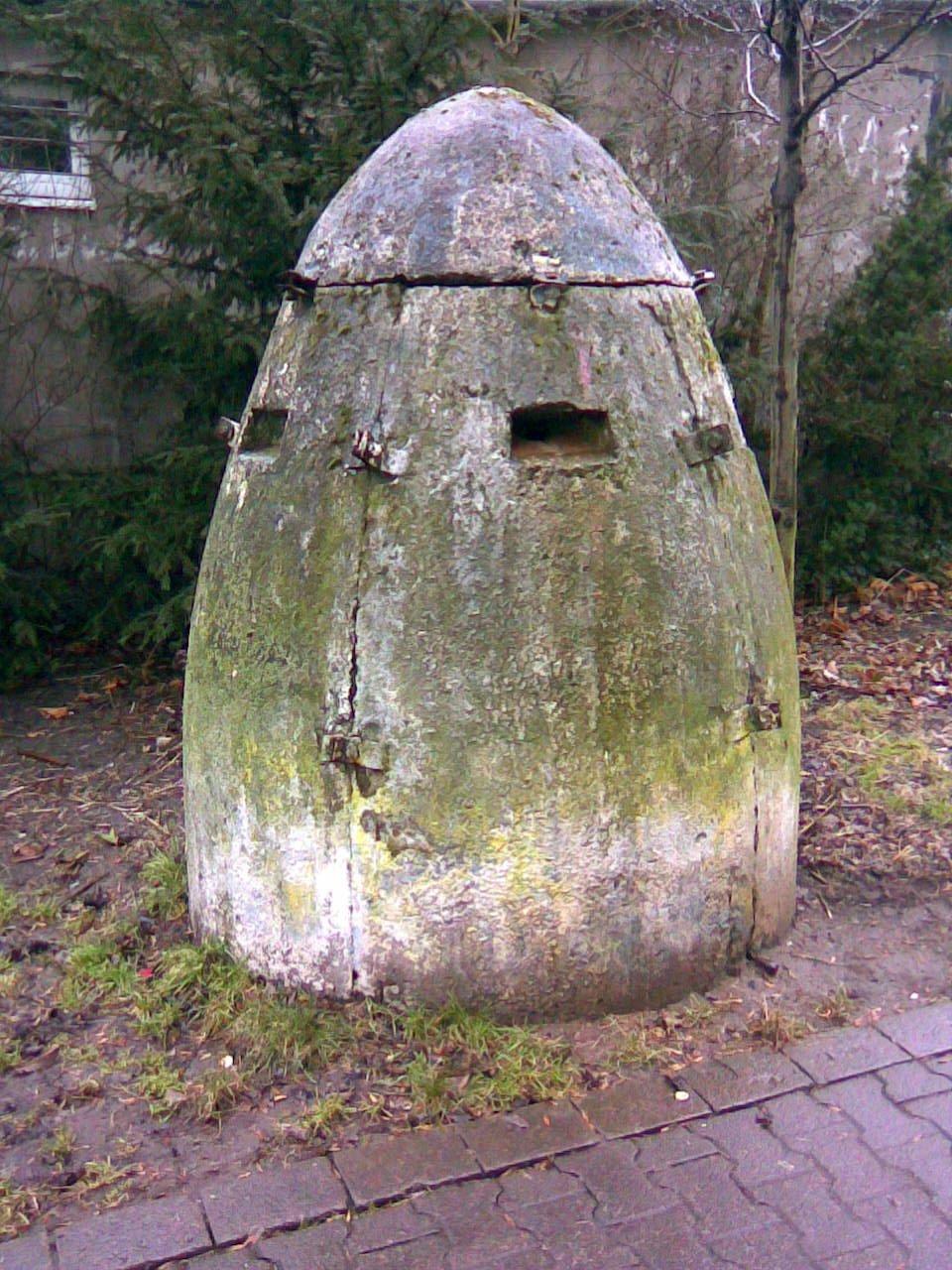
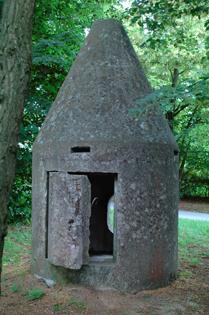
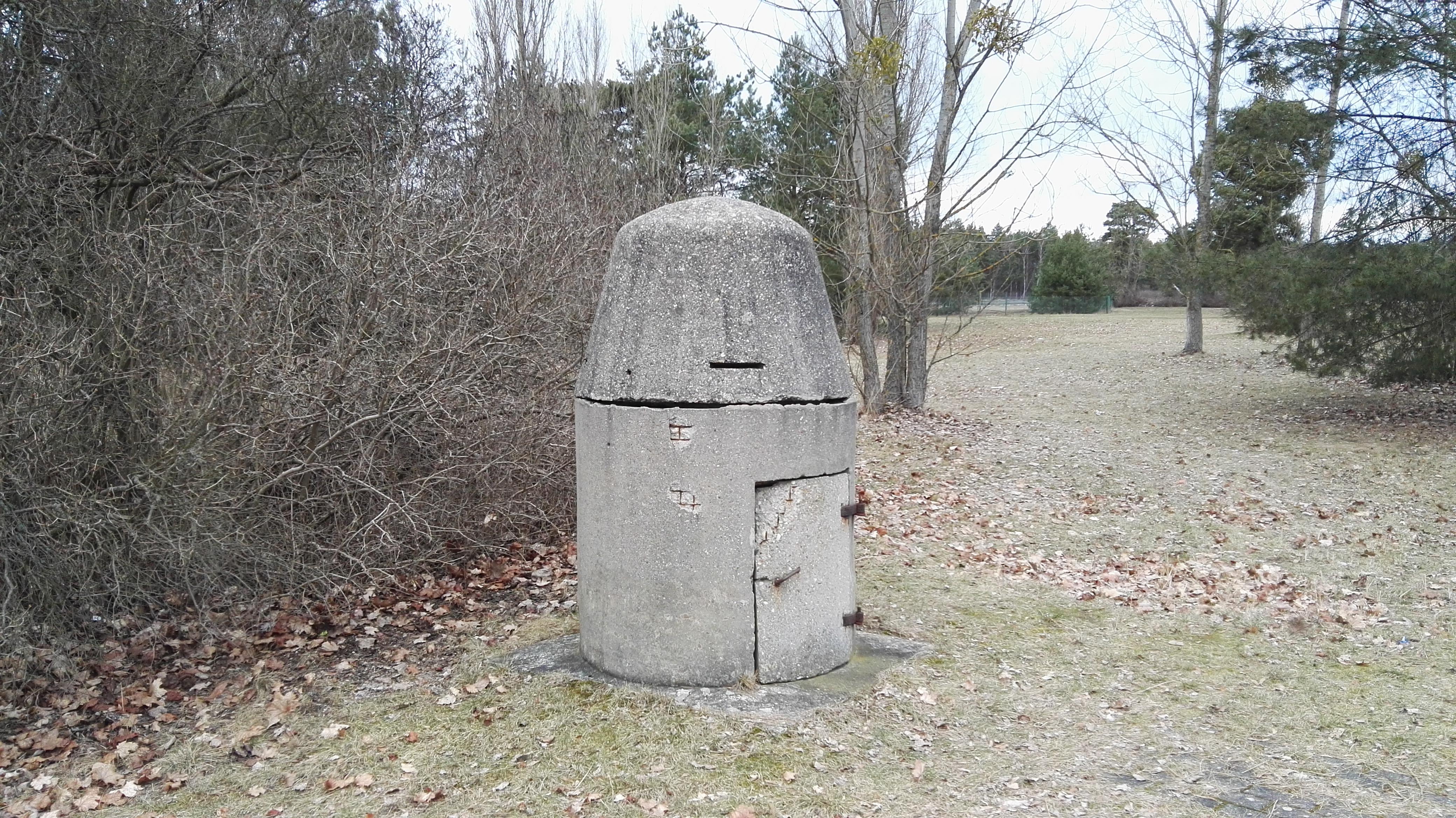
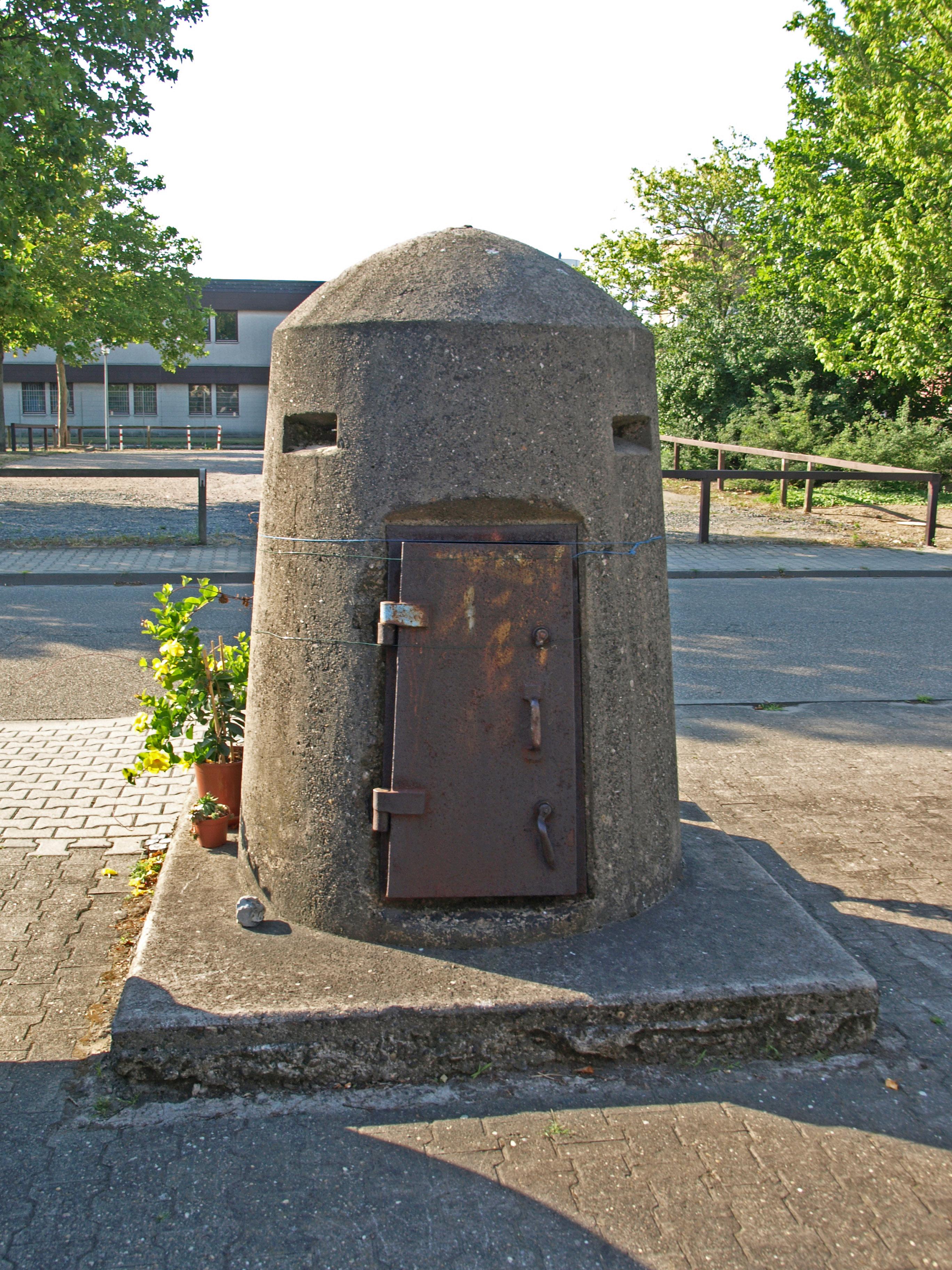
Splitterschutzzelle stands in Munich as a wartime architectural relic made mainly from reinforced concrete. Its cylindrical body has a small entry hatch and viewing slits. Engineers developed these shelters before World War Two to protect people from bomb splinters and small-arms fire. They offered limited protection during intense bombing raids. Early examples used metal, while material shortages later made concrete the primary construction material. DYWIDAG and Leonhard Moll Betonwerke produced examples of this design. Depending on the model, the structure carried a domed, conical, or flat roof above its compact cylindrical walls. Foundations, earth mounds, or additional walls helped prevent blast waves from overturning it. These shelters stood where larger protective spaces were unavailable, including railway facilities and open fields. Their narrow openings supported observation while keeping the protected interior enclosed. During the war, they served as protected observation posts in factories and later as improvised machine-gun positions. The design reveals how wartime architecture balanced quick access, limited shelter, and practical observation.
- City
- Munich
- Content updated
Take this page with you
The myTuur app is free, and once you are standing at a spot its story starts by itself.


Spots like this one are the stops myTuur strings into tours through Munich. In the app, each story begins where you stand: walk up to a spot and it starts, read it on screen or listen as you go, then follow the route to the next one.
What is myTuur?
myTuur is a free city-guide app. Its tours are built from spots, and each spot carries a story that starts when you get there, to read or to listen to as you like.