Esperanto
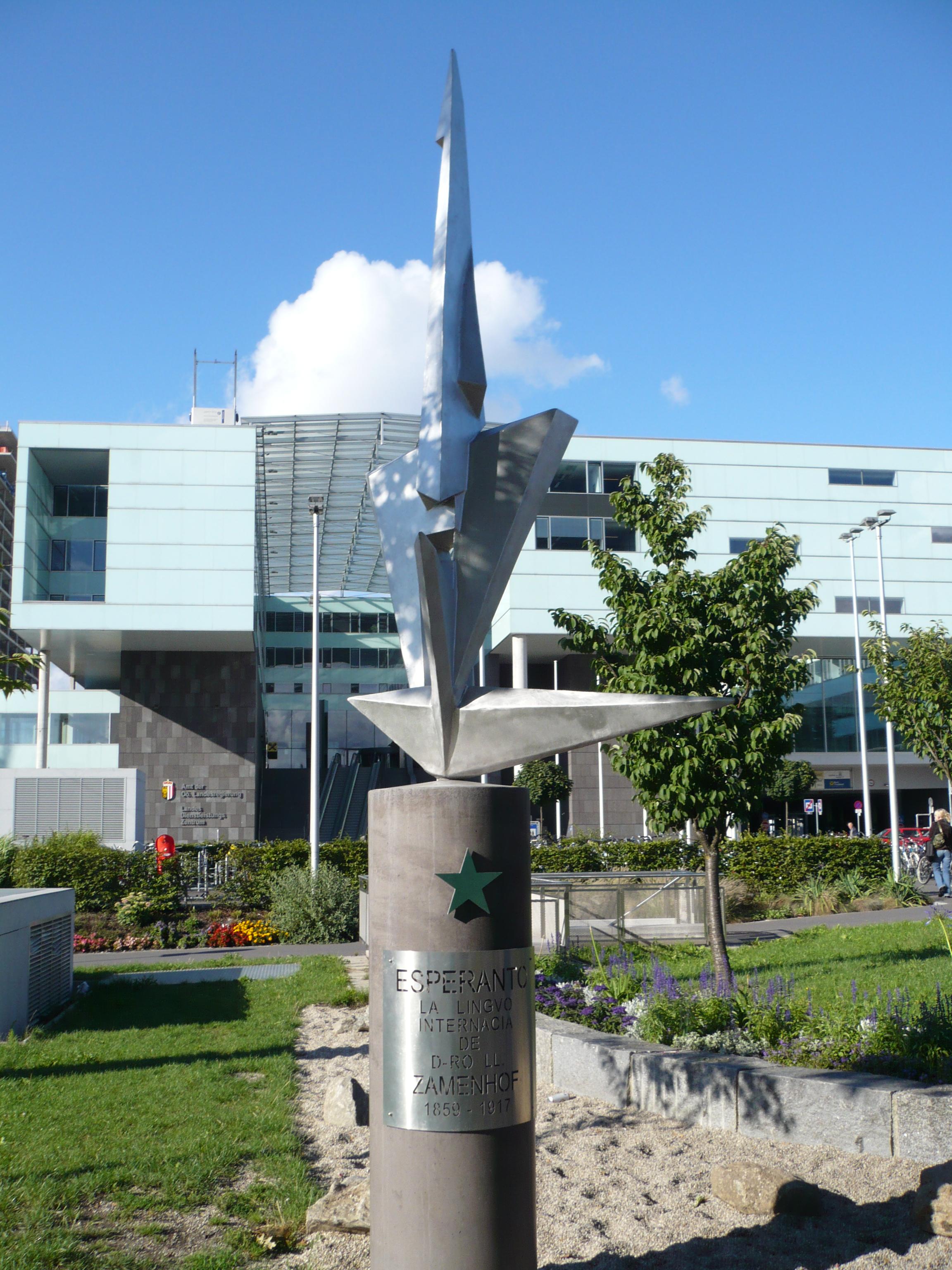
Esperanto is a public sculpture in Linz, Austria, standing near the city’s main railway station. About three metres high, it rises as a slender, round concrete column topped by six metal arrowheads. The arrowheads vary in size and point in every direction, including upwards. A five-pointed green star marks the column, while a metal plaque honours Ludwik Lejzer Zamenhof, Esperanto’s creator.
Adolph Kloska created the original monument, installed near the station in 1965. After station renovations damaged that work in 2001, Herbert Egger designed the present version from preserved plans and models. The Austrian National Library’s Esperanto Museum held those materials, helping reconnect the sculpture with its earlier form. Linz has supported Esperanto since 1922, and a local street has honoured Zamenhof since 1958. The arrows and green star give this compact artwork a clear visual language: communication reaching across borders.
- City
- Linz
- Content updated
Take this page with you
The myTuur app is free, and once you are standing at a spot its story starts by itself.


Spots like this one are the stops myTuur strings into tours through Linz. In the app, each story begins where you stand: walk up to a spot and it starts, read it on screen or listen as you go, then follow the route to the next one.
What is myTuur?
myTuur is a free city-guide app. Its tours are built from spots, and each spot carries a story that starts when you get there, to read or to listen to as you like.