Praetorium
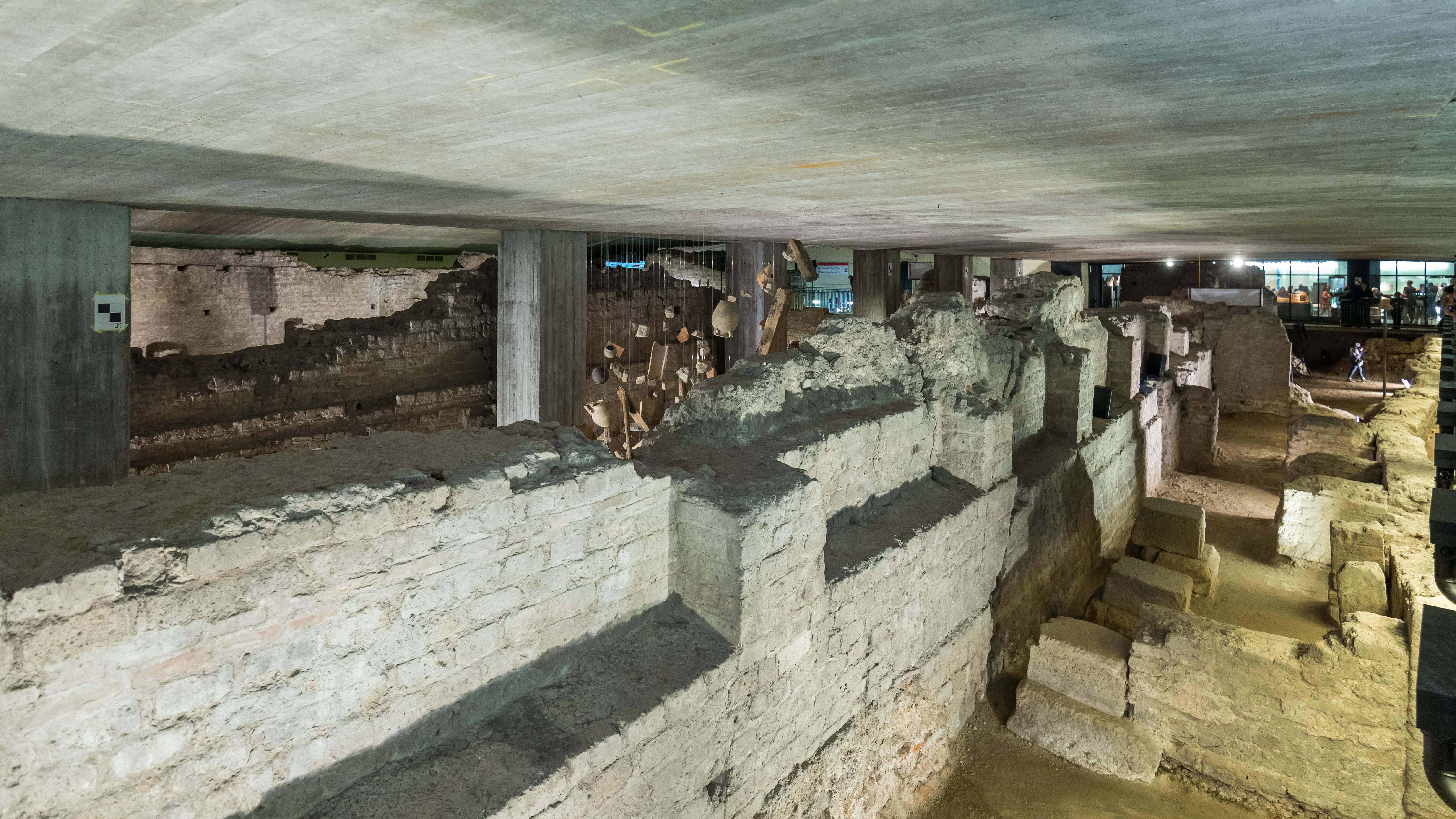
Praetorium in Cologne preserves a Roman governor’s palace beneath the medieval town hall. The site recalls Cologne as capital of Lower Germania.
Several building phases remain visible, especially the monumental palace walls from the fourth century. An octagonal central room stands between rectangular halls and attached apses.
An eastern portico faced the Rhine, while western courtyards extended beyond the archaeological area. Pottery, mosaics, wall paintings, and marble decorations reveal the palace’s elaborate interiors.
Archaeologists also found sculptures, inscriptions, glassware, and remains from ancient workshops. The complex ranks among Cologne’s most important official Roman monuments.
Cracks and shifts in the masonry preserve evidence of a major earthquake near the end of the eighth century. The exhibition presents palace walls, the octagonal room, and parts of a Roman sewer.
Those remains place Roman, medieval, and modern Cologne within one layered urban landscape. The Praetorium helps explain the administration and development of Roman Cologne.
Excavations continue to add objects and details to the story of this archaeological site. Together, the architecture and finds show how power, decoration, and infrastructure shaped Roman Cologne.
- City
- Cologne
- Content updated
Take this page with you
The myTuur app is free, and once you are standing at a spot its story starts by itself.


Spots like this one are the stops myTuur strings into tours through Cologne. In the app, each story begins where you stand: walk up to a spot and it starts, read it on screen or listen as you go, then follow the route to the next one.
What is myTuur?
myTuur is a free city-guide app. Its tours are built from spots, and each spot carries a story that starts when you get there, to read or to listen to as you like.