Begijnhof
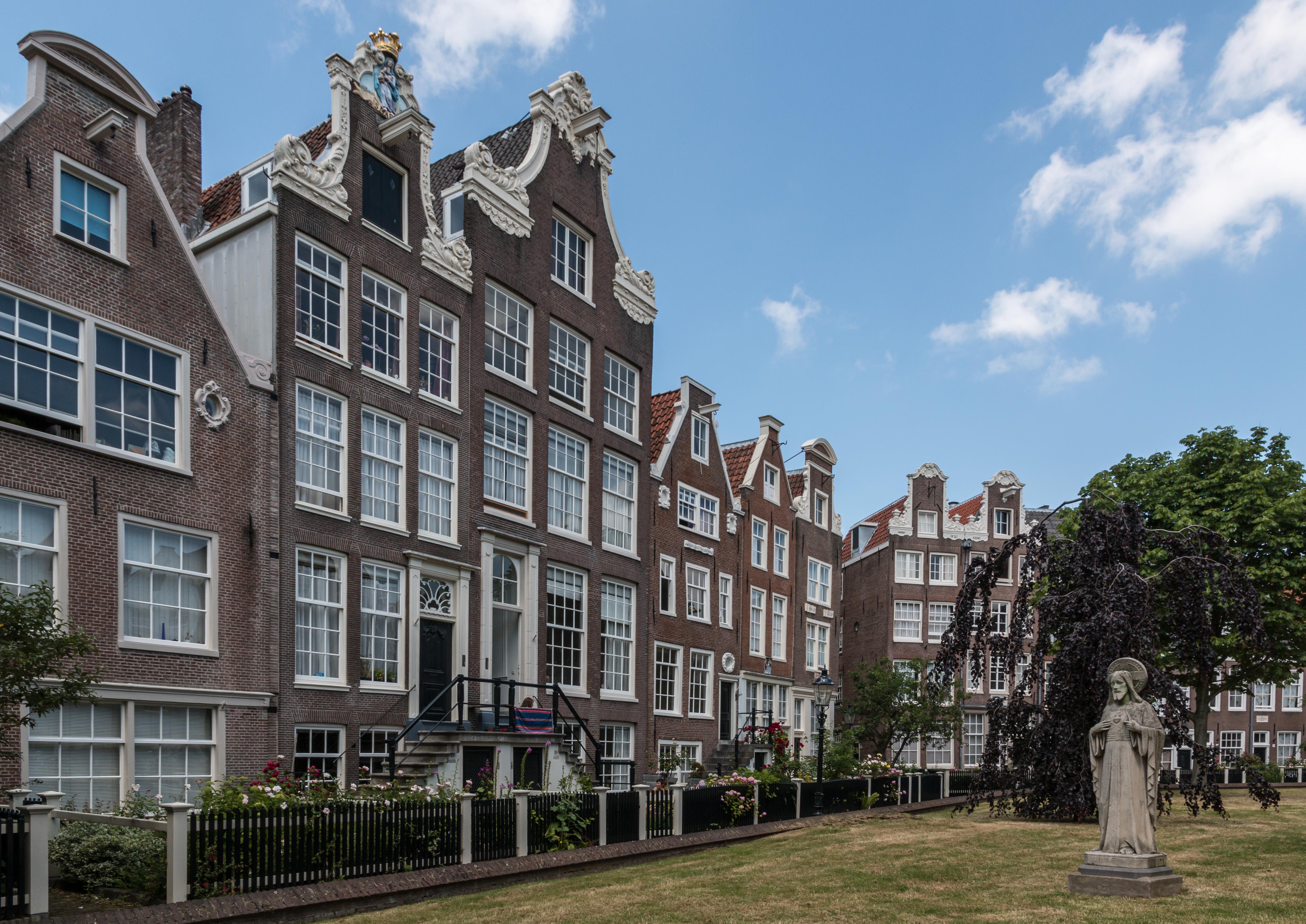
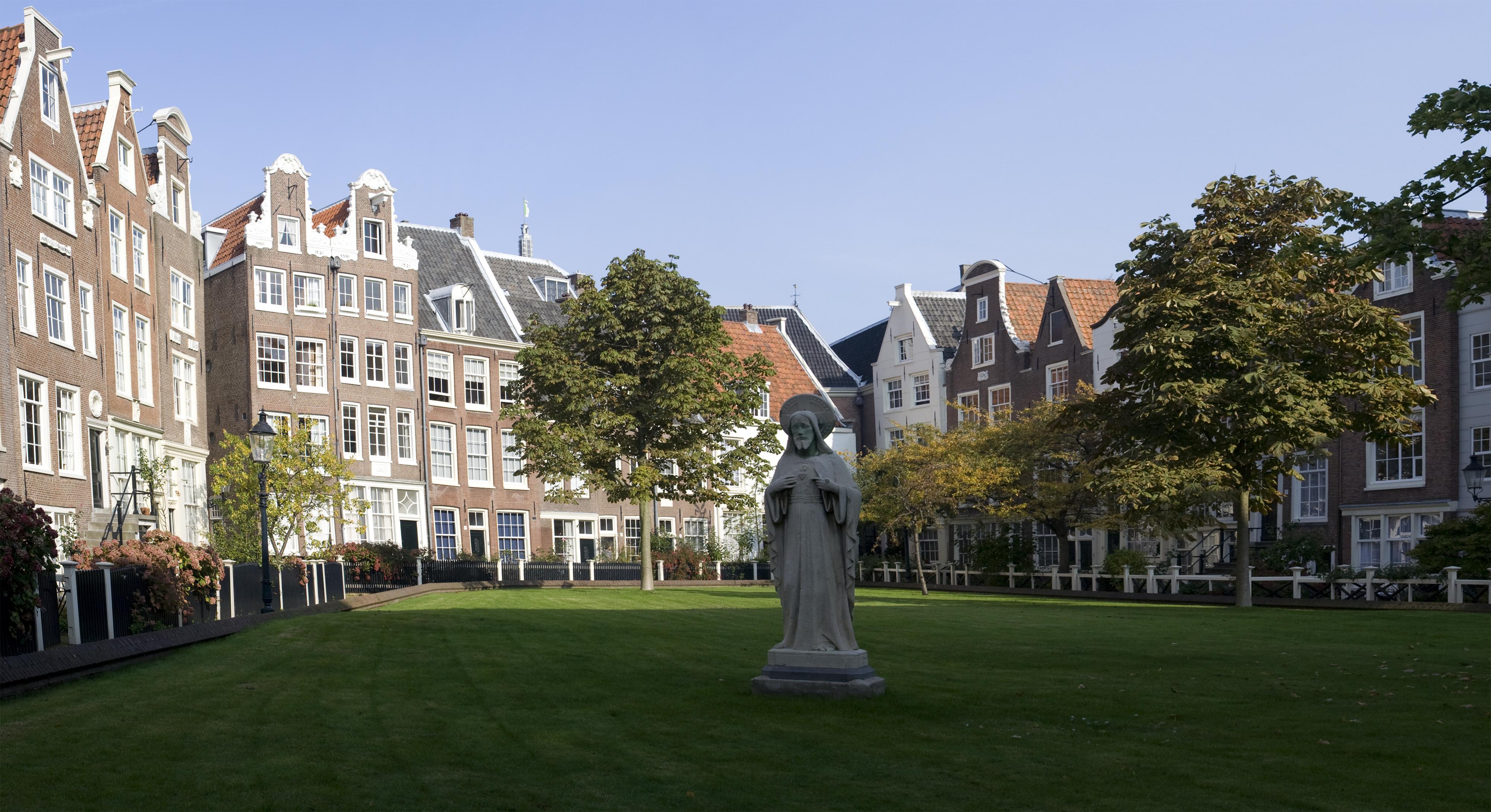
Begijnhof is a medieval inner courtyard in Amsterdam, tucked within the Singel and about a metre below the old city centre. It is the only Amsterdam courtyard founded during the Middle Ages. Records mention beguines living here in 1346, while the courtyard first appears in writing in 1389. Water once surrounded the enclosure on every side. The original entrance stood at Begijnensteeg, reached by a bridge over the Begijnensloot, or Beguines’ Ditch.
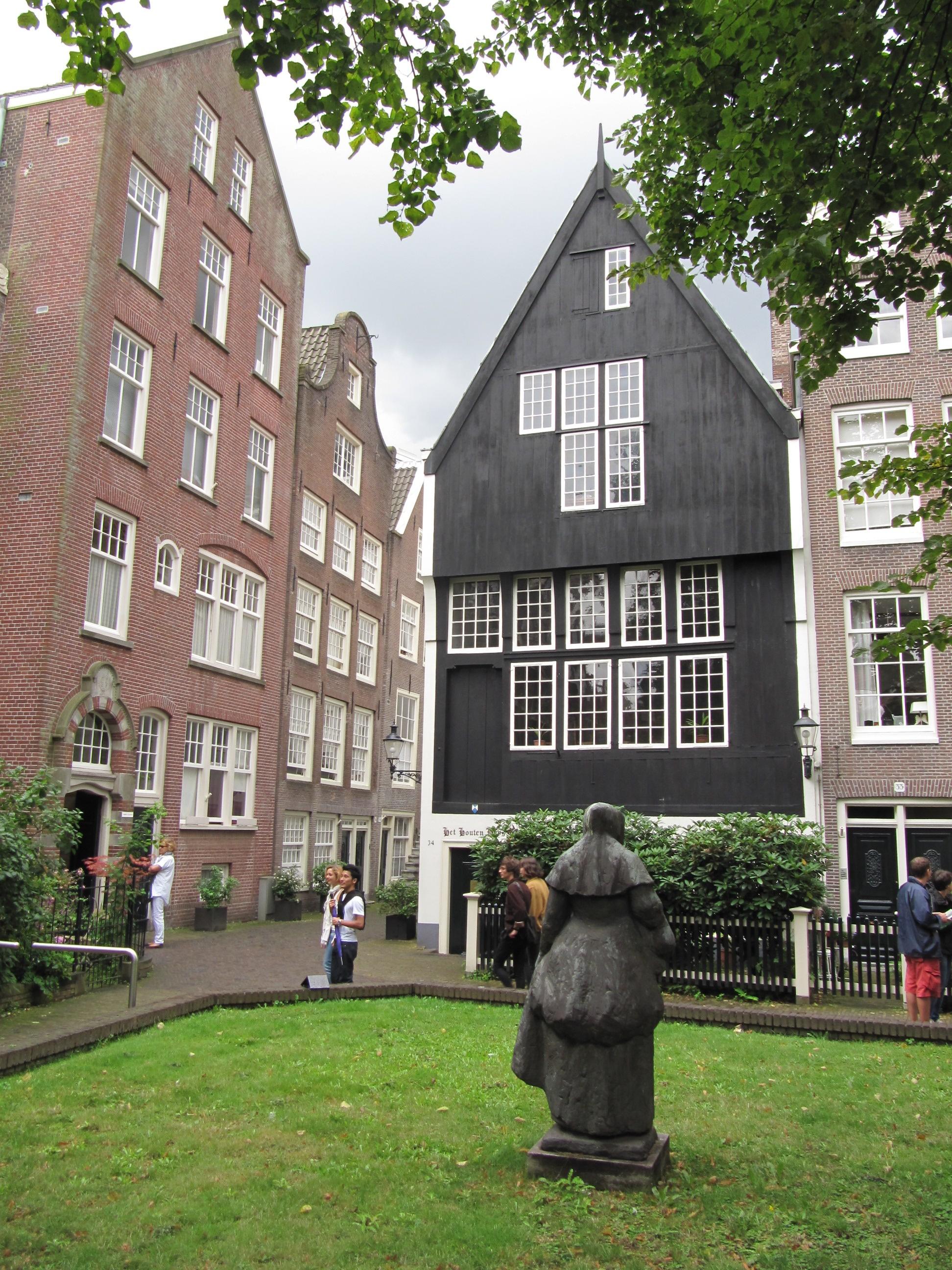
The community housed unmarried religious women who took vows of chastity, attended Mass, and could leave to marry. Their shared life resembled a convent, with greater personal freedom. Tall Amsterdam townhouses ring the courtyard, with façades from the seventeenth and eighteenth centuries. Many buildings are older than their façades suggest. House number 34, the Houten Huys, dates from around 1420 and retains a wooden structure. The city banned timber houses after fires in 1521.
After Amsterdam’s Protestant takeover in 1578, private ownership allowed the Catholic institution to remain. A hidden Catholic church occupied two houses from 1671. The former chapel became the English Reformed Church, whose medieval tower survives, while some pulpit panels carry designs by Piet Mondrian. Biblical wall plaques mark this quiet enclosure.
- City
- Amsterdam
- Content updated
Take this page with you
The myTuur app is free, and once you are standing at a spot its story starts by itself.


Spots like this one are the stops myTuur strings into tours through Amsterdam. In the app, each story begins where you stand: walk up to a spot and it starts, read it on screen or listen as you go, then follow the route to the next one.
What is myTuur?
myTuur is a free city-guide app. Its tours are built from spots, and each spot carries a story that starts when you get there, to read or to listen to as you like.