Schottenstift
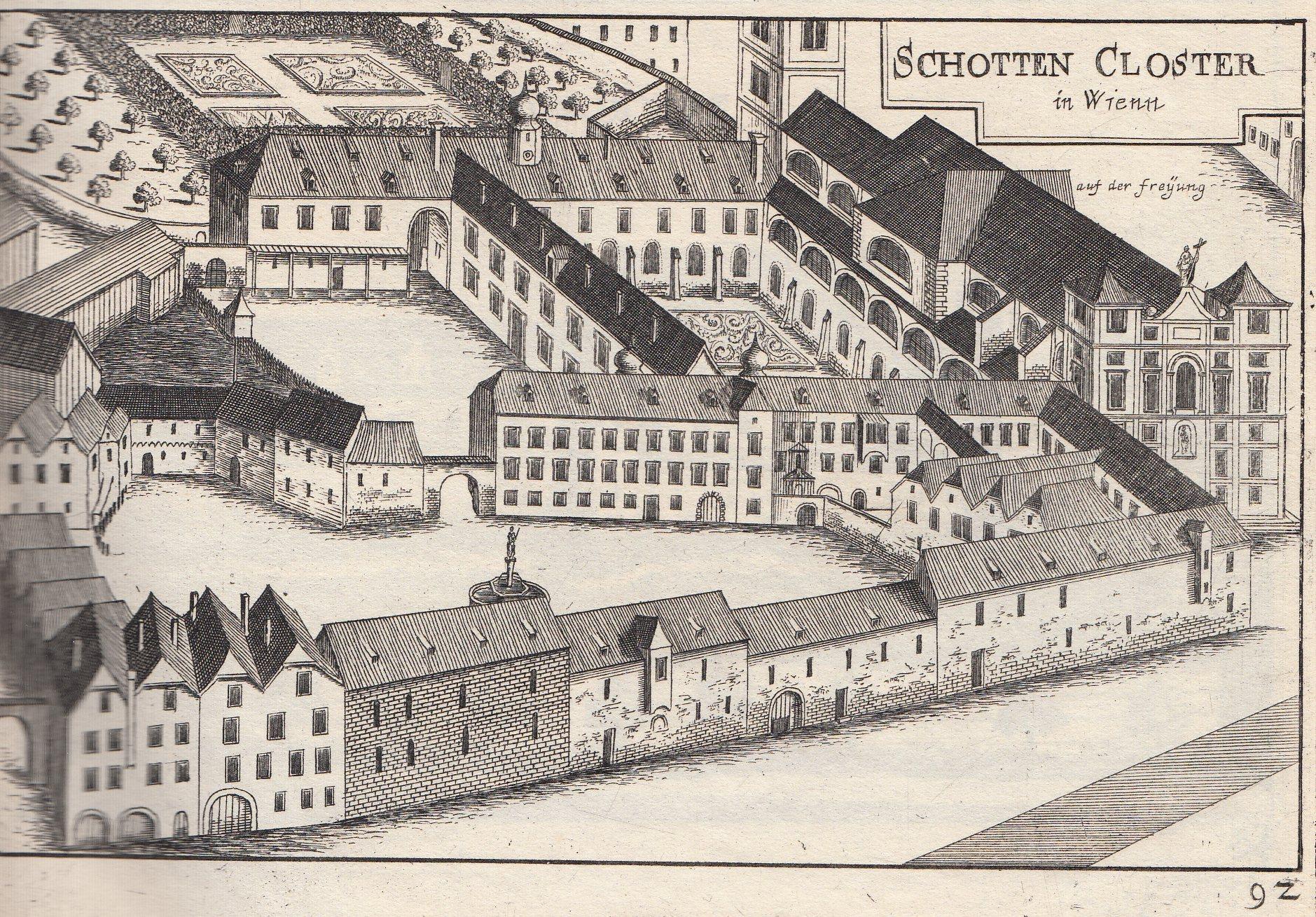
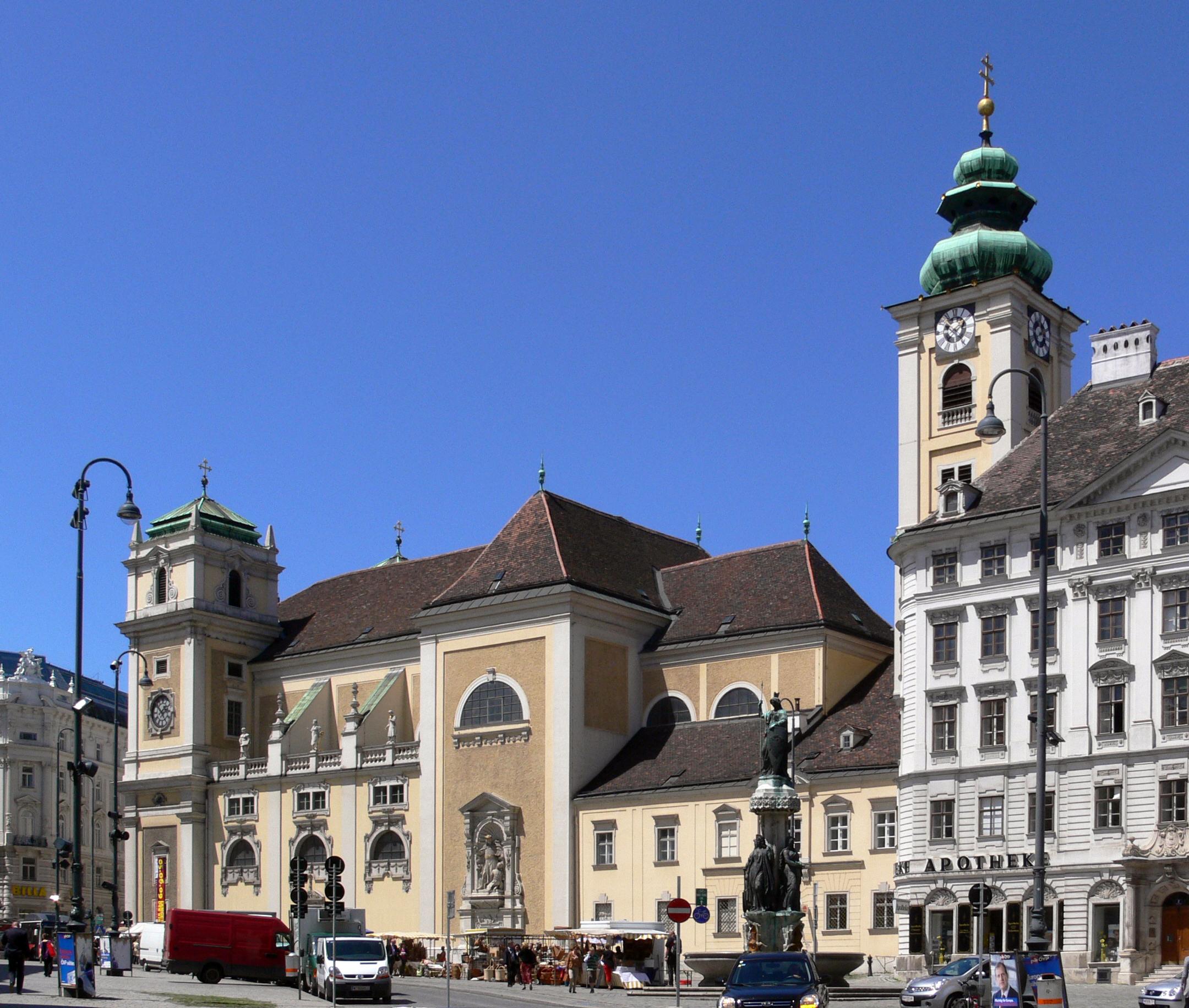
Schottenstift is a Catholic Benedictine monastery on Vienna’s Freyung, where its church faces historic townhouses and other old buildings. The complex includes a museum, school, café, and active monastic community. Its Baroque west tower rises only slightly above the church façade, giving the frontage a distinctive shape.
Henry the Second founded the monastery in 1155 after inviting Irish monks from Regensburg to Vienna. The first church stood outside the city walls and included three naves and a single apse. A fire damaged the cloister in 1276, while the Melker Reform brought Benedictine monks in 1418. Lightning destroyed the church tower in 1638, leading Andrea d’Allio the Younger and Silvestro Carlone to redesign the church. Later restoration added ceiling paintings by Julius Schmid and a high altar designed by Heinrich von Ferstel.
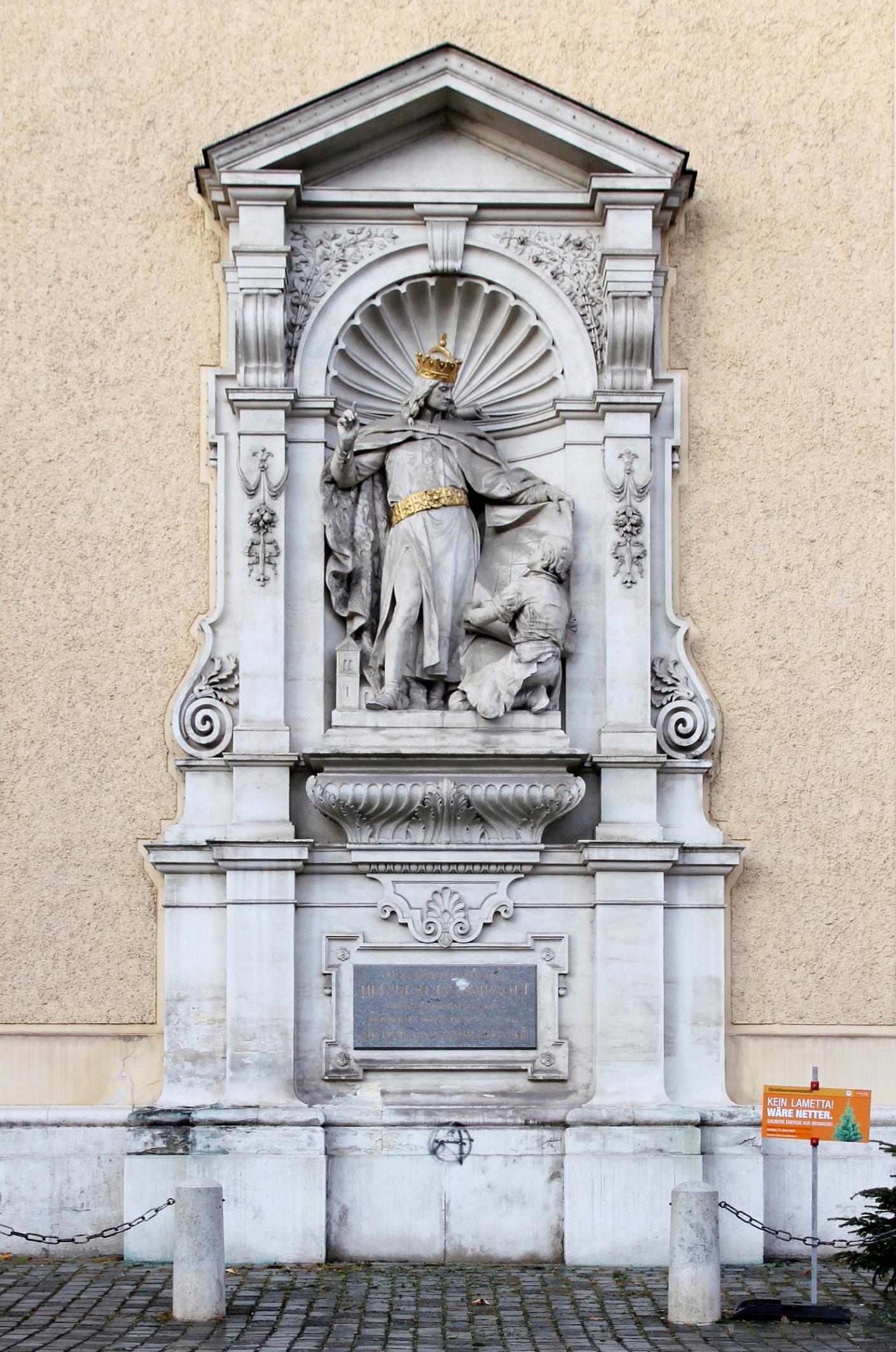
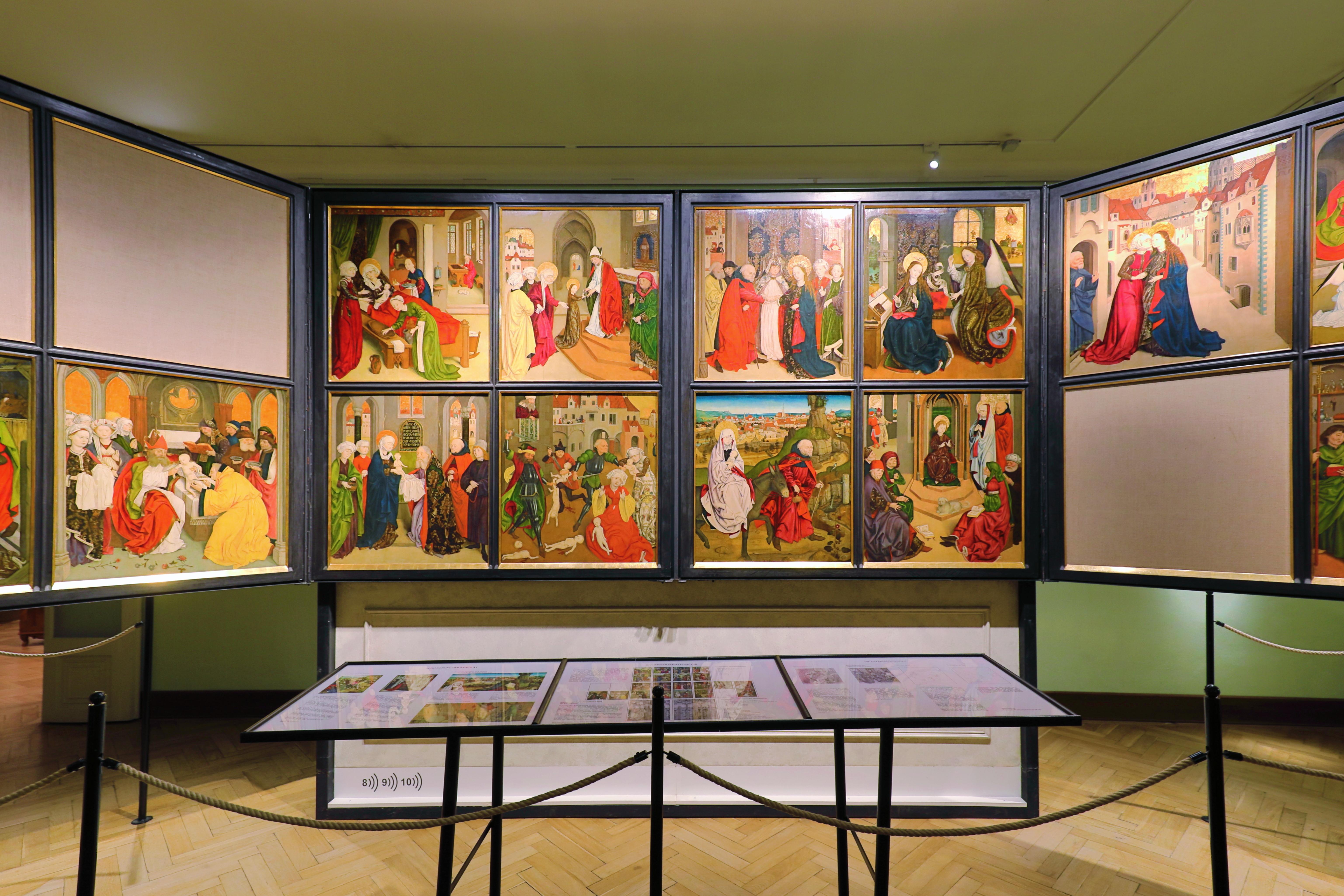
The museum occupies former rooms of the abbot and preserves works gathered across centuries. Its centrepiece is the Schottenmeisteraltar, a late Gothic altarpiece created around 1470. Several panels show fifteenth-century Vienna, including its fortifications and buildings such as Stephansdom. Illuminated manuscripts, gemstone-decorated liturgical objects, Biedermeier furniture, and the eighteenth-century prelate’s key add smaller human details. In the courtyard, a statue of the Black Madonna stands beside a fountain showing Henry the Second.
- City
- Vienna
- Content updated
Take this page with you
The myTuur app is free, and once you are standing at a spot its story starts by itself.


Spots like this one are the stops myTuur strings into tours through Vienna. In the app, each story begins where you stand: walk up to a spot and it starts, read it on screen or listen as you go, then follow the route to the next one.
What is myTuur?
myTuur is a free city-guide app. Its tours are built from spots, and each spot carries a story that starts when you get there, to read or to listen to as you like.