Muralla-Acueducto
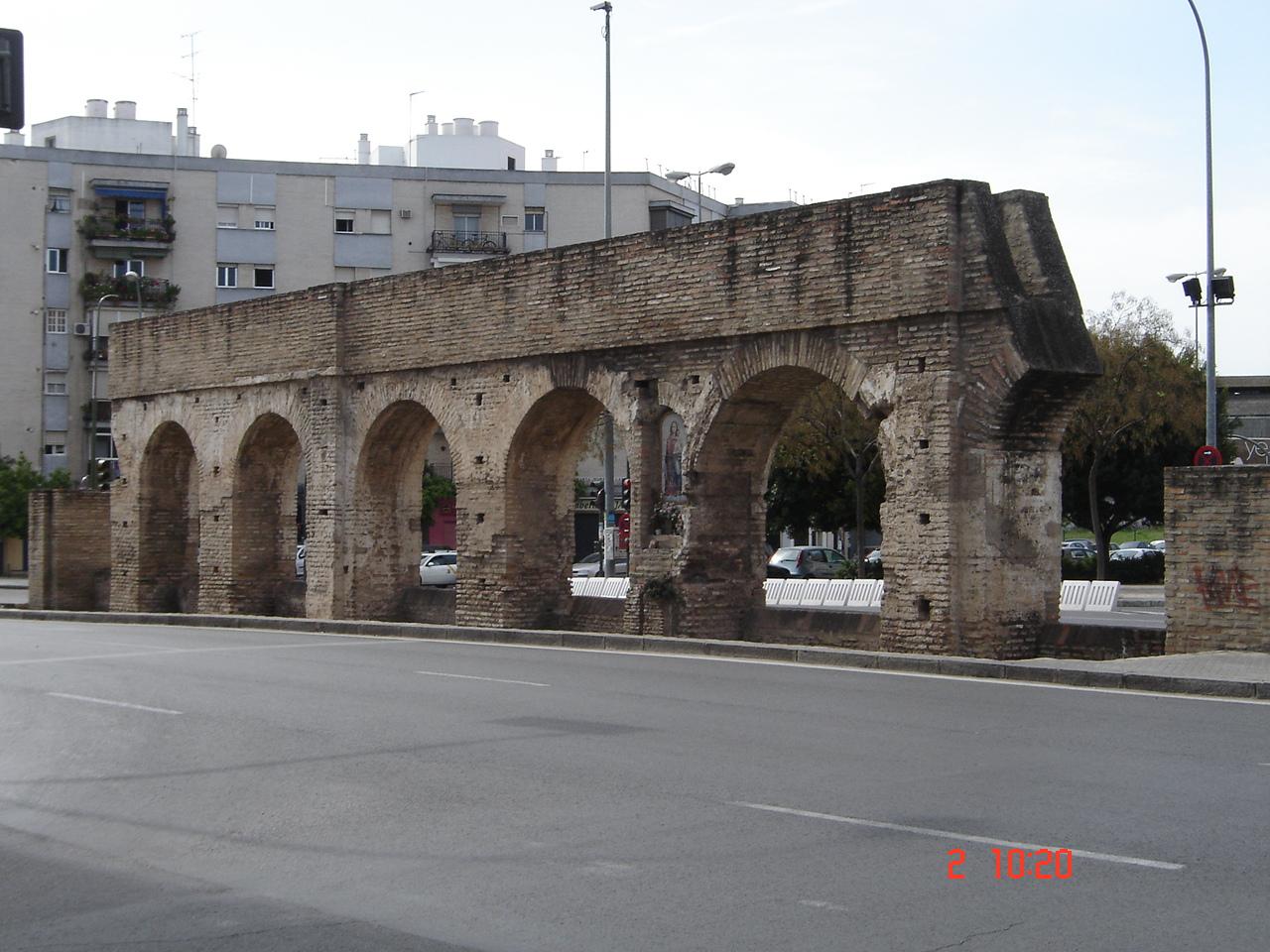
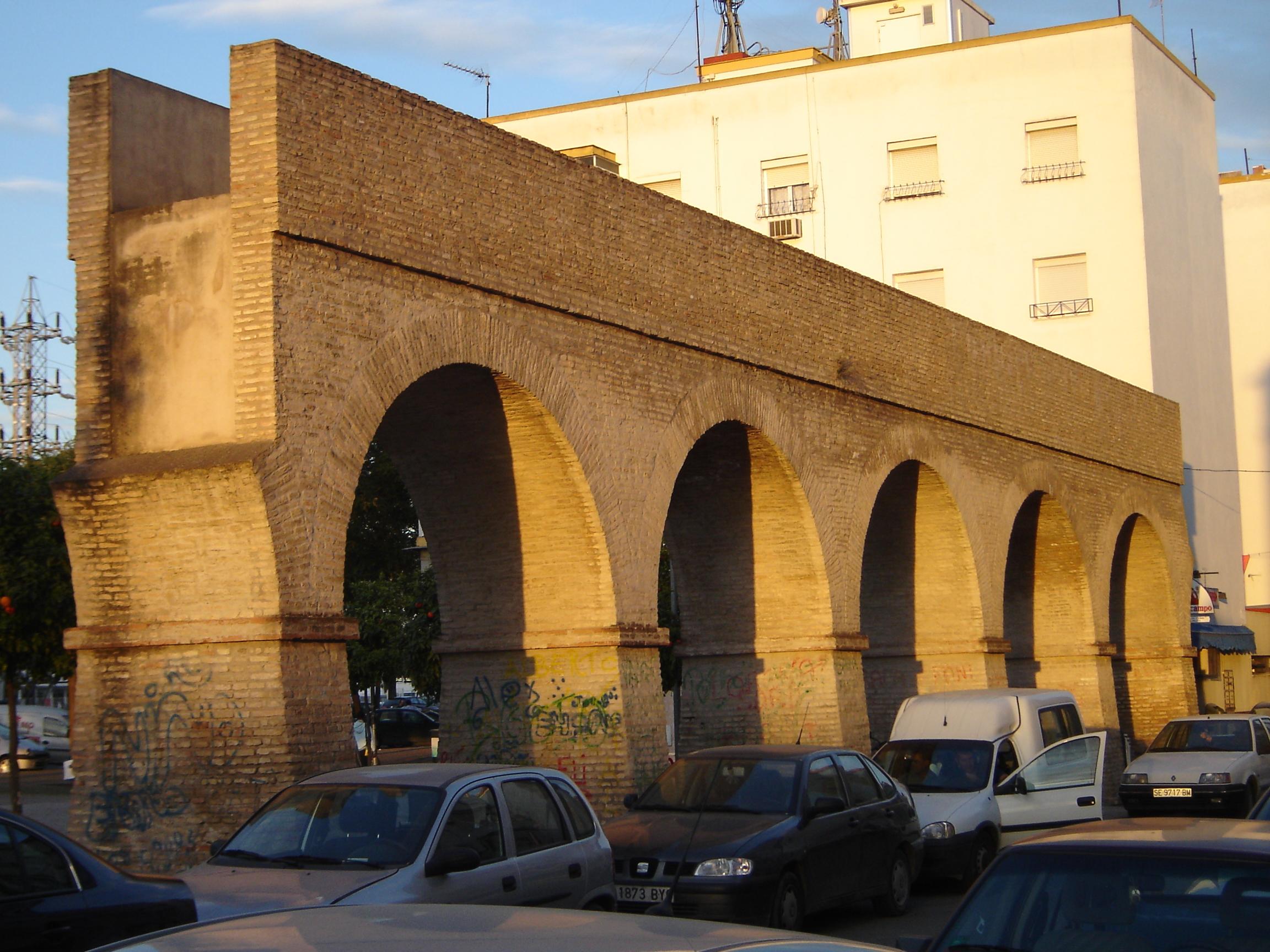
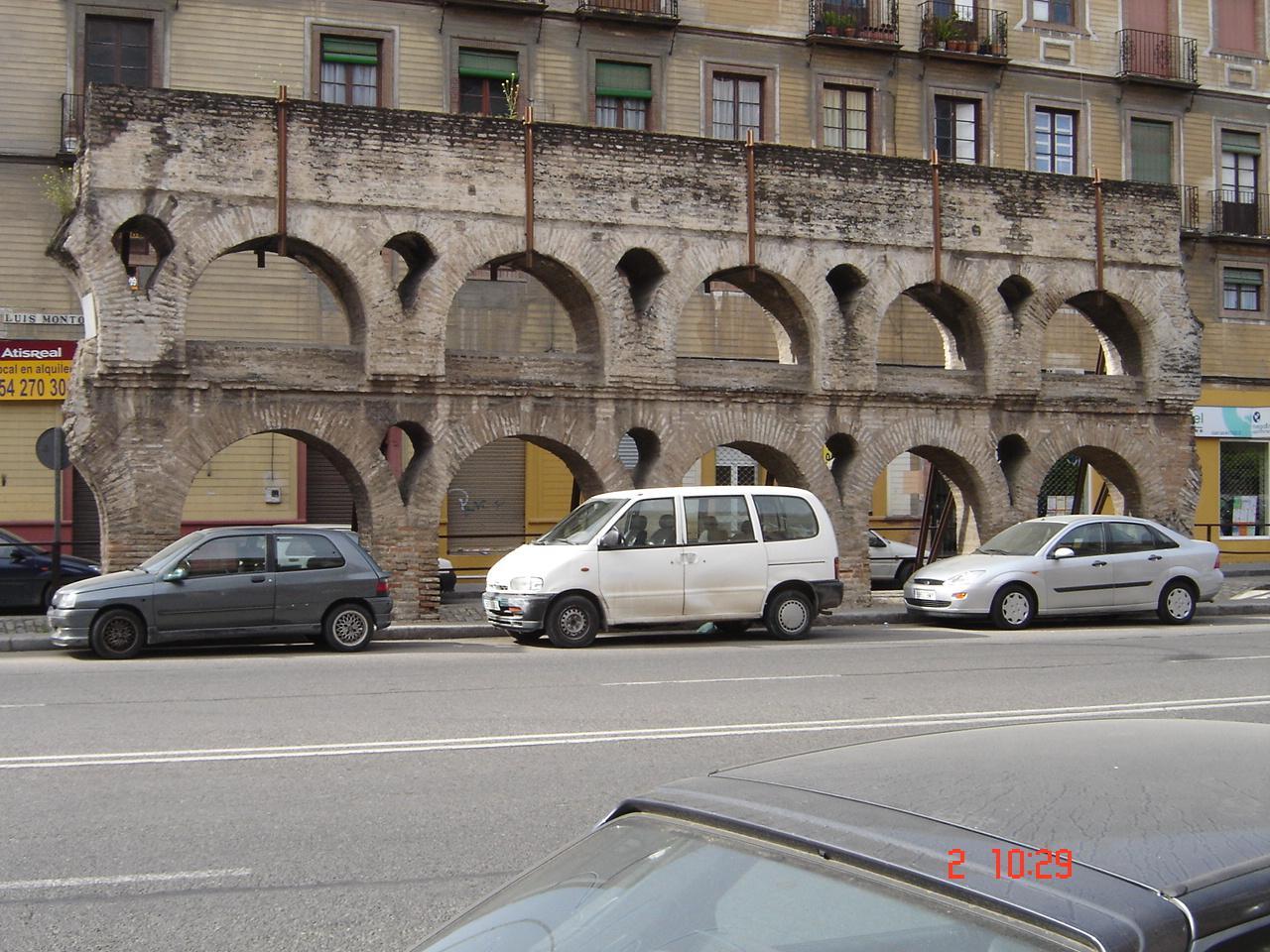
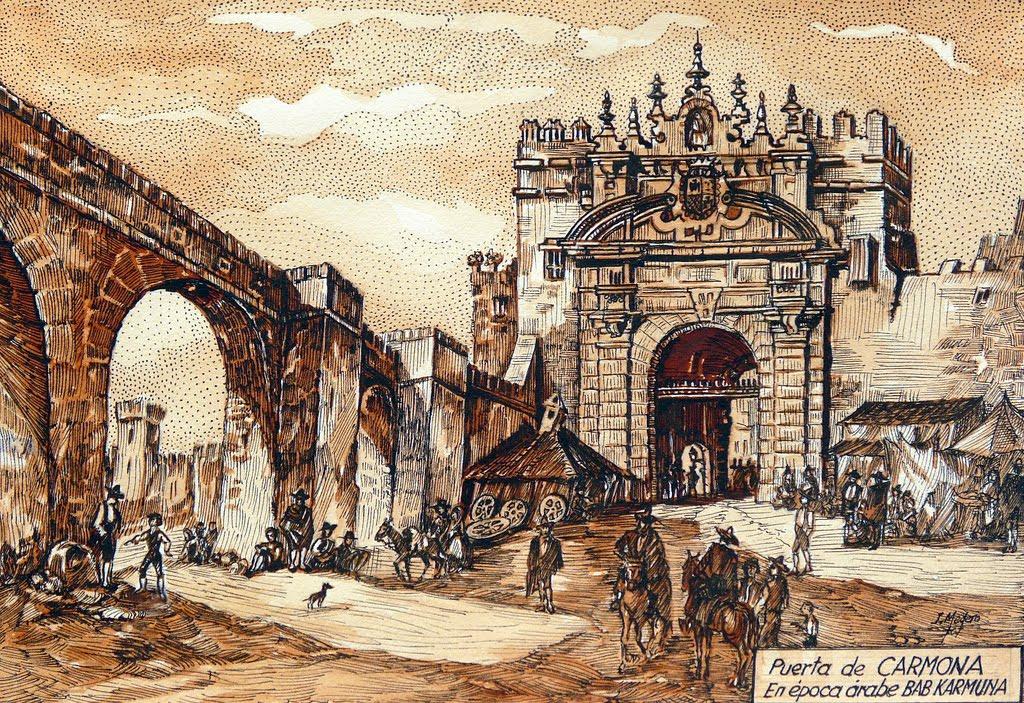
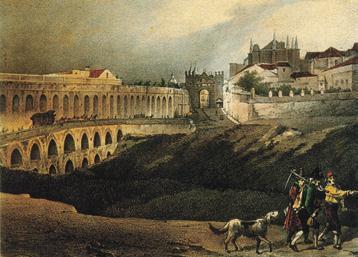
Muralla-Acueducto marks the surviving sections of the Caños de Carmona, a Roman waterway visible in Seville, Spain. Brick arches rise beside modern streets. Built in the first century before Christ, the aqueduct carried spring water from Alcalá de Guadaíra to ancient Hispalis. Much of its course ran underground through brick or rock-cut tunnels. Near the former Puerta de Carmona, a cistern distributed water to fountains, baths, gardens, and institutions.
The system remained active until the early twentieth century, after supplying Seville for more than two millennia. The Almohads rebuilt parts of it in the twelfth century. Later repairs and extensions followed changing urban needs, while flour mills also used its water power. Demolition began in 1912, after officials dismissed its artistic and archaeological value. Surviving stretches escaped complete removal, including sections on Calle Cigüeña and Calle Luis Montoto. One section emerged from a dismantled railway bridge in 1991, revealing a niche for the Virgin of las Madejas. Today, a ceramic reproduction from 1993 occupies that niche.
- City
- Seville
- Content updated
Take this page with you
The myTuur app is free, and once you are standing at a spot its story starts by itself.


Spots like this one are the stops myTuur strings into tours through Seville. In the app, each story begins where you stand: walk up to a spot and it starts, read it on screen or listen as you go, then follow the route to the next one.
What is myTuur?
myTuur is a free city-guide app. Its tours are built from spots, and each spot carries a story that starts when you get there, to read or to listen to as you like.