Weinstadel
The Weinstadel is a medieval half-timbered building beside the Pegnitz River in Nuremberg’s old town. Its architecture combines timber framing with a riverside setting.
Built between 1446 and 1448, the Weinstadel first served as a leprosarium during Easter. People with leprosy received shelter, food, clothing, and medical care within its walls.
Around 1571, the building became a wine warehouse, giving Weinstadel its name. Later, it housed a workhouse, a spinnery, and impoverished families.
Second World War bombing damaged the structure, while its historic exterior survived. The building later became a student residence for the University of Erlangen-Nuremberg.
Its rust-brown and white timber frame stretches 48 metres along the Pegnitz. Hangman’s Bridge and golden weeping willows add visible detail beside the façade.
The Weinstadel stands near a former city wall and a fortified bridge across the river. Its changing uses connect medieval care, wine storage, industry, housing, and university life.
The site is recorded as wheelchair accessible and remains a notable architectural landmark in Nuremberg. Its long façade gives the riverfront a distinctive historic presence.
- City
- Nuremberg
- Content updated
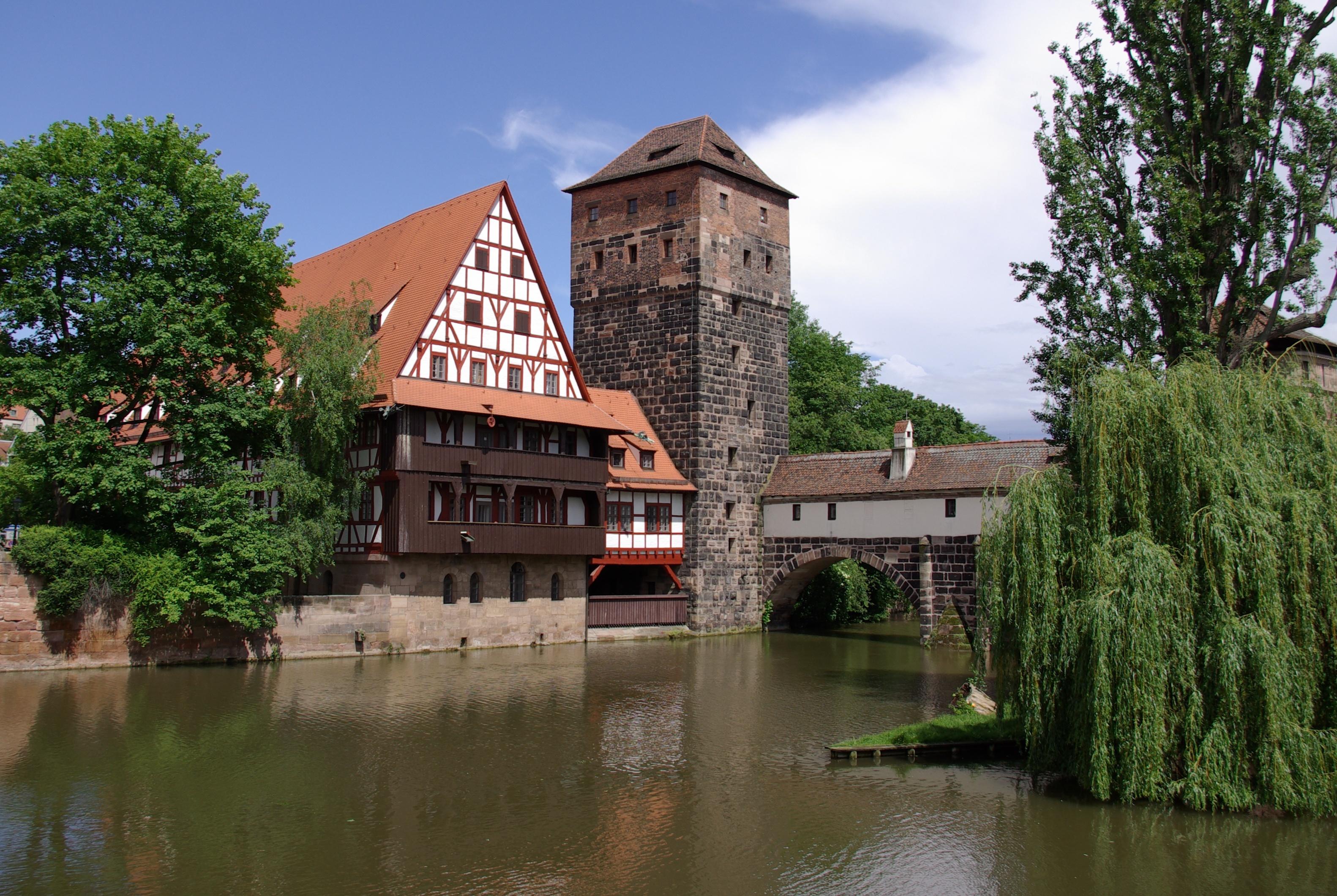
Image: JanericloebePublic domain 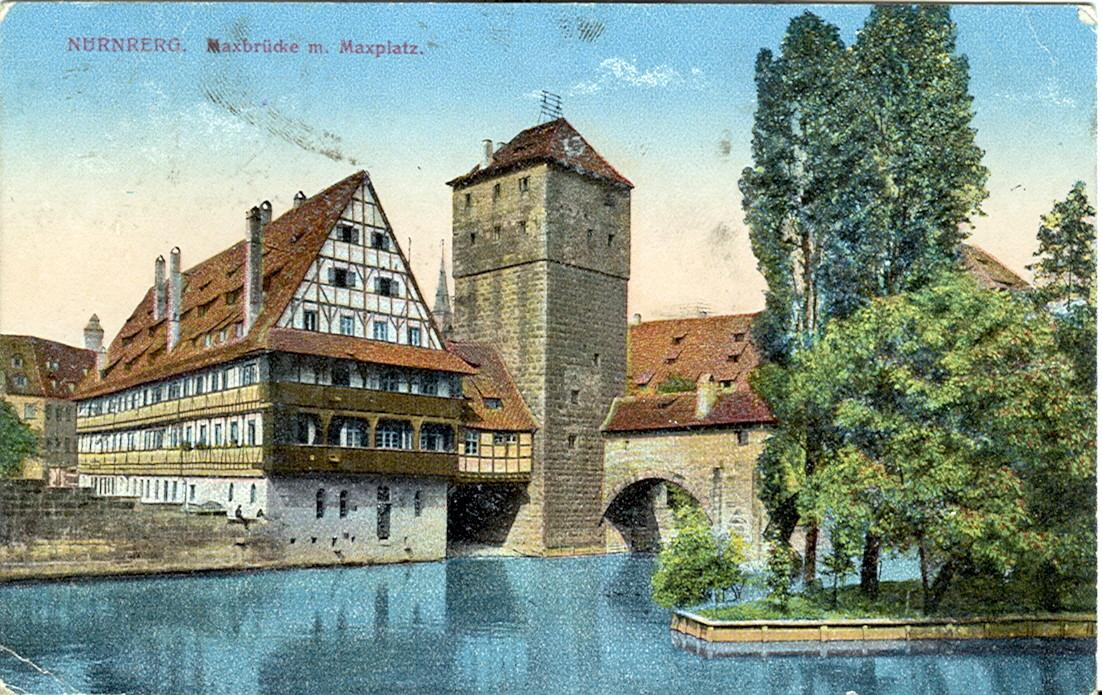
Image: AnonymousUnknown authorPublic domain 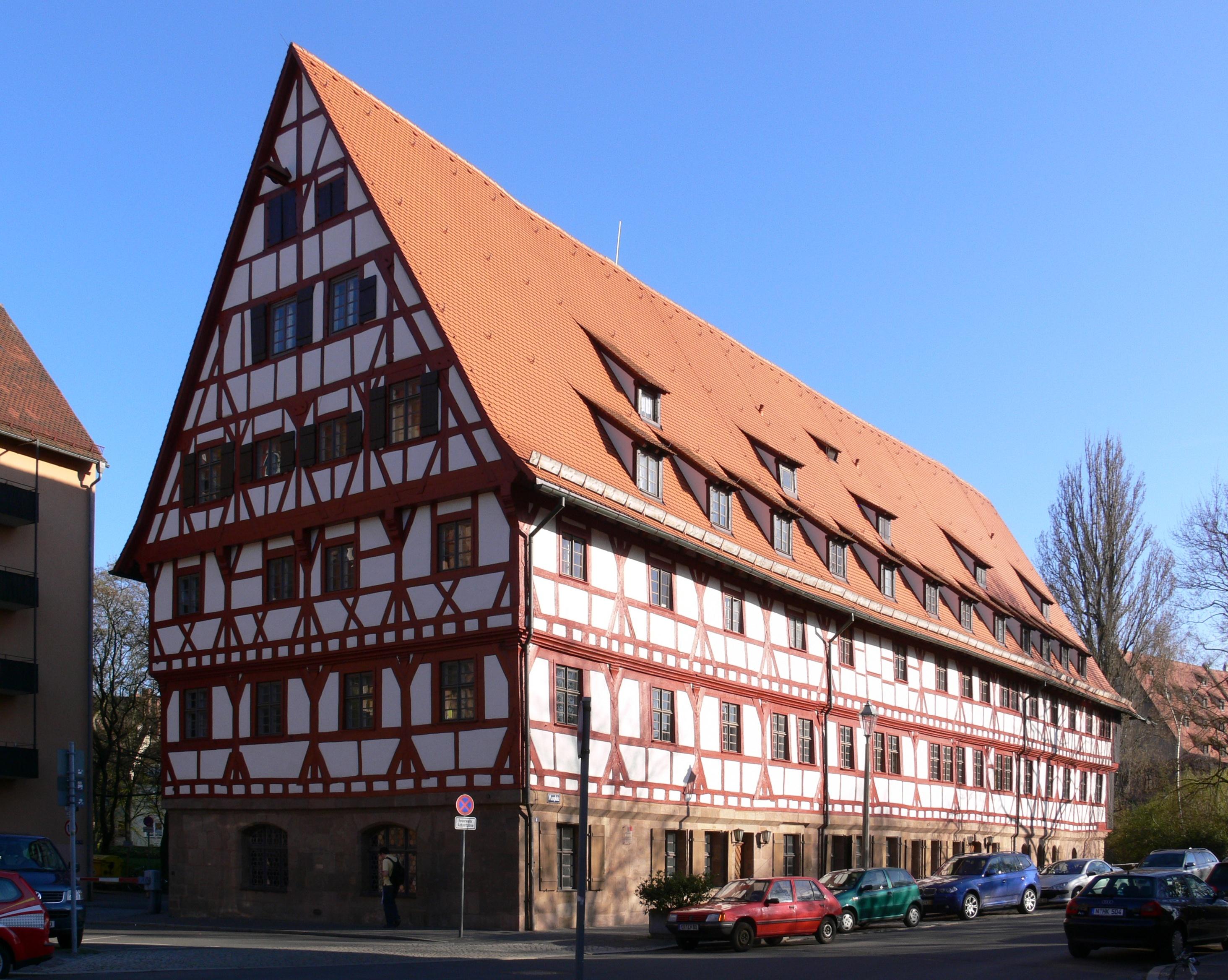
Image: Photo: Andreas PraefckeCC BY 3.0
Take this page with you
The myTuur app is free, and once you are standing at a spot its story starts by itself.


Spots like this one are the stops myTuur strings into tours through Nuremberg. In the app, each story begins where you stand: walk up to a spot and it starts, read it on screen or listen as you go, then follow the route to the next one.
What is myTuur?
myTuur is a free city-guide app. Its tours are built from spots, and each spot carries a story that starts when you get there, to read or to listen to as you like.