Yacimientos de la Araña
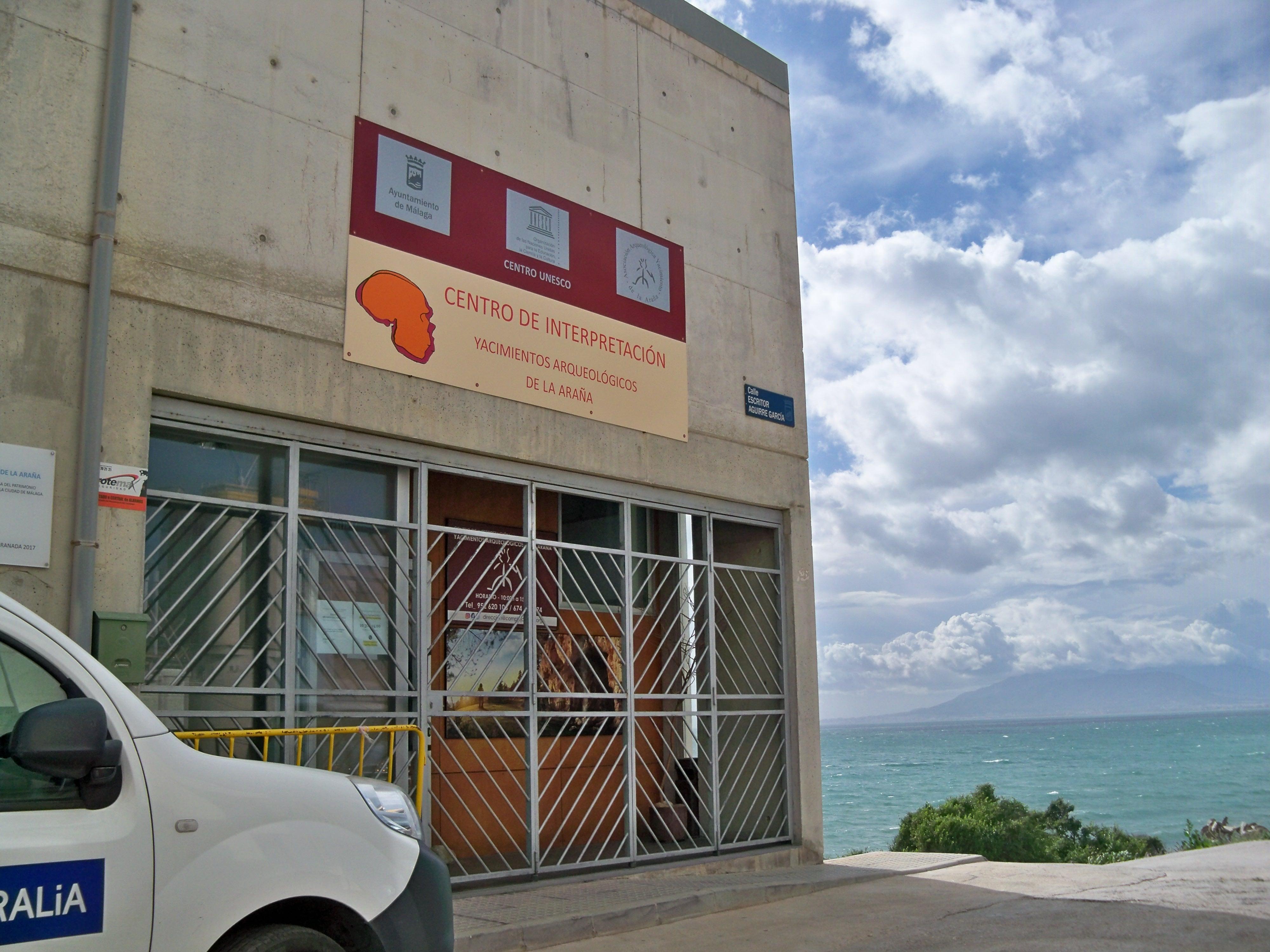
On the eastern side of Málaga's bay, in the district of La Araña, the shoreline holds a dense cluster of prehistoric sites. The Yacimientos de la Araña ranks among the largest concentrations of Upper Pleistocene sites along the Andalusian coast. Pre-Neanderthals, Neanderthals, Cro-Magnons and later Neolithic and Chalcolithic communities all left their remains here.
The Parque Prehistórico de Málaga, an open-air museum, owes its existence to the city's bid to become European Capital of Culture. It brings together seven archaeological sites and a visitor centre that regularly welcomes school groups from Málaga. The first phase concentrates on the Middle Paleolithic and the Neanderthals, featuring Abrigos 1, 2 and 3 alongside the Cueva del Humo. A second phase extends the circuit to Abrigos 6 and 7, dedicated to Recent Prehistory. The Raja del Caballo, or Abrigo 4, pairs Mousterian tools with evidence of Solutrean occupation. The Cueva del Humo has yielded scrapers and burins linked to Magdalenian groups.
The Cueva Navarro IV and its neighbouring caves sit in carbonate rock that forms a karstic aquifer. The complex is protected as a Site of Cultural Interest. Paleokarst fillings, a mix of marine and continental deposits, preserve finds from the Upper Pleistocene to the Early Holocene. Its Solutrean art echoes the Cueva de Nerja, further along the same coast. The best of it waits in a central room where red and black motifs cover the walls.
- City
- Malaga
- Content updated
Take this page with you
The myTuur app is free, and once you are standing at a spot its story starts by itself.


Spots like this one are the stops myTuur strings into tours through Malaga. In the app, each story begins where you stand: walk up to a spot and it starts, read it on screen or listen as you go, then follow the route to the next one.
What is myTuur?
myTuur is a free city-guide app. Its tours are built from spots, and each spot carries a story that starts when you get there, to read or to listen to as you like.