Plaça de Sant Jaume
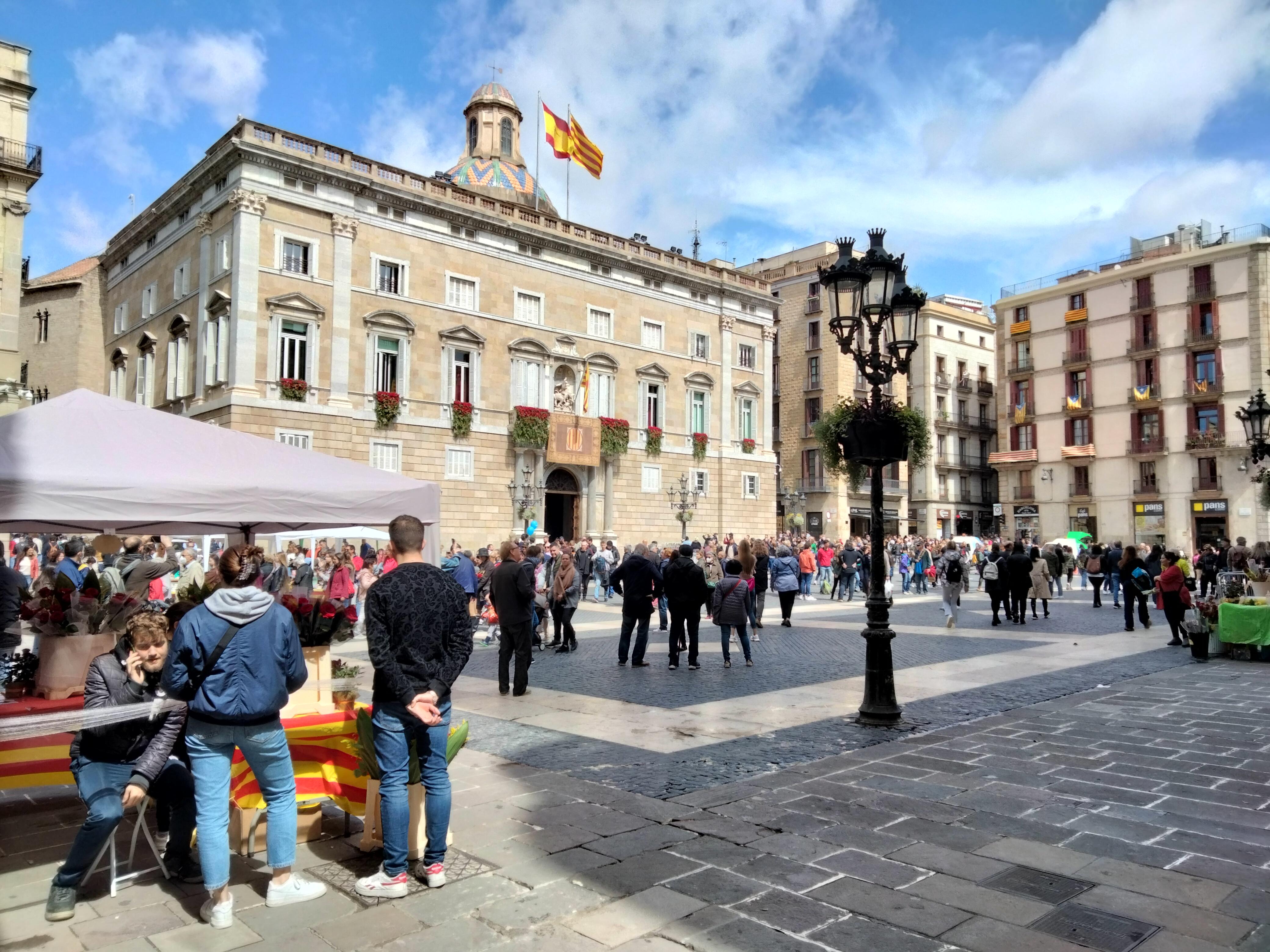
Plaça de Sant Jaume stands in Barcelona’s Old City, between the Palace of the Generalitat and City Hall. Together, these buildings form the administrative centre for Barcelona and Catalonia. The square occupies the crossing of Barcino’s Roman cardo and decumanus, now represented by several surrounding streets. Four columns from the Temple of Augustus remain nearby on Paradís Street.
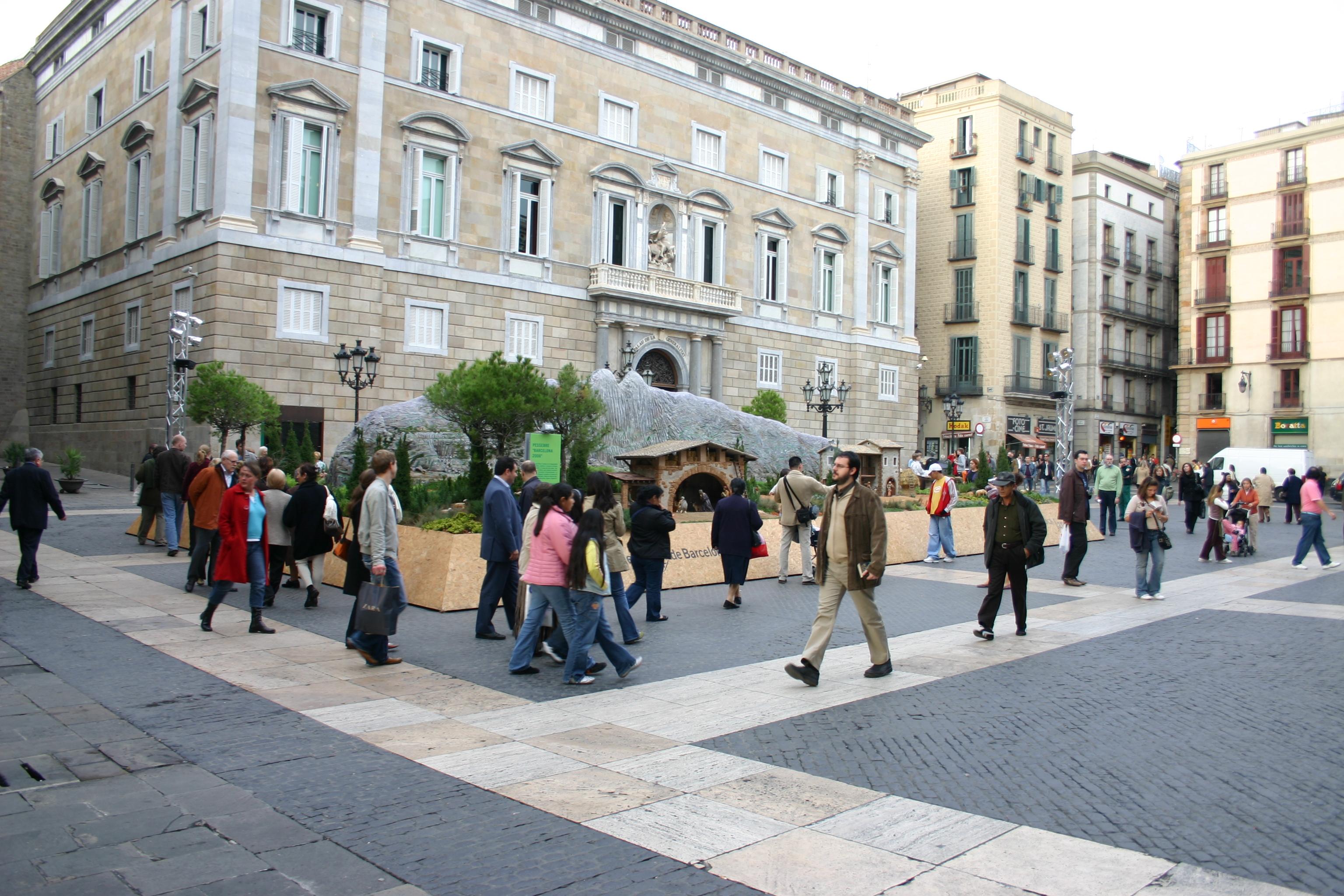
The name recalls the church of Sant Jaume, which stood here until its demolition made way for Ferran Street. That earlier space was narrower, bordered by a cemetery and public buildings. The Generalitat combines Gothic side facades with a Renaissance front inspired by Rome’s Palazzo Farnese. Its Golden Chamber and Orange Tree Courtyard preserve Renaissance features. Casa Gran retains a Gothic facade on Carrer de la Ciutat, while its main facade follows a neoclassical design. A medieval entrance nearby carries an Archangel Raphael statue.
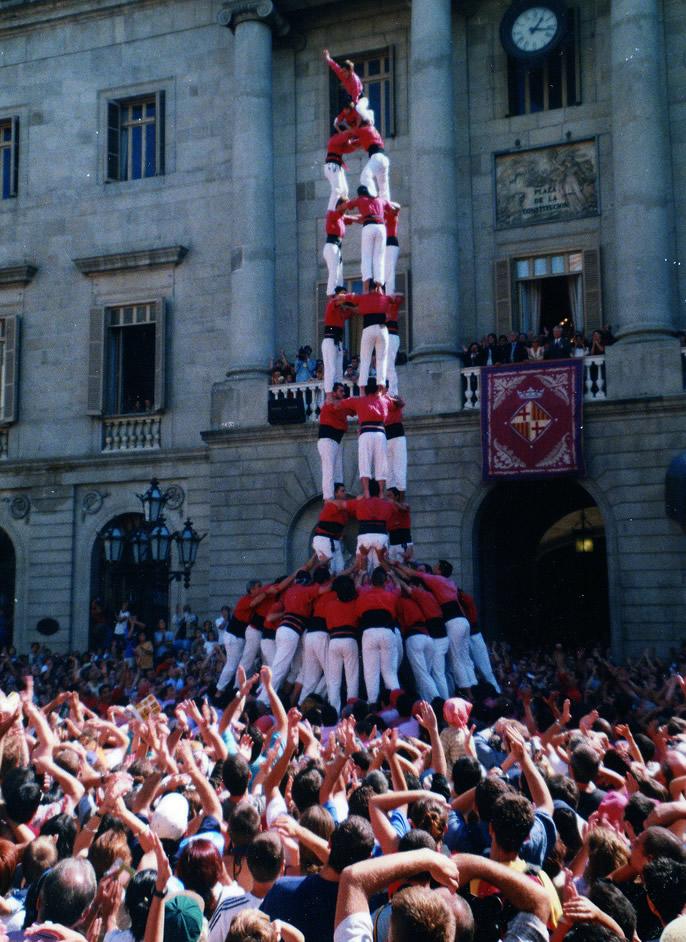
Public life brings demonstrations, newlyweds, concerts, and human towers called castells into the same setting. The Mercè and Santa Eulàlia festivals add concerts, castells, and a Christmas nativity scene. Two political announcements also mark its history: the Republic and Tarradellas’s return from exile. The cathedral, La Rambla, Boqueria Market, and Born neighbourhood lie within a short walk. Four Roman columns on Paradís Street keep Barcino’s forum present beside today’s civic buildings.
- City
- Barcelona
- Content updated
Take this page with you
The myTuur app is free, and once you are standing at a spot its story starts by itself.


Spots like this one are the stops myTuur strings into tours through Barcelona. In the app, each story begins where you stand: walk up to a spot and it starts, read it on screen or listen as you go, then follow the route to the next one.
What is myTuur?
myTuur is a free city-guide app. Its tours are built from spots, and each spot carries a story that starts when you get there, to read or to listen to as you like.