Sint-Annakapel
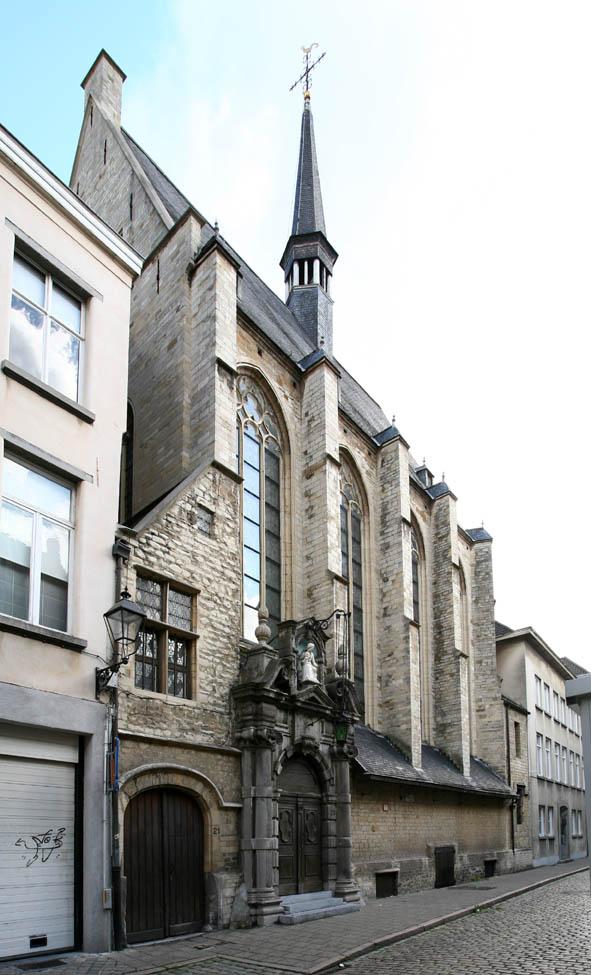
Sint-Annakapel, also known as the Keizerskapel, is a small chapel in Antwerp with early sixteenth-century origins. The Droogscheerdersgilde built it between 1513 and 1514.
Its history includes Lutheran worship from 1578 to 1585 and parish use by Sint-Willibrordus from 1625 to 1648. The chapel closed in 1794, then returned to religious services around 1800.
Sandstone walls, a blue natural-stone portal, and a hexagonal roof turret define its exterior form. Late Gothic star vaults shape the ceiling. A marble floor, a Baroque portal from 1681, and seventeenth-century furnishings record later changes inside. The chapel’s main altar dates from 1653.
The interior includes a pulpit from 1689 to 1691, confessionals from 1657 to 1658, and choir stalls from 1790. Henri Mondt-Groenewout built the organ in 1864. Wooden saints attributed to Jan Van den Cruys date from 1638 to 1649. Figures of John the Baptist and Peter date around 1680.
A Saint Liborius reliquary from the eighteenth century and later artworks extend the chapel’s artistic record. Exhibitions have featured historical maps and scientific instruments from the early seventeenth century.
- City
- Antwerp
- Content updated
Take this page with you
The myTuur app is free, and once you are standing at a spot its story starts by itself.


Spots like this one are the stops myTuur strings into tours through Antwerp. In the app, each story begins where you stand: walk up to a spot and it starts, read it on screen or listen as you go, then follow the route to the next one.
What is myTuur?
myTuur is a free city-guide app. Its tours are built from spots, and each spot carries a story that starts when you get there, to read or to listen to as you like.