Palazzo Giusti
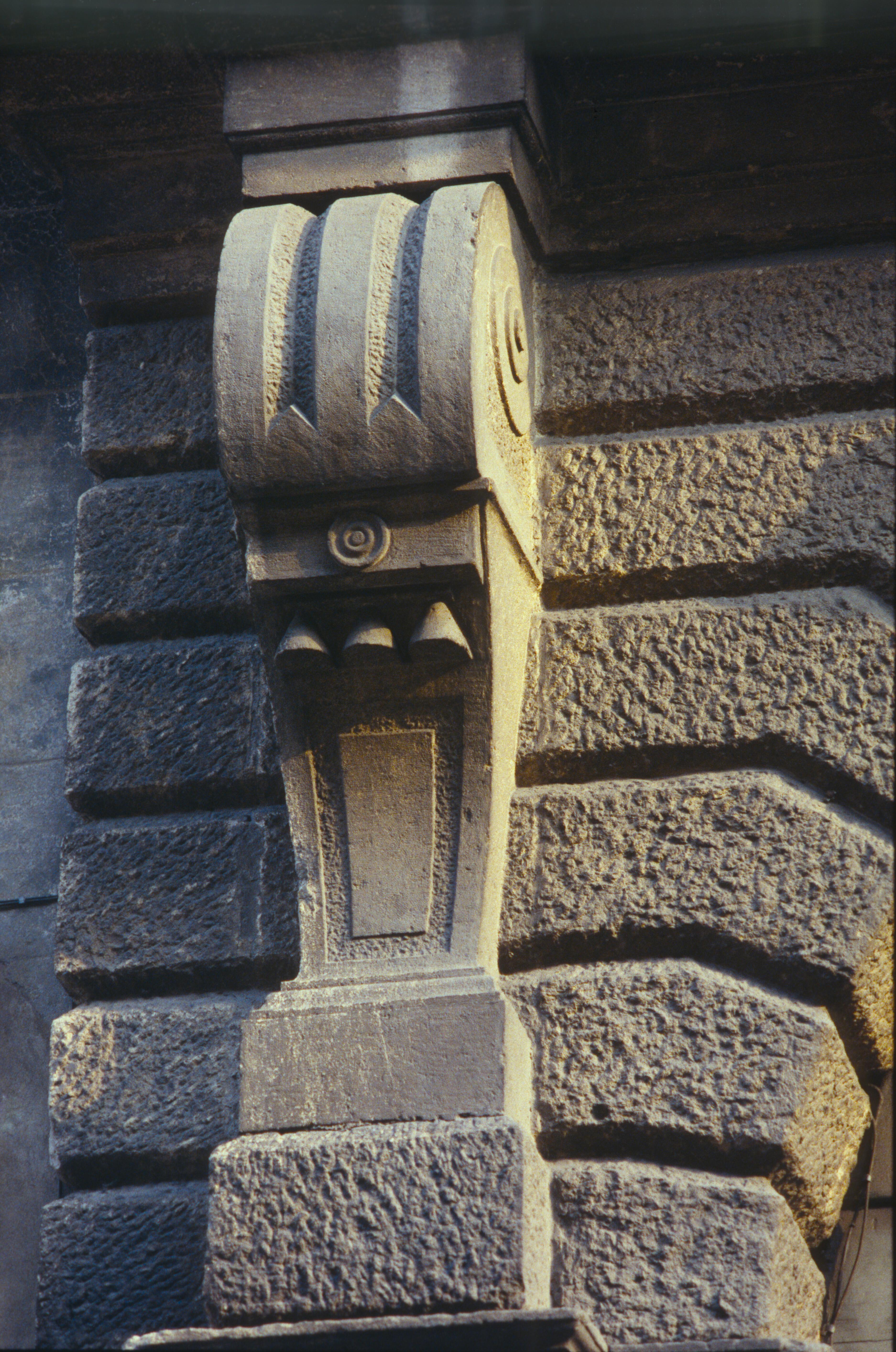
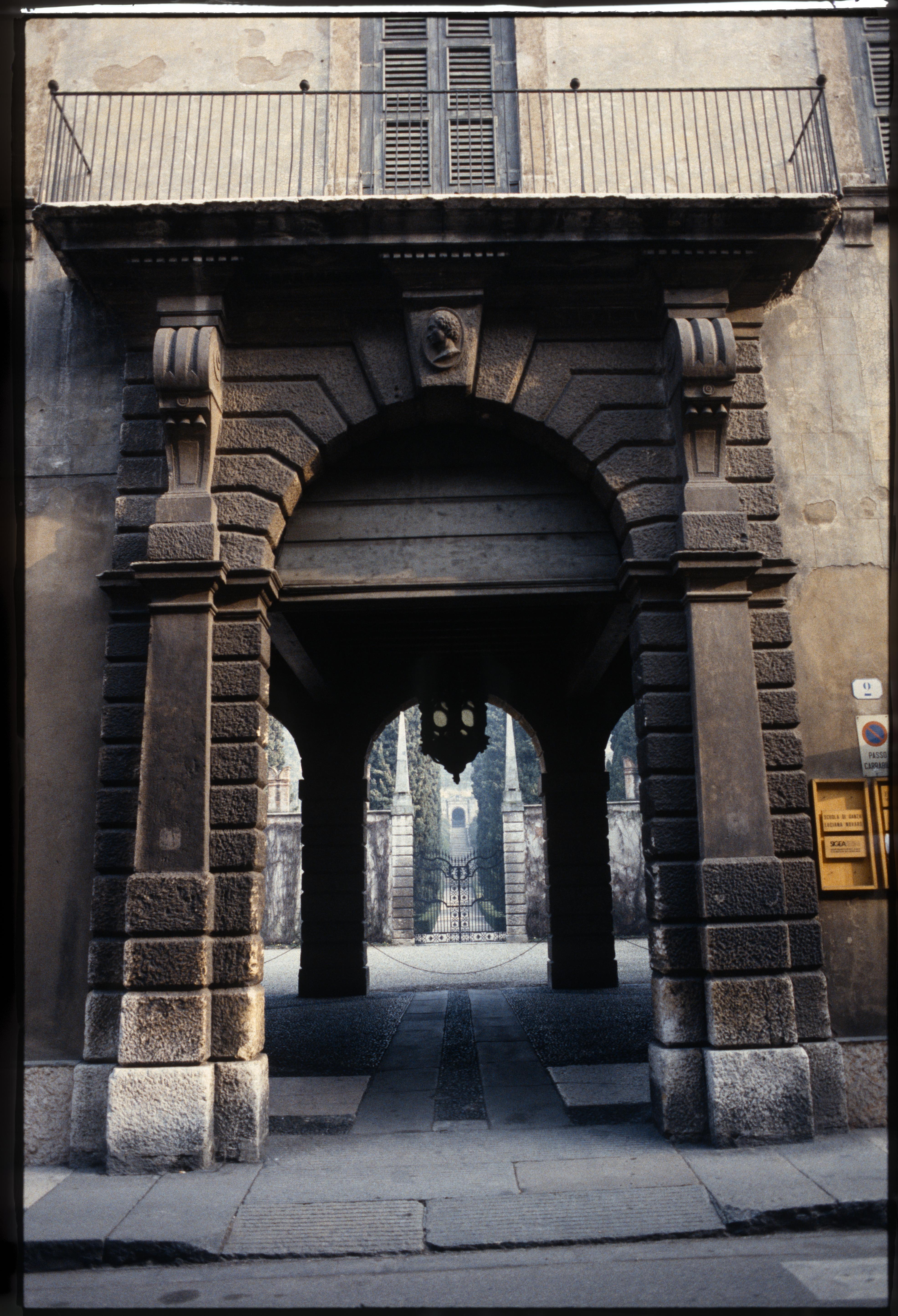
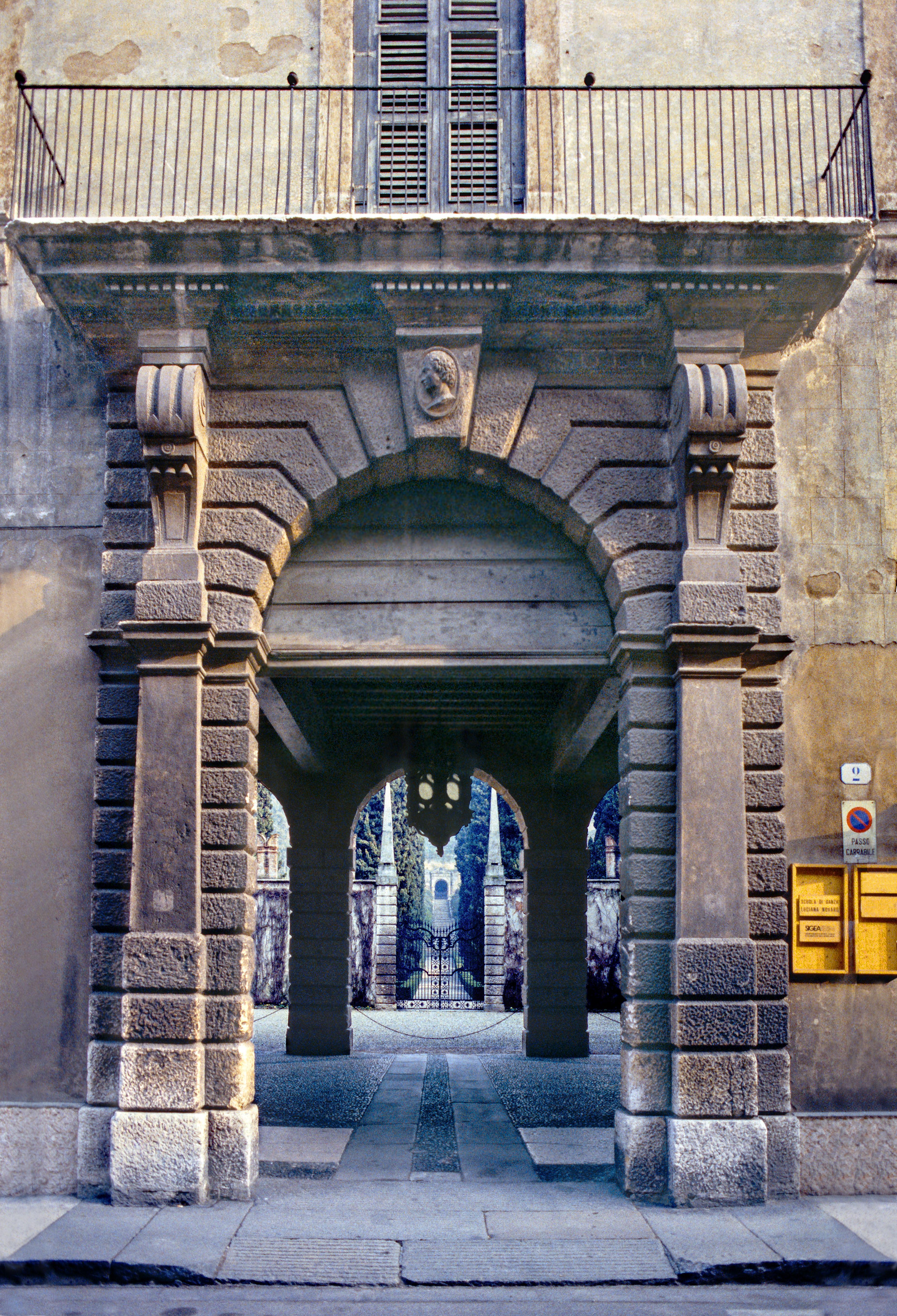
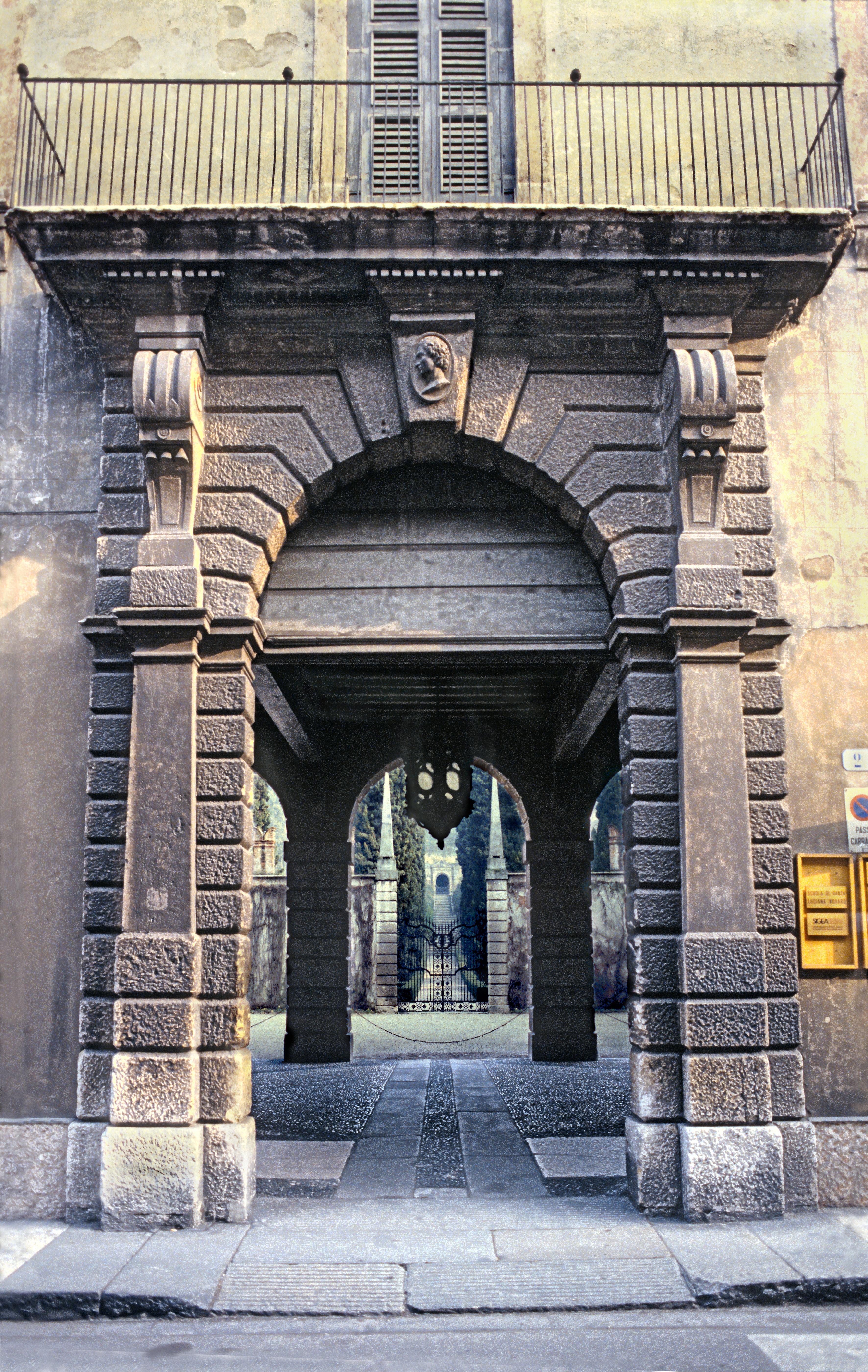
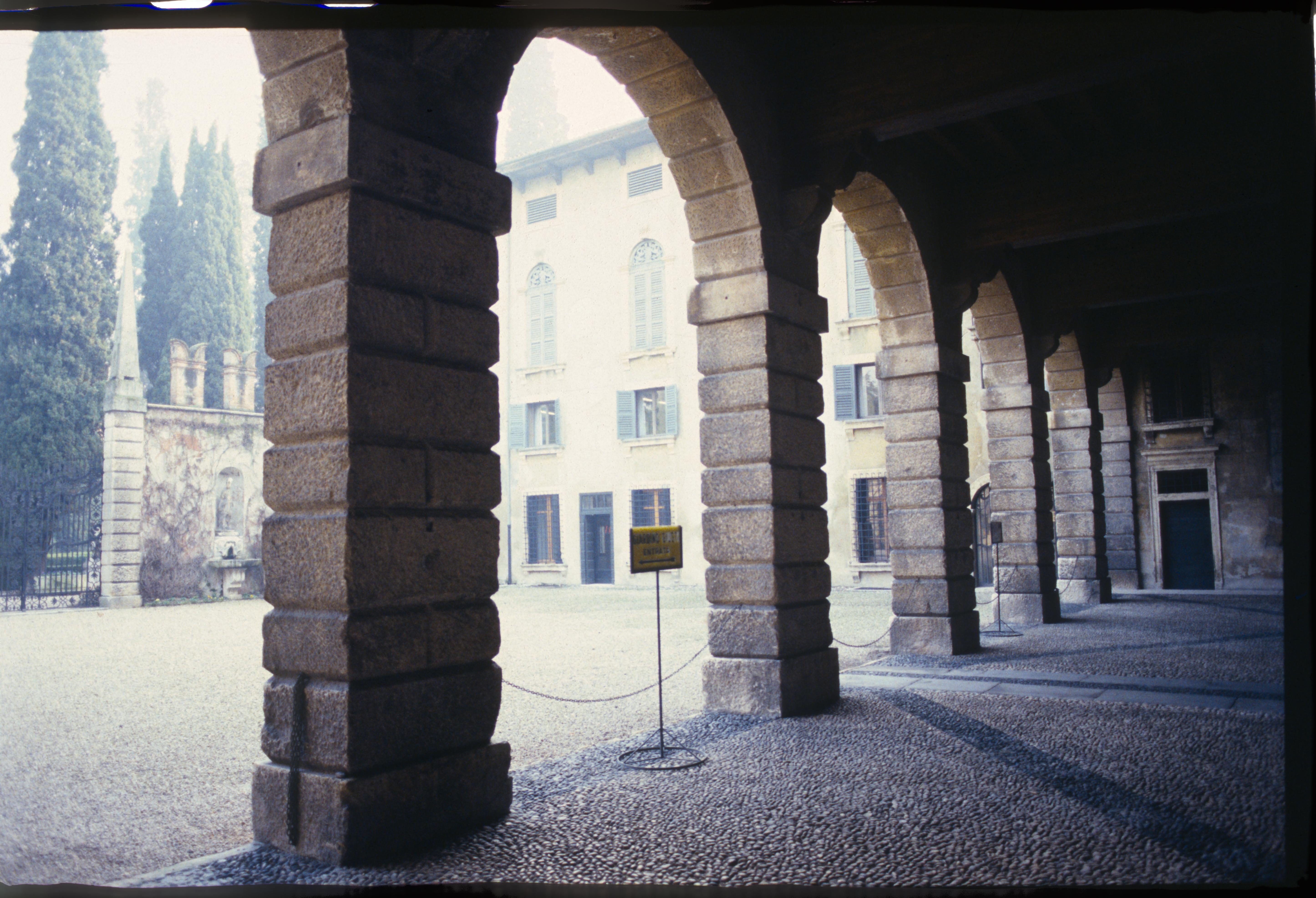
Palazzo Giusti is a sixteenth-century palace in Verona, built by the Giusti family after its move from Tuscany. Its L-shaped structure has a mezzanine, a principal floor, and service rooms above. A broad entrance, tuff windows, and a stone portal bearing the family coat of arms shape the facade. The main floor contains two apartments and a reception hall.
Behind the palace, Giusti Garden unfolds as a Renaissance park inspired by Tuscan models and divided by a cypress avenue. Symmetrical flowerbeds, box hedges, mythological statues, and fountains fill the formal Italian side. A wooded slope climbs toward a cliff, where five caves and a masked entrance create a theatrical route. A hidden staircase reaches the belvedere and upper garden, with views across Verona. The maze began in the sixteenth century and was redesigned by Luigi Trezza in 1786.
Inside, Louis Dorigny's 1721 frescoed ceilings preserve the setting of the Giusti family's former antiquities and paintings collection. Francesco Lorenzi painted the palace's Aurora Room. A storm in 2020 destroyed the six-hundred-year-old Goethe cypress, later placing the garden among Europe's most endangered heritage sites. Goethe, Mozart, and other visitors encountered the cypress avenue that Goethe described in Journey to Italy.
- City
- Verona
- Content updated
Take this page with you
The myTuur app is free, and once you are standing at a spot its story starts by itself.


Spots like this one are the stops myTuur strings into tours through Verona. In the app, each story begins where you stand: walk up to a spot and it starts, read it on screen or listen as you go, then follow the route to the next one.
What is myTuur?
myTuur is a free city-guide app. Its tours are built from spots, and each spot carries a story that starts when you get there, to read or to listen to as you like.