Setas de Sevilla
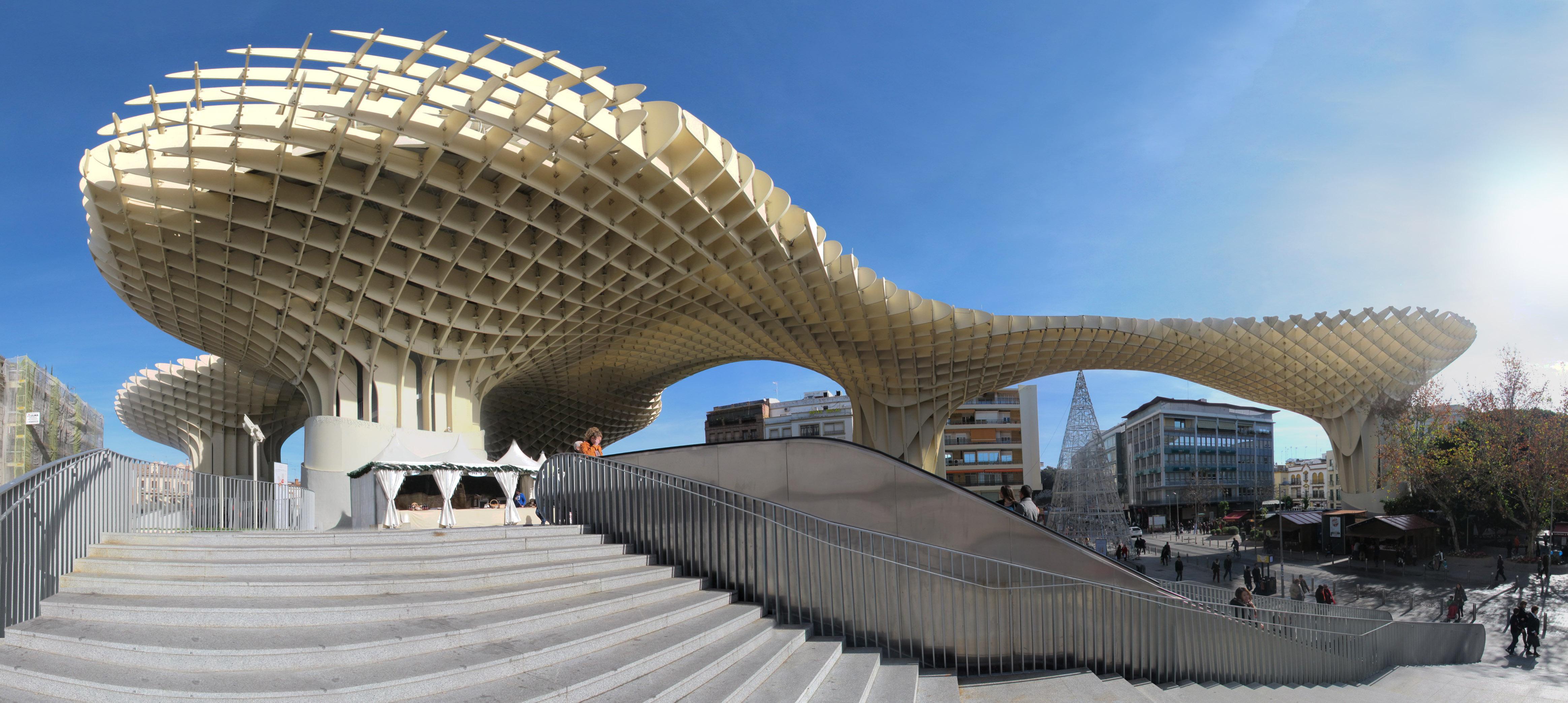
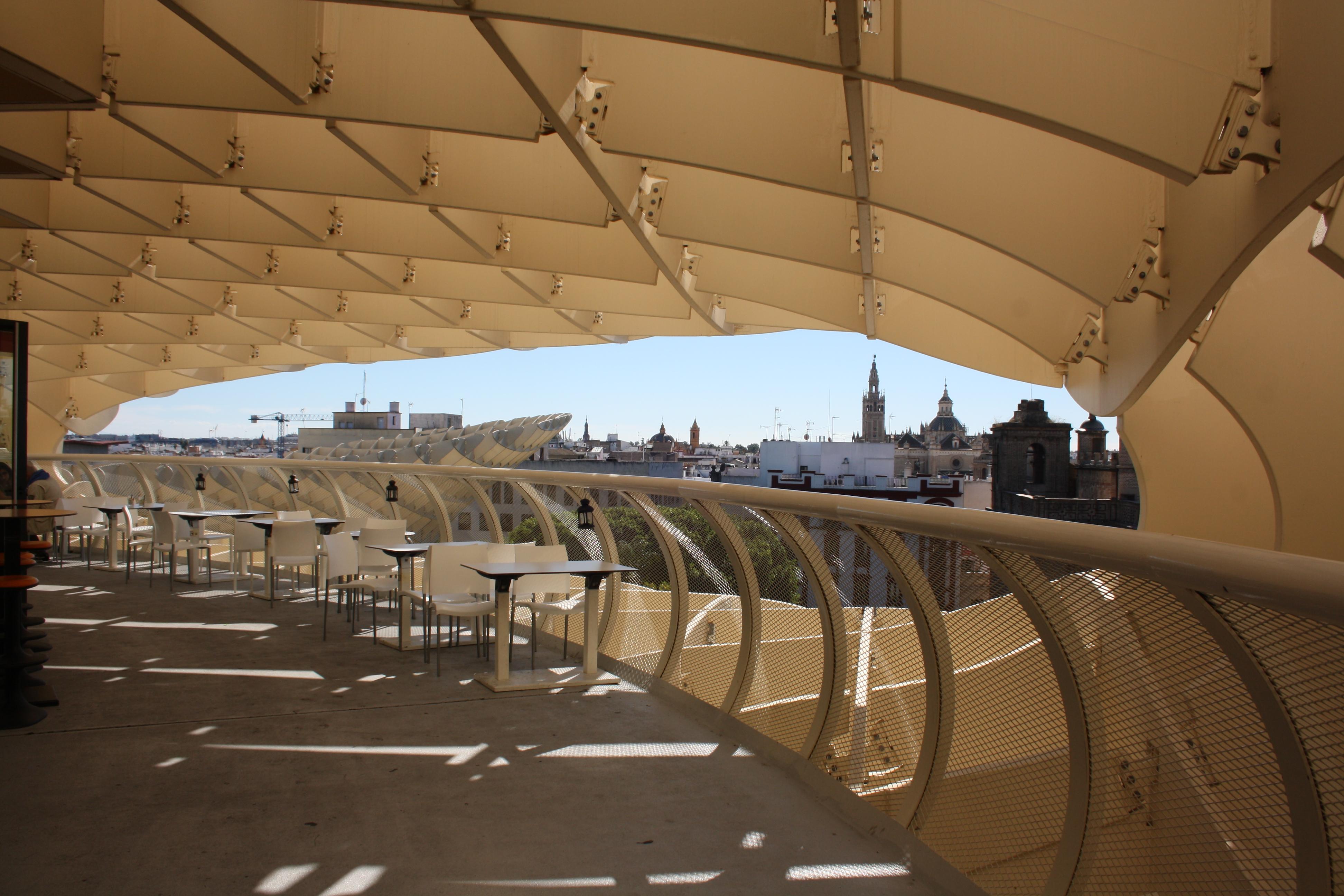
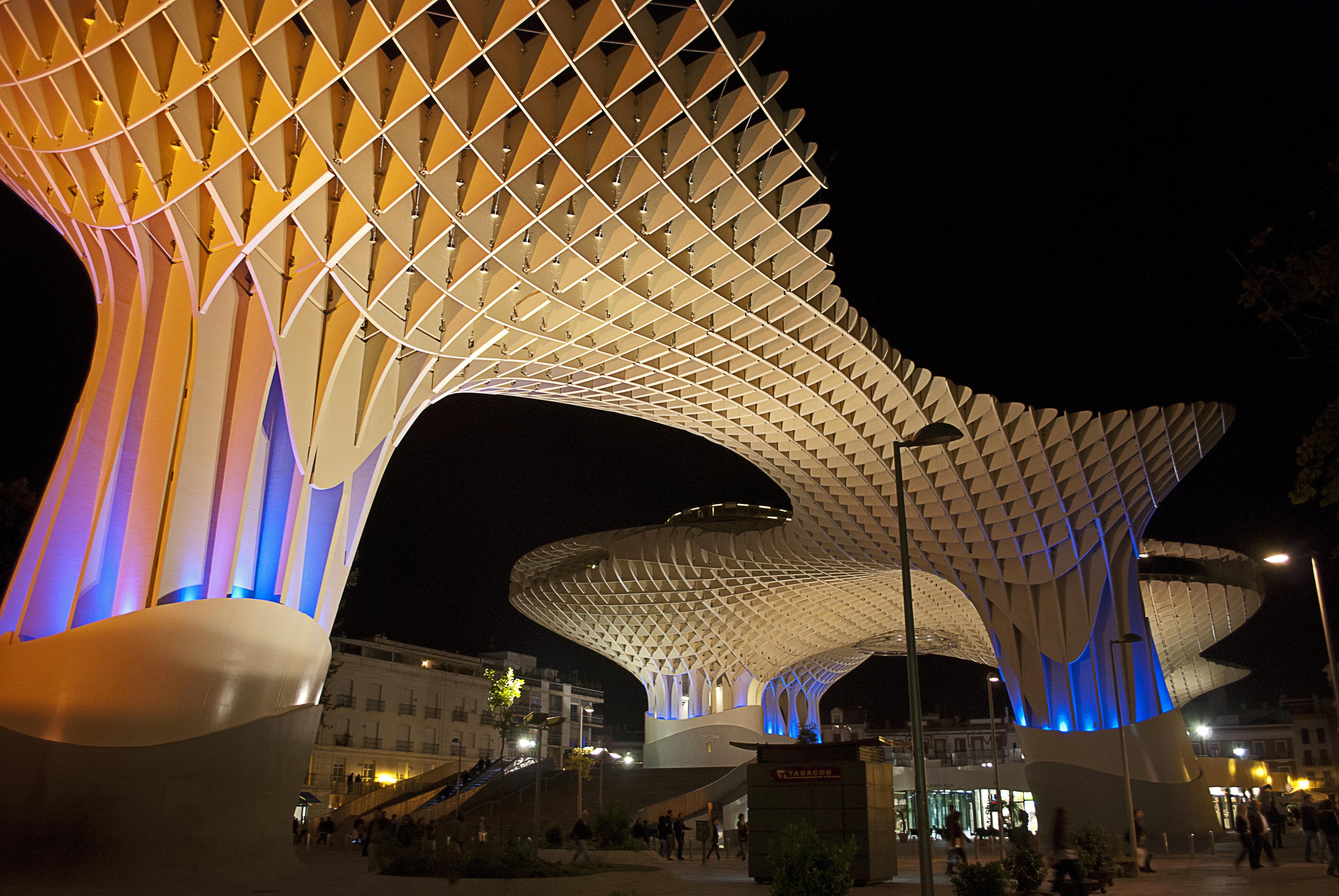
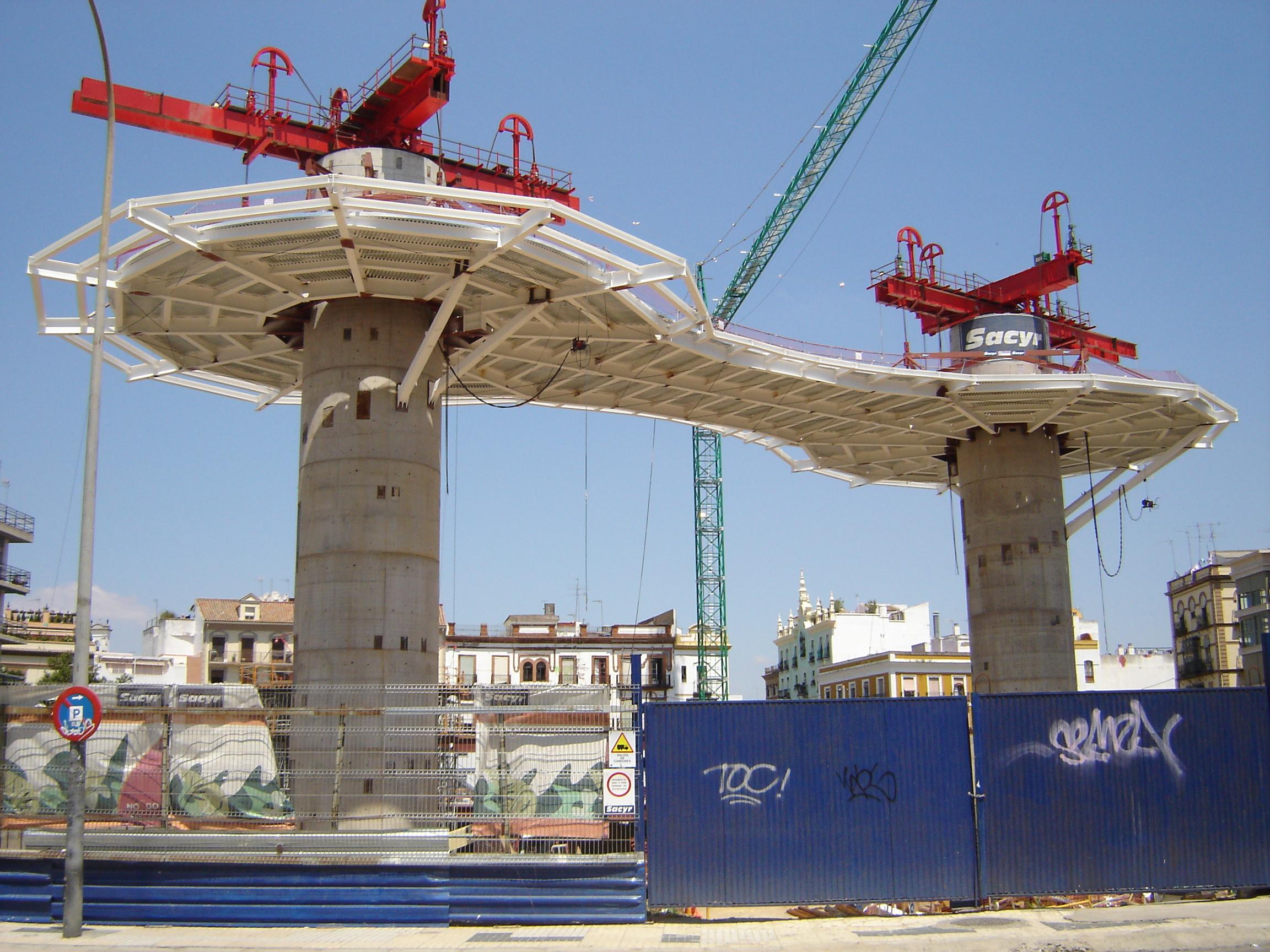
Setas de Sevilla rises in Seville as a large wooden landmark designed by German architect Jürgen Mayer. Six mushroom-shaped parasols give the structure its familiar local name. The micro-laminated Finnish pine framework measures about 150 metres long, 70 metres wide, and 26 metres high. Its form draws on cathedral vaults and ficus trees. Four levels combine an archaeological museum, a market, a public plaza, restaurants, and panoramic terraces above Seville’s old city. The Antiquarium museum lies about five metres underground. It displays Roman mosaics, first-century houses, and remains from the Moorish and Islamic periods discovered during construction. Street level holds a traditional market with local food and other goods. Above it, wooden parasols shade an open-air plaza used for events and gatherings. Higher terraces offer views across historic buildings and modern city life. The site preserves archaeological layers while providing space for shopping, eating, performances, and public gatherings. A former market occupied this area from the nineteenth century. Construction uncovered Roman and Moorish ruins, shaping the project’s combination of preservation and modern architecture. Setas de Sevilla connects Seville’s past and present through timber, archaeology, commerce, and elevated views.
- City
- Seville
- Content updated

Take this page with you
The myTuur app is free, and once you are standing at a spot its story starts by itself.


Spots like this one are the stops myTuur strings into tours through Seville. In the app, each story begins where you stand: walk up to a spot and it starts, read it on screen or listen as you go, then follow the route to the next one.
What is myTuur?
myTuur is a free city-guide app. Its tours are built from spots, and each spot carries a story that starts when you get there, to read or to listen to as you like.