Pabellón de Hungría
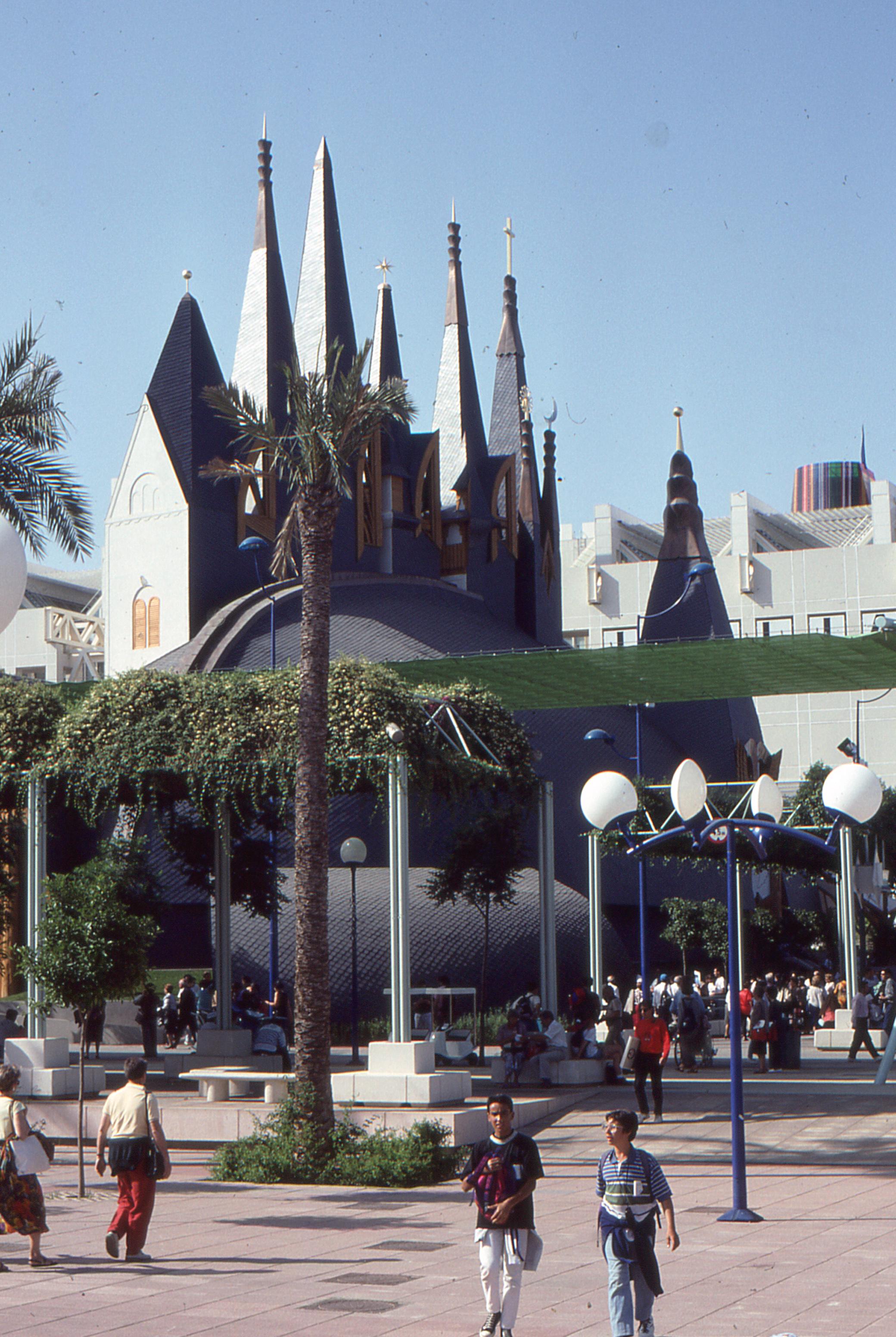
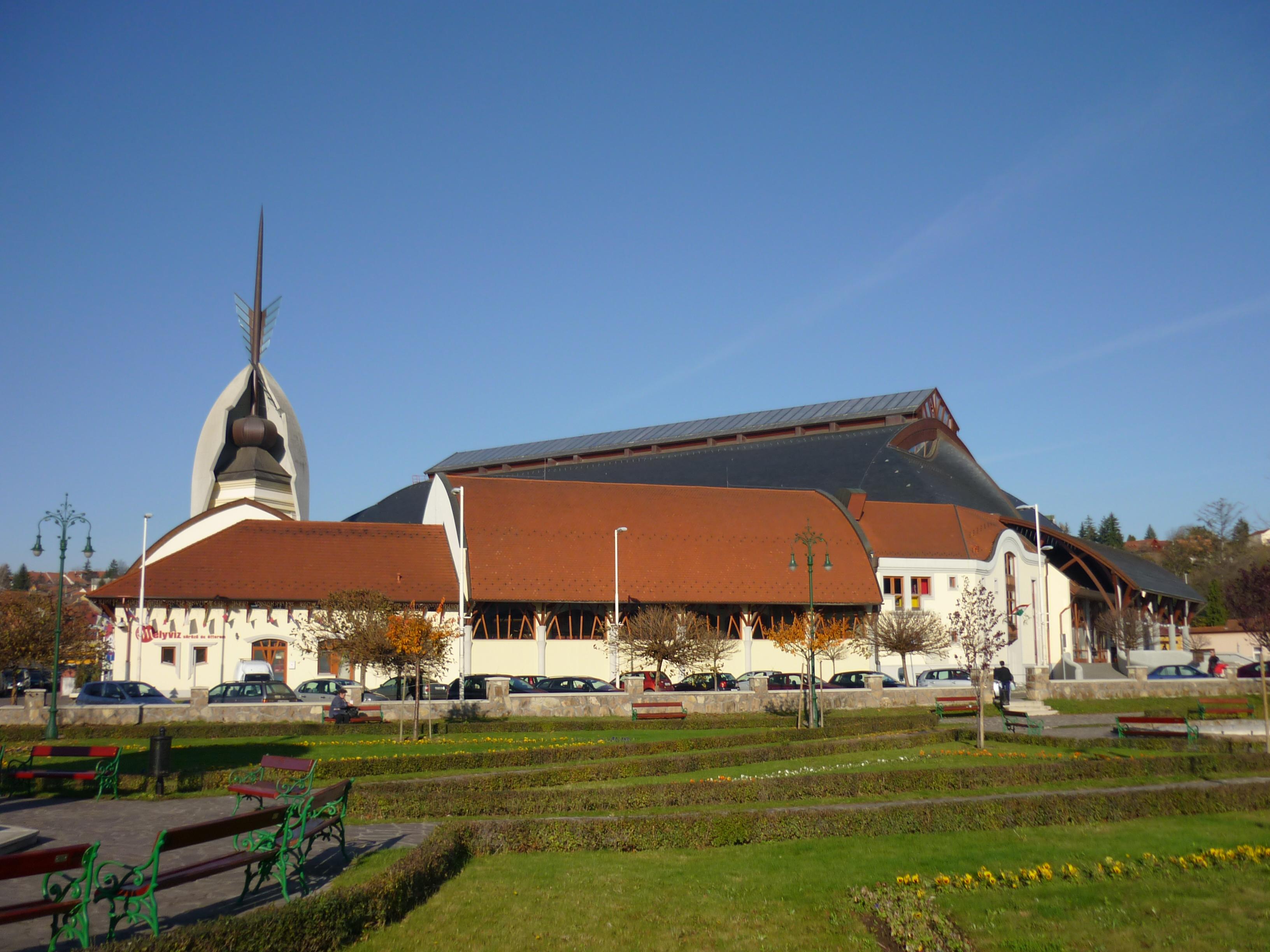
Pabellón de Hungría stands in Seville as a building created for the Universal Exposition of Seville, or Expo ’92. Imre Makovecz shaped its organic architecture around carved wooden forms and a grey slate roof. Its rising silhouette recalls Hungarian village churches without copying one particular model.
Inside, two sections present Hungary facing west and east through contrasting architectural languages. A simplified Baroque church front leads towards undulating Slavic-style façades, carved portals and further slate surfaces. This movement between western and eastern references reflects Hungary’s geographical and cultural position in Europe. Makovecz’s design also connects folk traditions with a critique of uniform, system-built architecture.
The western side contains a tree of life made from tangled roots and branches. A glass floor lets you look down through the structure, where Hungarian folklore links earth, sky, growth and connection. During Expo ’92, the building presented Hungarian culture, art and innovation through this meeting of symbolism, materials and form.
- City
- Seville
- Content updated
Take this page with you
The myTuur app is free, and once you are standing at a spot its story starts by itself.


Spots like this one are the stops myTuur strings into tours through Seville. In the app, each story begins where you stand: walk up to a spot and it starts, read it on screen or listen as you go, then follow the route to the next one.
What is myTuur?
myTuur is a free city-guide app. Its tours are built from spots, and each spot carries a story that starts when you get there, to read or to listen to as you like.