Villa Borghese Gardens
Villa Borghese in Italy unfolds as a designed landscape of broad avenues, ancient trees, lawns, ordered gardens and small buildings. The park covers about eighty hectares. Its paths connect quiet garden rooms with museums, historic façades and open spaces, creating the sense of a separate world within the landscape.
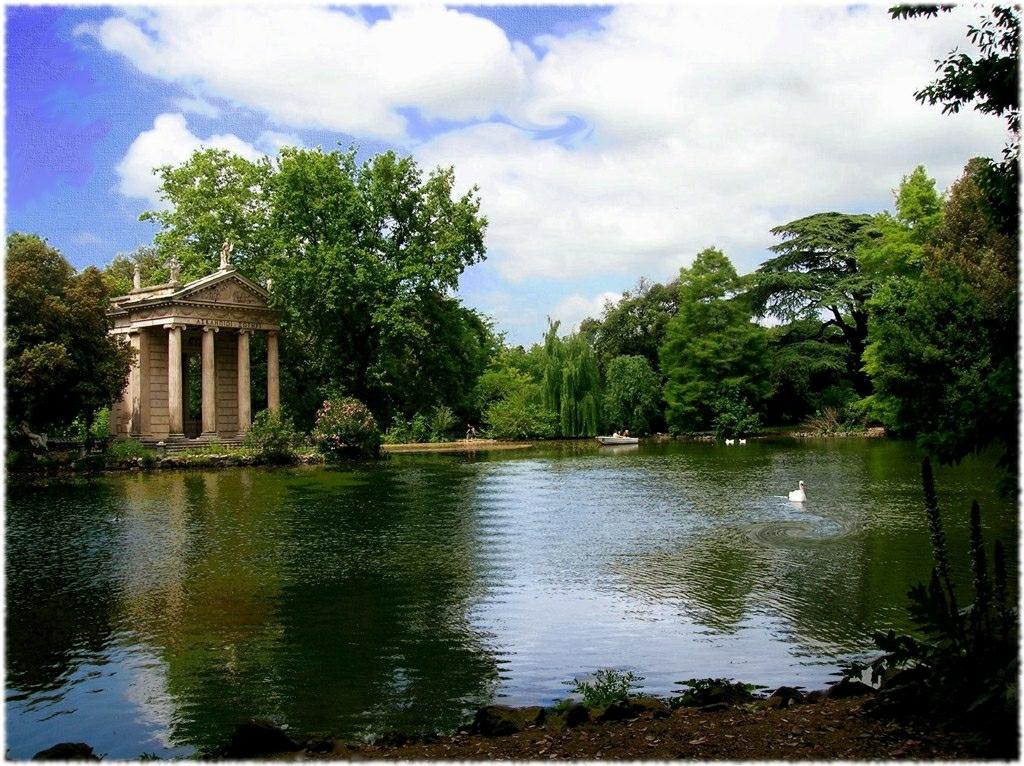
The story began in 1600, when Cardinal Scipione Borghese united several vineyards into a residence with gardens, artworks and hunting grounds. Flaminio Ponzio designed the Villa Pinciana. Giovanni Vasanzio continued the work after Ponzio’s death. The Casino Nobile became the home of the cardinal’s collection, now displayed in the Galleria Borghese with works by Raphael, Titian, Caravaggio, Bernini and Canova. The original grounds joined the formal pars urbana with the more natural pars rustica. In the eighteenth century, Antonio and Mario Asprucci reshaped the garden around an artificial lake and its island temple dedicated to Aesculapius.
Later additions keep that history visible among the trees. The seventeenth-century Uccelliera carries Borghese eagles and dragons on its façade. The former orangery houses the Carlo Bilotti Museum, while the Pietro Canonica Museum combines sculpture with the artist’s private home. A lake, a museum or a historic façade can appear at the end of any avenue.
- City
- Rome
- Content updated
Take this page with you
The myTuur app is free, and once you are standing at a spot its story starts by itself.


Spots like this one are the stops myTuur strings into tours through Rome. In the app, each story begins where you stand: walk up to a spot and it starts, read it on screen or listen as you go, then follow the route to the next one.
What is myTuur?
myTuur is a free city-guide app. Its tours are built from spots, and each spot carries a story that starts when you get there, to read or to listen to as you like.