Piemineklis Rūdolfam Blaumanim
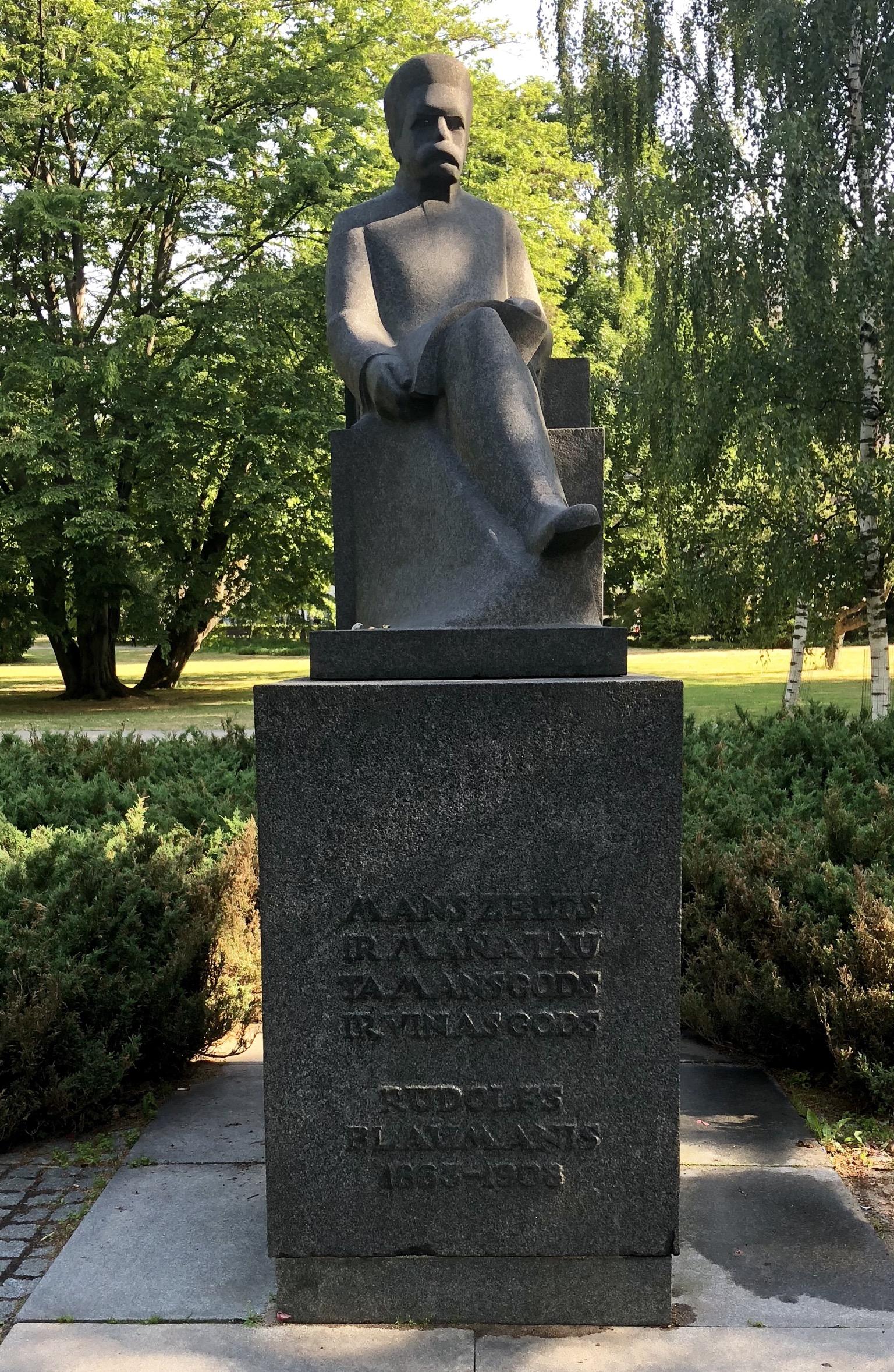
The Monument to Rūdolfs Blaumanis stands beside Riga’s city canal in Bastejkalns Park, north of the Old Town. Trees, paths, and a nearby bridge frame the granite figure as you walk through the park. Teodors Zaļkalns created the 3.2-metre sculpture in 1929, showing the Latvian writer and playwright seated on a pedestal.
The pedestal carries Blaumanis’s name, the years 1863 to 1908, and a line from his poem “Tālavas taurētājs.” Its Latvian inscription reads, “Mans zelts ir mana tauta, Mans gods ir viņas gods,” linking gold and honour with the Latvian people. The monument first stood here, moved to a square at Krišjāņa Barona and Blaumaņa streets in 1935, and returned to the park in 1948. In 2001, it moved closer to the canal bridge and the main path.
Blaumanis wrote poems, stories, plays, and satire in Latvian and German, and his realistic writing shaped Latvian literature. His first play, “Zagļi,” reached the Riga stage in 1890, while his former Braki homestead now serves as a museum. From the path, the seated granite figure connects a major literary life with the ordinary movement of Riga’s park.
- City
- Riga
- Content updated
Take this page with you
The myTuur app is free, and once you are standing at a spot its story starts by itself.


Spots like this one are the stops myTuur strings into tours through Riga. In the app, each story begins where you stand: walk up to a spot and it starts, read it on screen or listen as you go, then follow the route to the next one.
What is myTuur?
myTuur is a free city-guide app. Its tours are built from spots, and each spot carries a story that starts when you get there, to read or to listen to as you like.