Orangerie
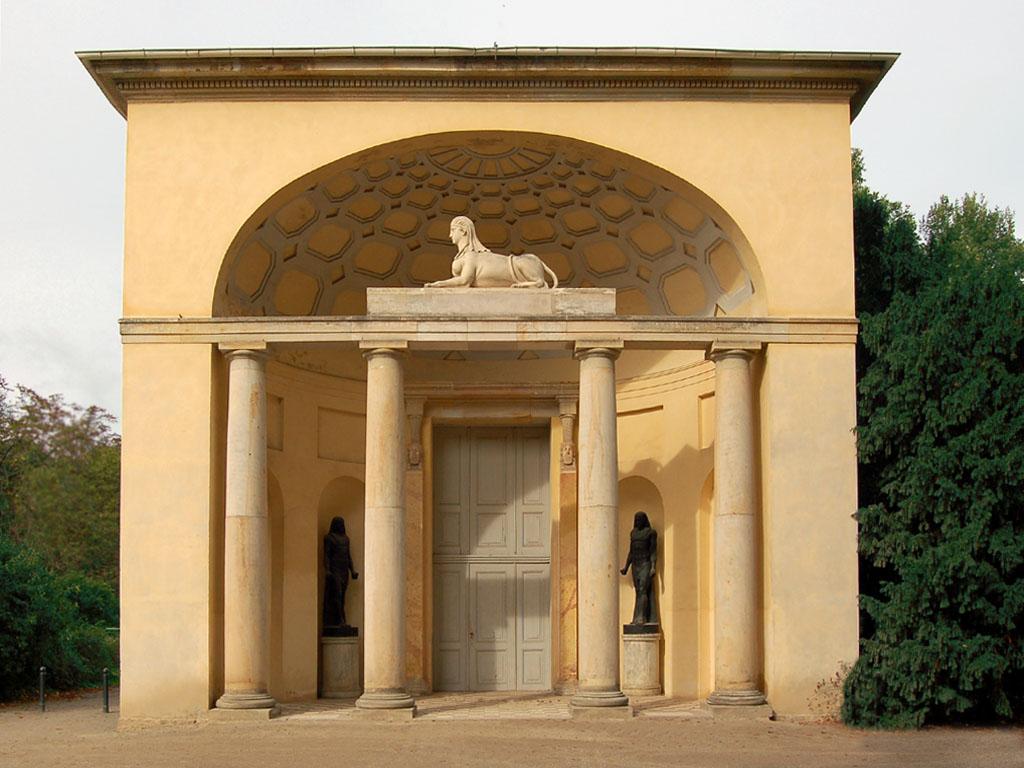
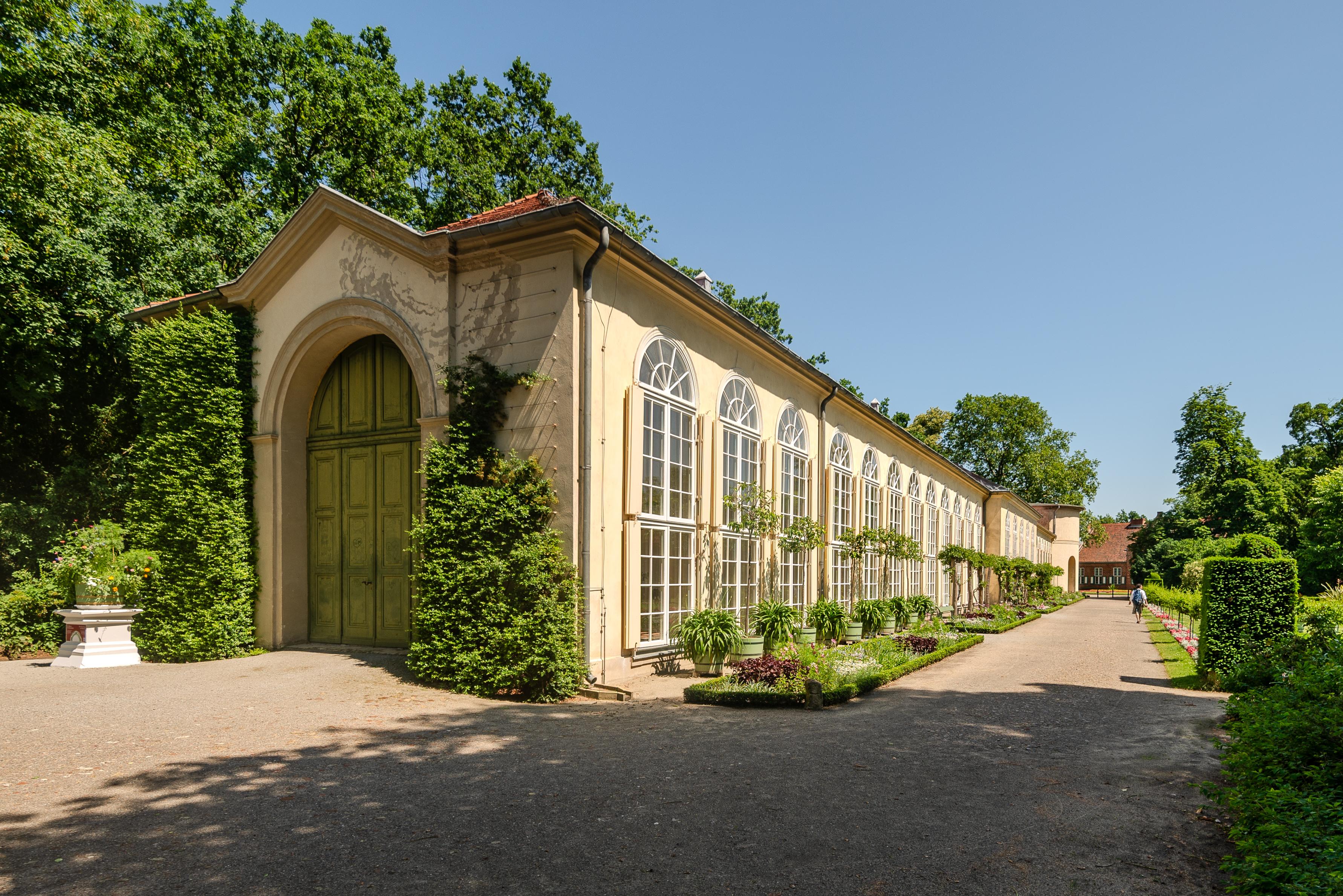
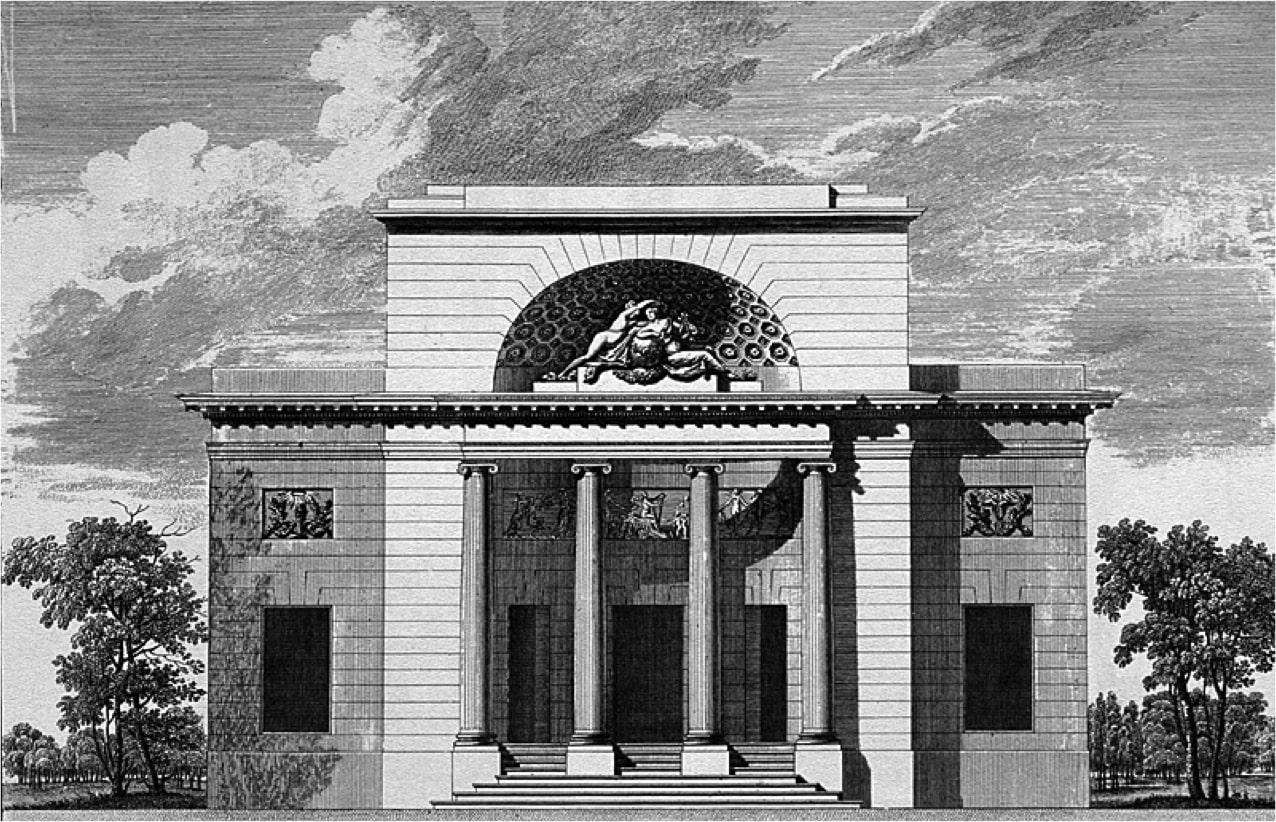
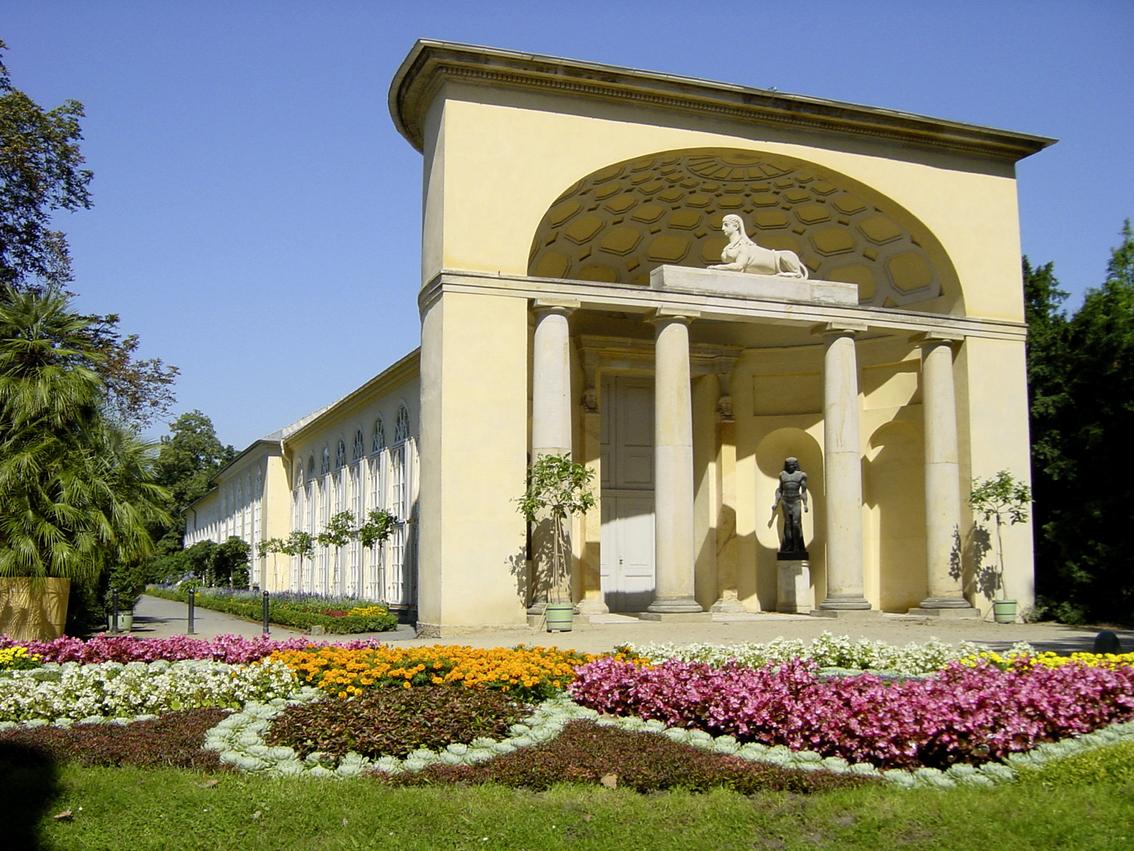
Orangerie stands in Potsdam’s Neuer Garten as an 86-metre, single-storey building designed by Carl Gotthard Langhans. Twenty-six nearly floor-to-ceiling arched windows rhythmically shape its long façade. At the eastern end, an Egyptian-style portal faces the avenue leading towards the Marble Palace, creating a clear visual focus. A western arched gate completes the exterior.
Built between 1791 and 1793, the building combines a central Palmensaal with two plant halls designed for potted plants. The Palmensaal first served as a concert hall. Naturalistic palm carvings decorate the hall, while each adjoining plant hall measures 25 metres long, six metres wide, and six metres high. Heating, porous clay tiles, ceiling vents, and openable windows protect plants from winter cold and excess moisture.
A separate warmer room accommodates ailing plants, adding a practical detail to this carefully managed botanical setting. The building later housed a theatre and opera house, then sheltered Hohenzollern orange trees until 1945. Postwar use as an officers’ casino led to deterioration. Restoration began in 1953, and full restoration in 1994 returned the spaces to their original horticultural role. Young orange trees still grow inside, linking architecture with seasonal plant care.
- City
- Potsdam
- Content updated
Take this page with you
The myTuur app is free, and once you are standing at a spot its story starts by itself.


Spots like this one are the stops myTuur strings into tours through Potsdam. In the app, each story begins where you stand: walk up to a spot and it starts, read it on screen or listen as you go, then follow the route to the next one.
What is myTuur?
myTuur is a free city-guide app. Its tours are built from spots, and each spot carries a story that starts when you get there, to read or to listen to as you like.