La Seu
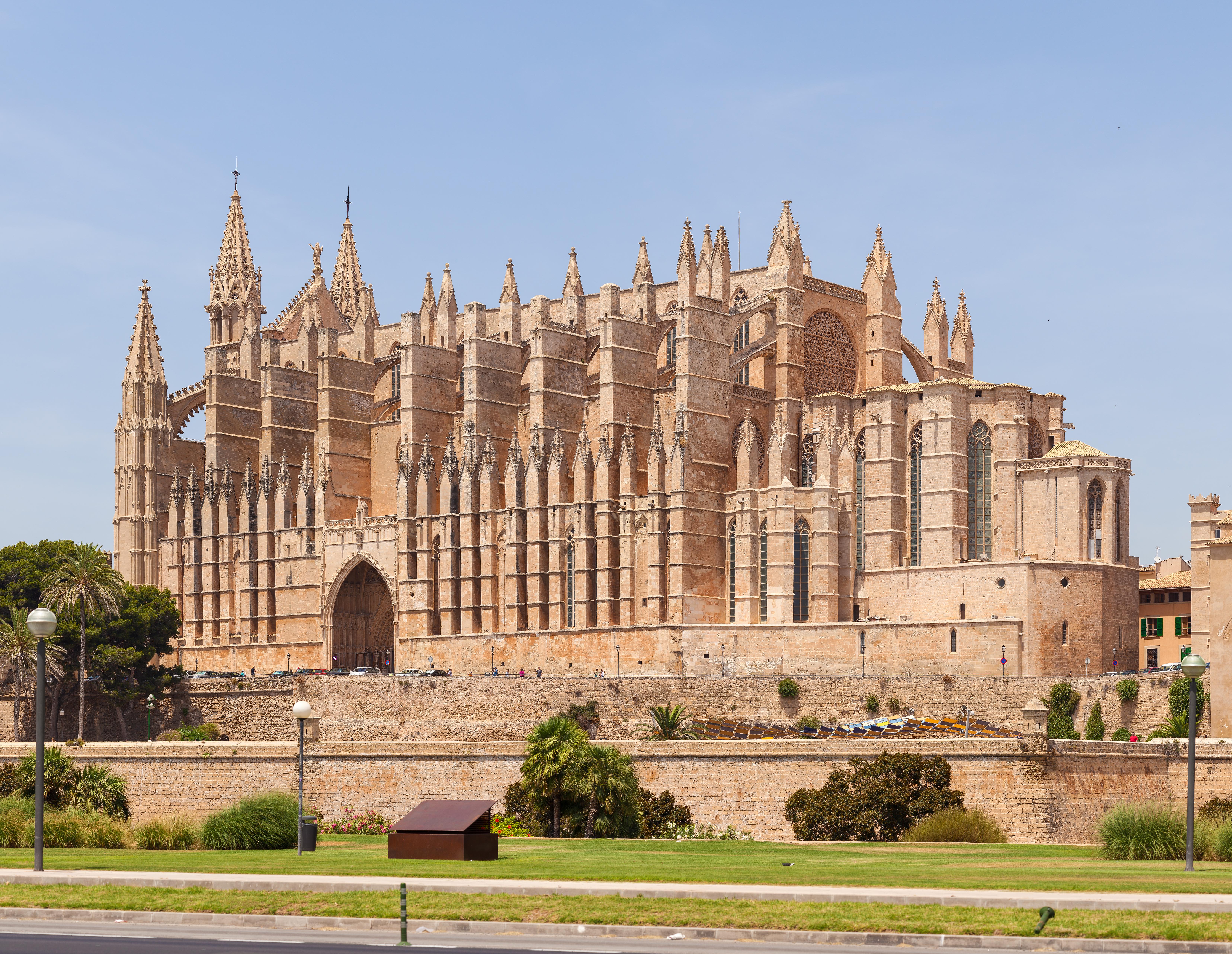
La Seu, the Cathedral of Santa Maria of Palma, stands beside the sea in Palma, Mallorca. The Royal Palace of La Almudaina and the Episcopal Palace stand beside its soaring Gothic walls. Flying buttresses, pinnacles, and three stacked levels shape the view from the port and much of the city.
Construction began after King James I conquered Mallorca in 1229, replacing a mosque on this site. The Chapel of the Holy Trinity, completed in 1327, became a burial place for Mallorca’s monarchs. The bell tower and vaulted naves reached completion around 1498, while later centuries added Baroque decoration and a Neo-Gothic west front. Antoni Gaudí reshaped the interior in the early twentieth century, moving the choir stalls and opening blocked windows. Miquel Barceló later covered the apse of Sant Pere with Italian ceramic, creating sea-inspired scenes from the Gospels.
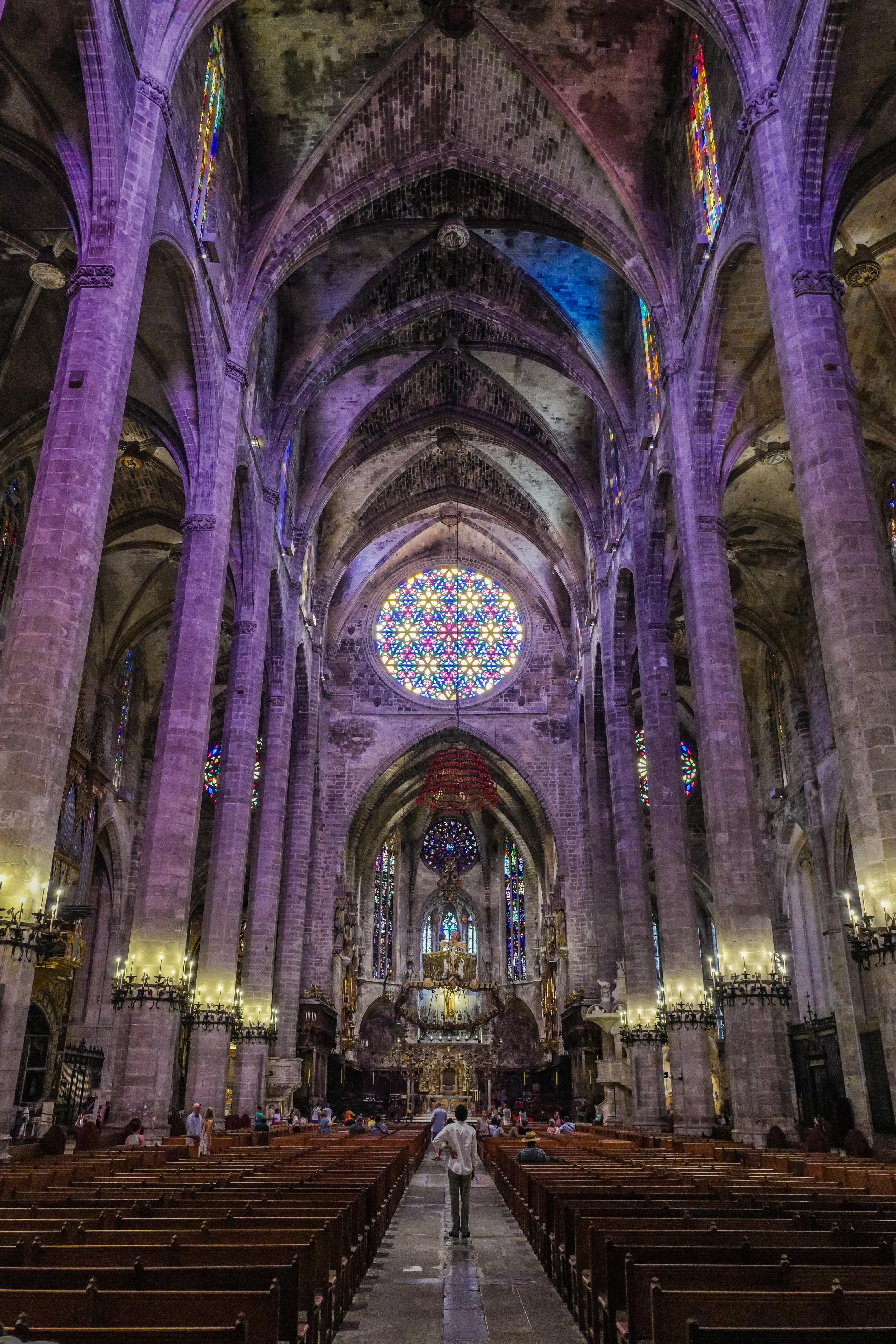
Three parallel naves rise without a transept or ambulatory, giving the interior a non-cruciform plan. The central nave reaches 40 metres, while the cathedral measures 121 metres long and 40 metres wide. Nearly 14 metres across, the eastern rose window is among the world’s largest Gothic examples. Sixteen chapels, 110 Catalan Gothic choir stalls, royal tombs, and a wheelchair-accessible layout make the vast interior especially varied.
- City
- Palma de Mallorca
- Content updated
Take this page with you
The myTuur app is free, and once you are standing at a spot its story starts by itself.


Spots like this one are the stops myTuur strings into tours through Palma de Mallorca. In the app, each story begins where you stand: walk up to a spot and it starts, read it on screen or listen as you go, then follow the route to the next one.
What is myTuur?
myTuur is a free city-guide app. Its tours are built from spots, and each spot carries a story that starts when you get there, to read or to listen to as you like.