Catacombe di Porta d'Ossuna
Beneath Palermo, the Catacombe di Porta d'Ossuna spreads through yellowish calcarenite as the city’s largest early Christian communal cemetery. Its fourth- and fifth-century galleries occupy the rocky bank bordering the Papireto, one of ancient Panormo’s two rivers. This was a planned necropolis, not a natural cave, secret refuge or place of worship.
Corridors running north to south meet a main east to west axis beneath skylights opening into the garden above. Their walls hold arched burial recesses, rectangular body niches and small hollows that may have accommodated lamps or offerings. Monumental square chambers contain stepped multiple tombs, revealing a cemetery designed for an organised Christian community. Near the original south-western entrance, a trapezoidal base probably served funeral banquets, recalling similar installations in Malta’s catacombs.
A circular vestibule from 1785, built by Ferdinand I of Bourbon, precedes the entrance restored in 1977. After abandonment, storage and stabling followed, and wartime shelter use left whitewashed walls hiding most painted decoration. Inside, educational panels and maps help you trace the galleries and understand Palermo’s early Christian community.
- City
- Palermo
- Content updated
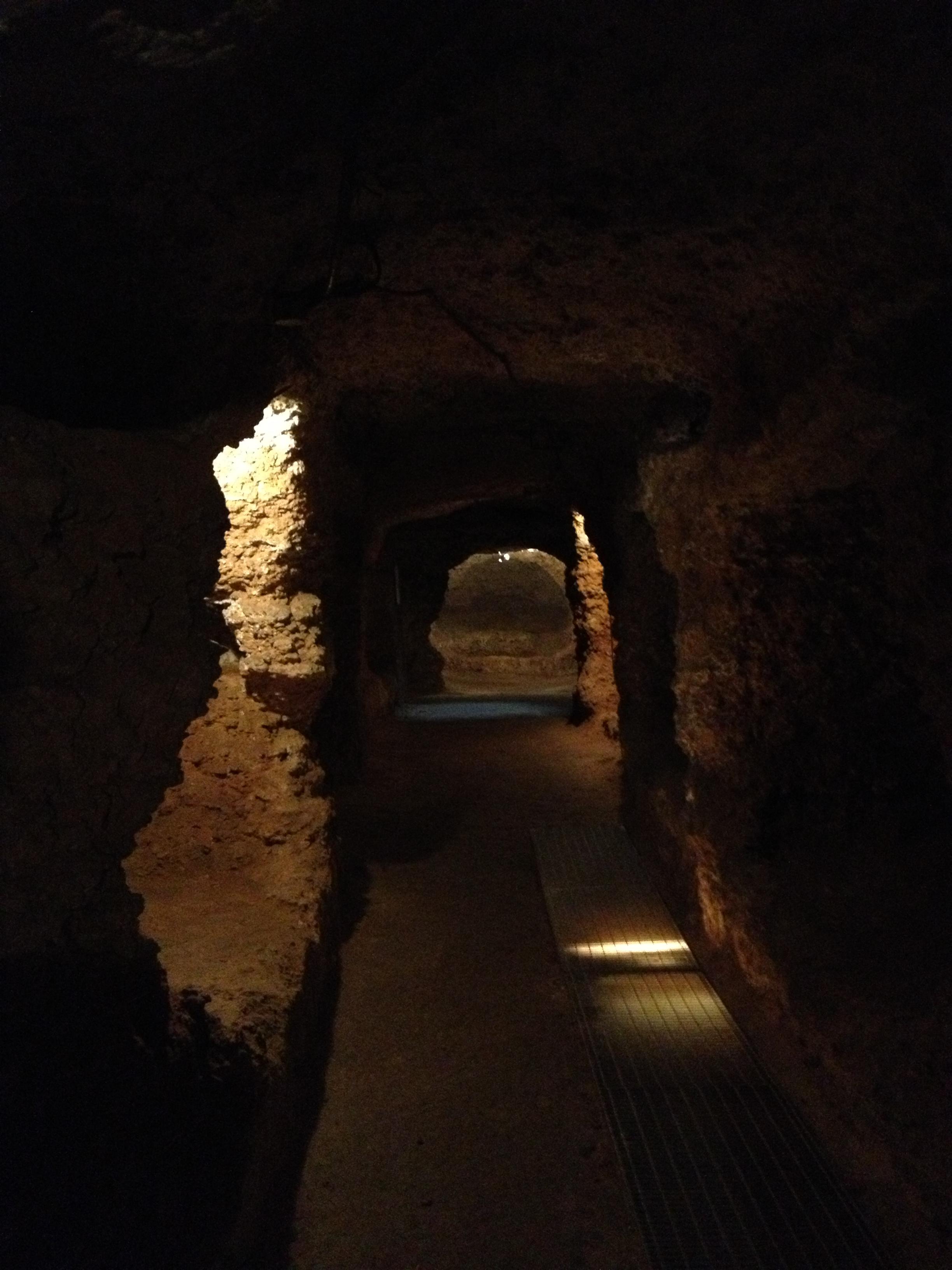
Image: HowRapidPublic domain
Take this page with you
The myTuur app is free, and once you are standing at a spot its story starts by itself.


Spots like this one are the stops myTuur strings into tours through Palermo. In the app, each story begins where you stand: walk up to a spot and it starts, read it on screen or listen as you go, then follow the route to the next one.
What is myTuur?
myTuur is a free city-guide app. Its tours are built from spots, and each spot carries a story that starts when you get there, to read or to listen to as you like.