St. Olavs plass
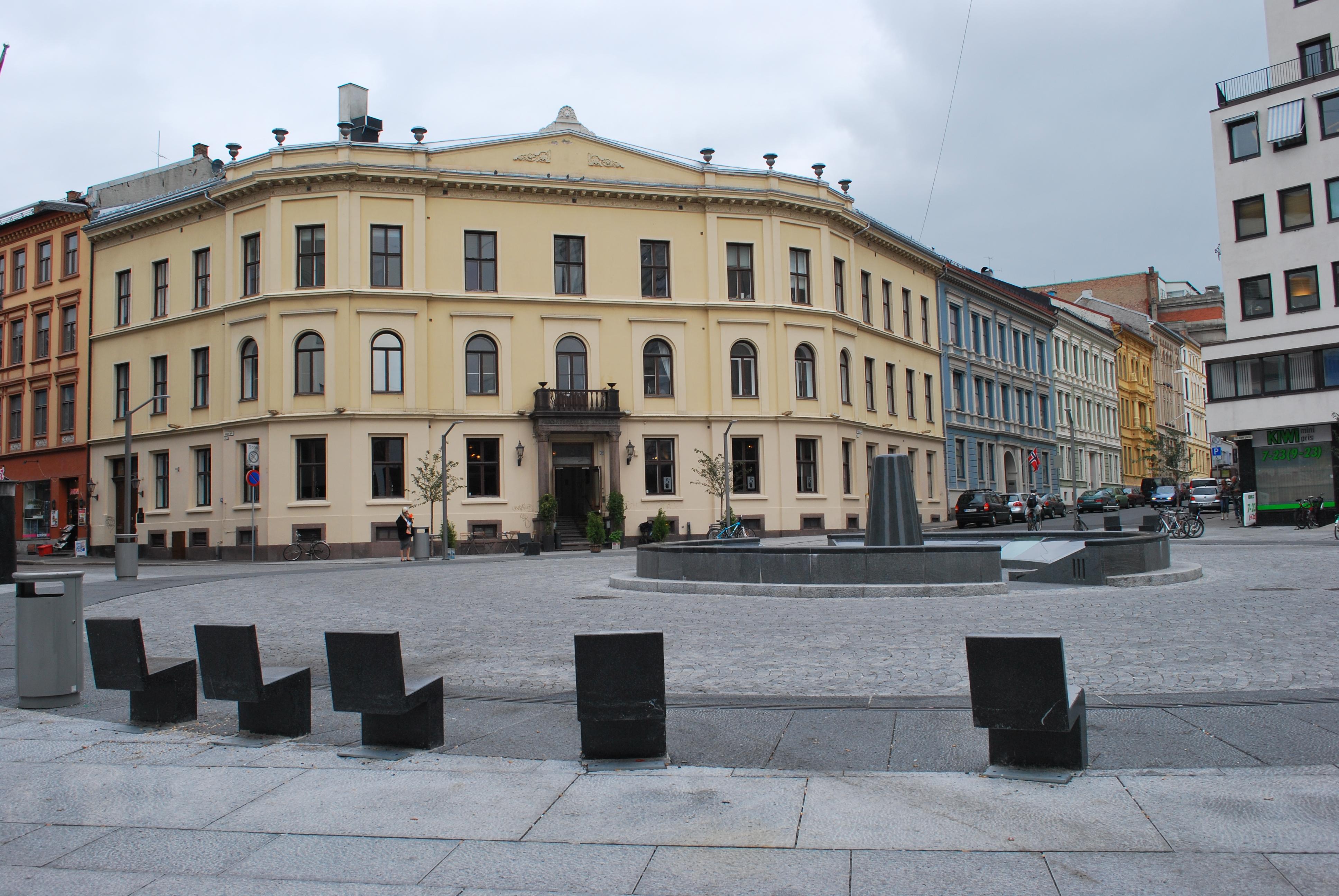
St. Olavs plass is an Oslo square where St. Olavs gate, Munchs gate, Langes gate and Universitetsgata meet. Its slightly irregular pentagon sends five streets outward from its corners. Wide façades shape the surrounding urban room, while St. Olavs gate runs directly through its centre. The space forms part of the Meyerløkka development, planned by architect Georg Andreas Bull.
The square received its name in 1864, honouring Olav den hellige, who lived from 995 to 1030. Only St. Olavs plass 2 remains from the original buildings. Olaus Johnsen built that three-storey mansion in 1872, and its former National Hospital pharmacy now gives way to restaurants and cafés. Knut Hamsun’s novel Sult also places the character Ylajali in one of these buildings.
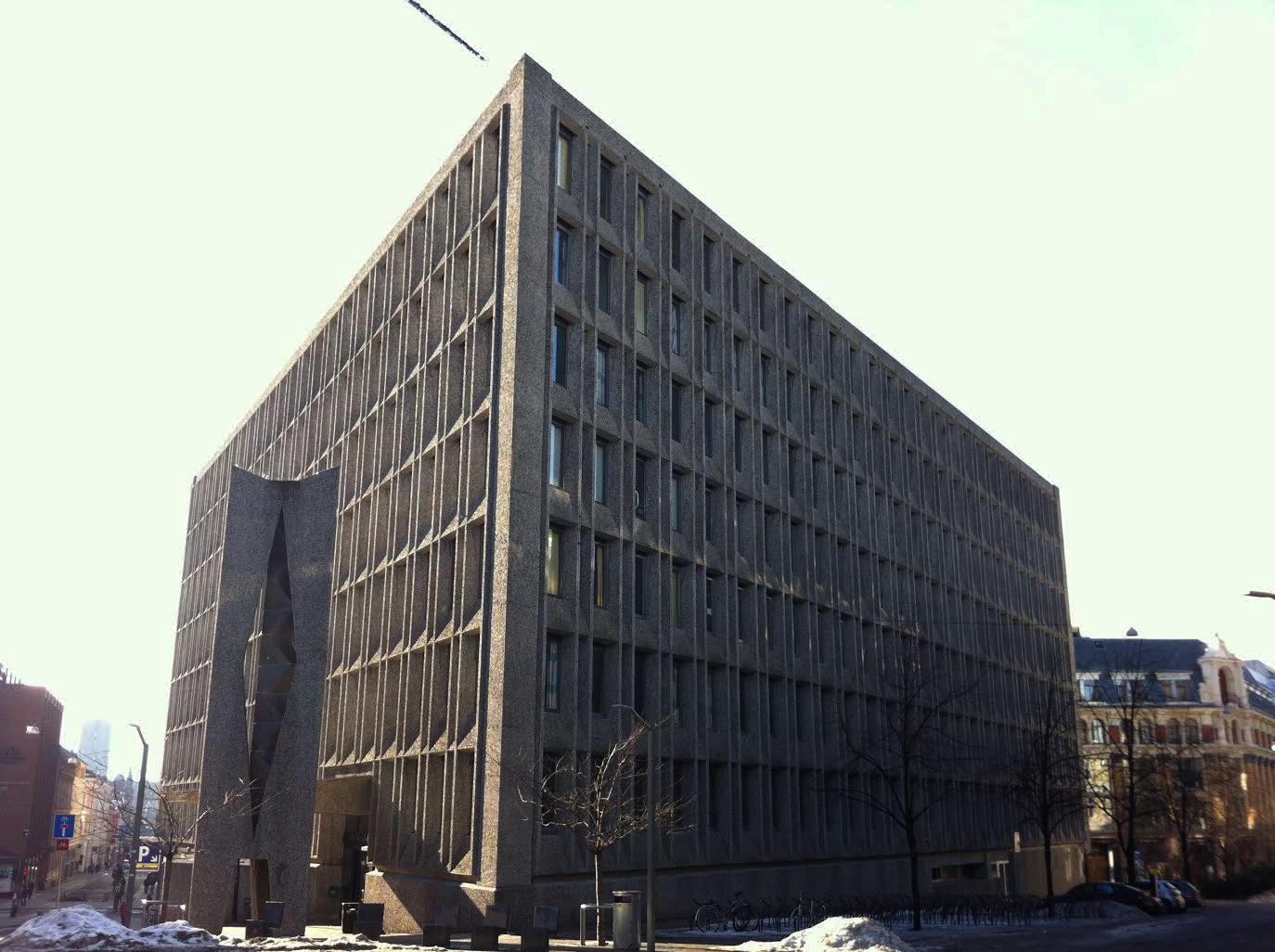
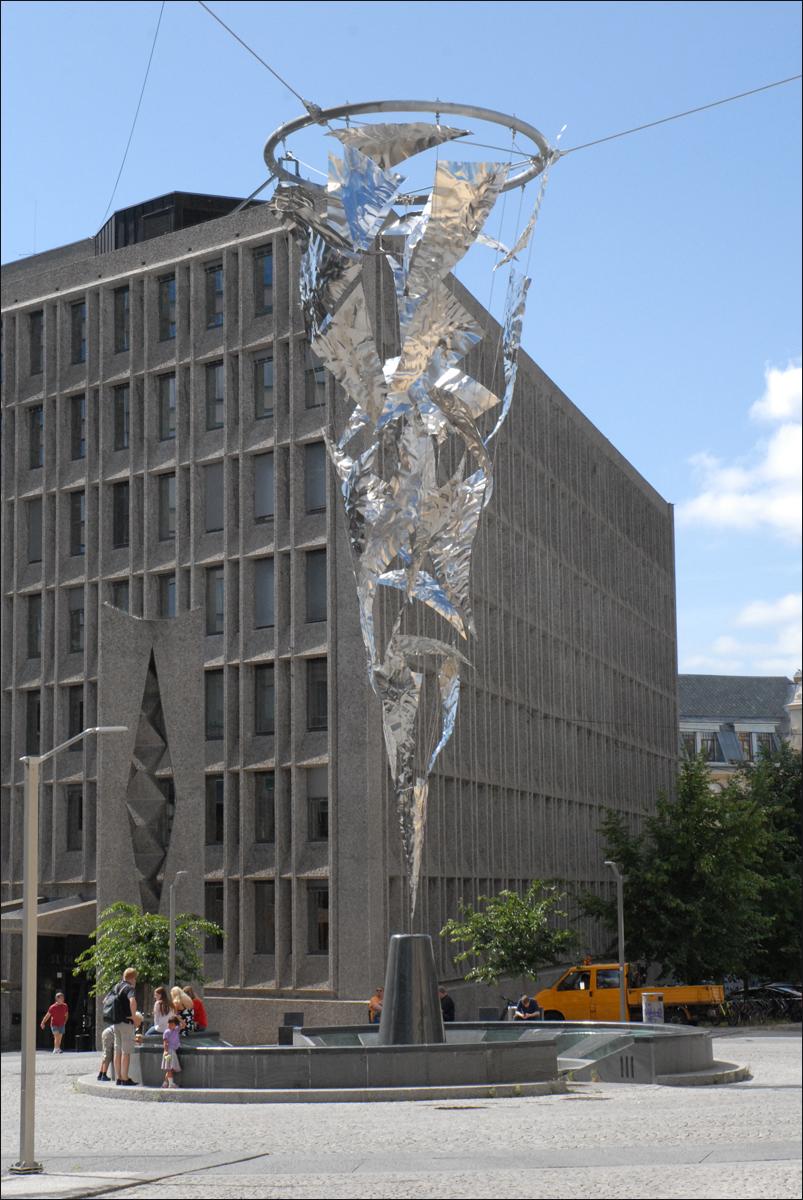
A 12.2-metre Tetraeder sculpture by Ramón Isern stands beside number 5. At the centre, Sven Påhlsson’s 17-metre light fountain rises above black basalt and a Mongolian obelisk. Triangular steel plates reflect light from below, while natural-stone paving, Tokyo cherry trees and seating make the surrounding space easier to cross and inhabit.
- City
- Oslo
- Content updated


Take this page with you
The myTuur app is free, and once you are standing at a spot its story starts by itself.


Spots like this one are the stops myTuur strings into tours through Oslo. In the app, each story begins where you stand: walk up to a spot and it starts, read it on screen or listen as you go, then follow the route to the next one.
What is myTuur?
myTuur is a free city-guide app. Its tours are built from spots, and each spot carries a story that starts when you get there, to read or to listen to as you like.