Høyesterett
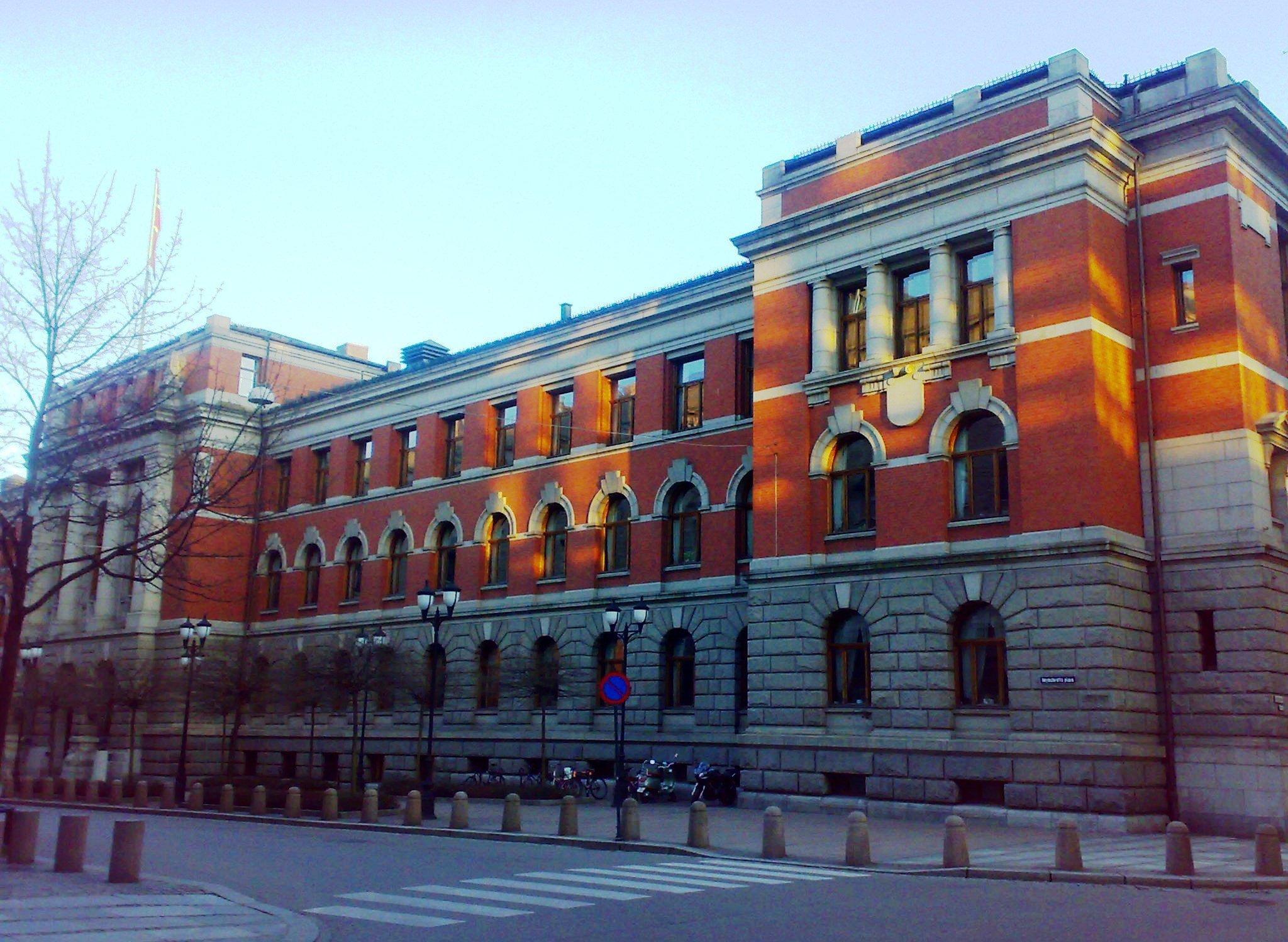
Høyesterett stands in Oslo as Høyesteretts hus, an early twentieth-century building designed by Hans Jacob Sparre. Its architecture places Norway’s highest court within the city’s legal and political landscape. Before this permanent home opened, the Supreme Court moved between five addresses in Kvadraturen.
The building originally brought together Norway’s three court levels: the city court, the court of appeal and the Supreme Court. Since 1994, only Høyesterett has worked inside these rooms. The court entered Norway’s Constitution in 1814 and delivered its first judgment in 1815. Its public decisions shape how Norwegian law applies across the country. They also examine connections between Norwegian law and international agreements, including the Refugee Convention and the Svalbard Treaty.
Legal history remains visible in the institution’s working methods: judges’ votes became public in 1864, and the court first tested a law against the Constitution in 1866. The protected building received official heritage status in 2015. Cases have addressed municipal responsibility, property purchases in Oslo and safety measures beside Bjørvika. You can picture a courthouse that began with every level of Norway’s court system, then became the sole workplace of its highest court.
- City
- Oslo
- Content updated
Take this page with you
The myTuur app is free, and once you are standing at a spot its story starts by itself.


Spots like this one are the stops myTuur strings into tours through Oslo. In the app, each story begins where you stand: walk up to a spot and it starts, read it on screen or listen as you go, then follow the route to the next one.
What is myTuur?
myTuur is a free city-guide app. Its tours are built from spots, and each spot carries a story that starts when you get there, to read or to listen to as you like.