Aksisehuset
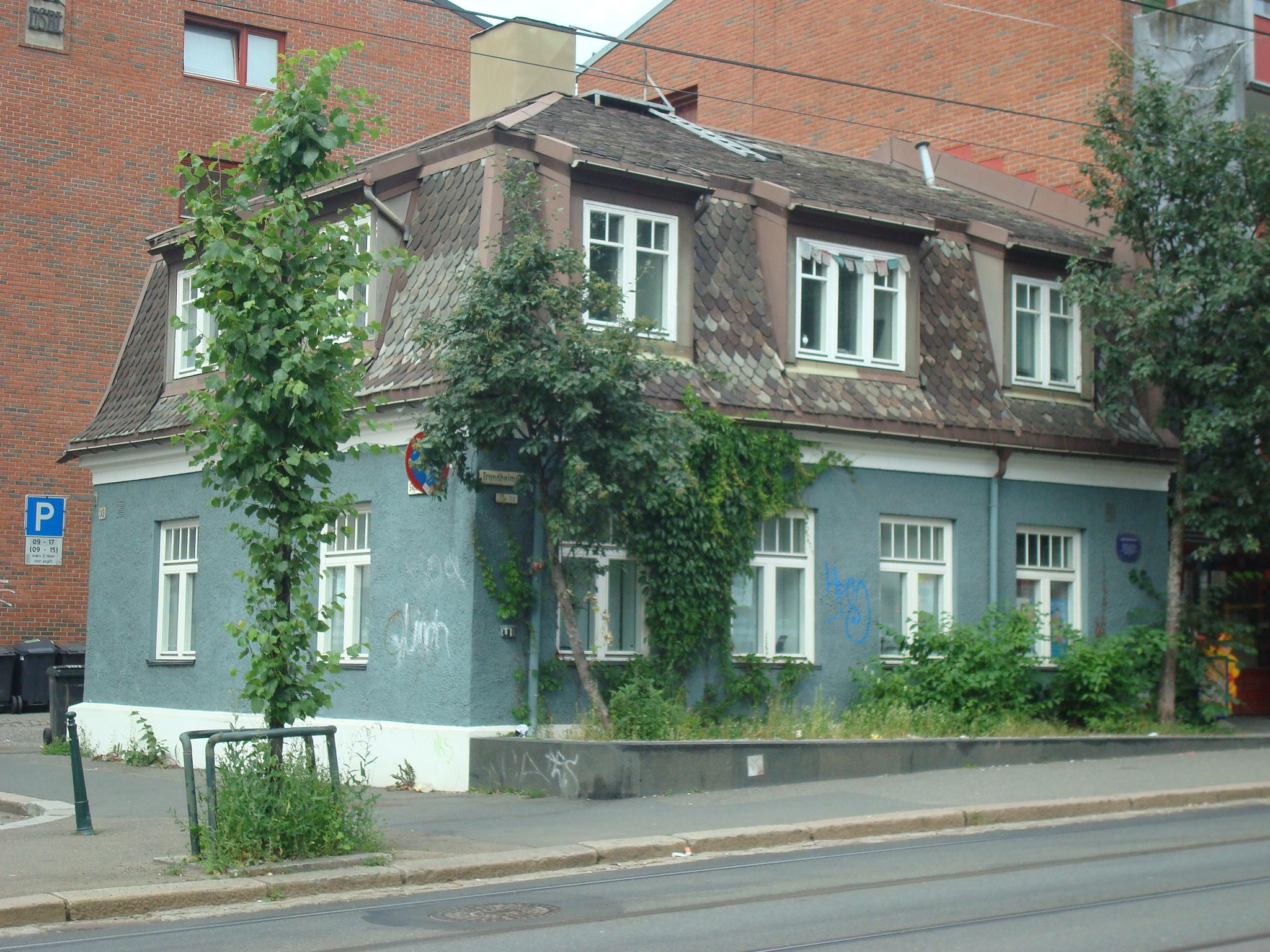
Aksisehuset is an Oslo building from the 1830s, standing where Lakkegata meets Trondheimsveien. Its walls are made from rendered brick. The house began as a guardhouse for customs officers collecting aksise on goods entering Christiania. Christiania was the earlier name for Oslo. The northern checkpoint developed near Tøyens portstuer after Nybrua opened in 1827 and increased traffic. The customs role ended there in 1842. Private ownership followed around 1860, while the building later accommodated Madame Bech’s liquor shop and a residence. Karen Marie Bech remained listed as owner in 1886. A major early twentieth-century renovation raised the roof and added dormer windows to the mansard roof. The house also names the Aksiseboden housing cooperative. Its surviving form records changes in Oslo’s roads, trade controls, private ownership, and expanding city boundaries. A local heritage listing recognizes its historical value. The former customs setting links this building with a wider network of entry points around Christiania. Klingenberg and Oslo Ladegård marked other city approaches.
- City
- Oslo
- Content updated
Take this page with you
The myTuur app is free, and once you are standing at a spot its story starts by itself.


Spots like this one are the stops myTuur strings into tours through Oslo. In the app, each story begins where you stand: walk up to a spot and it starts, read it on screen or listen as you go, then follow the route to the next one.
What is myTuur?
myTuur is a free city-guide app. Its tours are built from spots, and each spot carries a story that starts when you get there, to read or to listen to as you like.