Église Saint-Étienne
Église Saint-Étienne stands in Nice’s Vernier-Trachel district, where housing, workshops, shops, and schools occupy a once-rural setting. The church serves as a local place of worship. Its streets reflect the district’s changing character, shaped by the railway, the 1865 viaduct, and the Voie Mathis.
A small chapel dedicated to Saint Étienne stood nearby from the sixteenth century, at today’s Place du Général de Gaulle. Urban growth eventually replaced that chapel with houses and workshops. Construction of the present building began in 1902, but unstable ground and former watercress beds forced architects Febvre and Deporta to abandon their original plans. The more modest structure expanded with the neighbourhood, gaining two side aisles between 1925 and 1929. An annex followed in 1931, the nave rose in 1933, and the transept rose in 1943.
The porch and interior decoration came after the Second World War, completing a building shaped over several decades. Vernier and Trachel recall local figures, including architect Joseph Vernier and artist Hercule Trachel. From fields and gardens to a dense urban district, the surrounding transformation remains visible in the church’s successive additions.
- City
- Nice
- Content updated
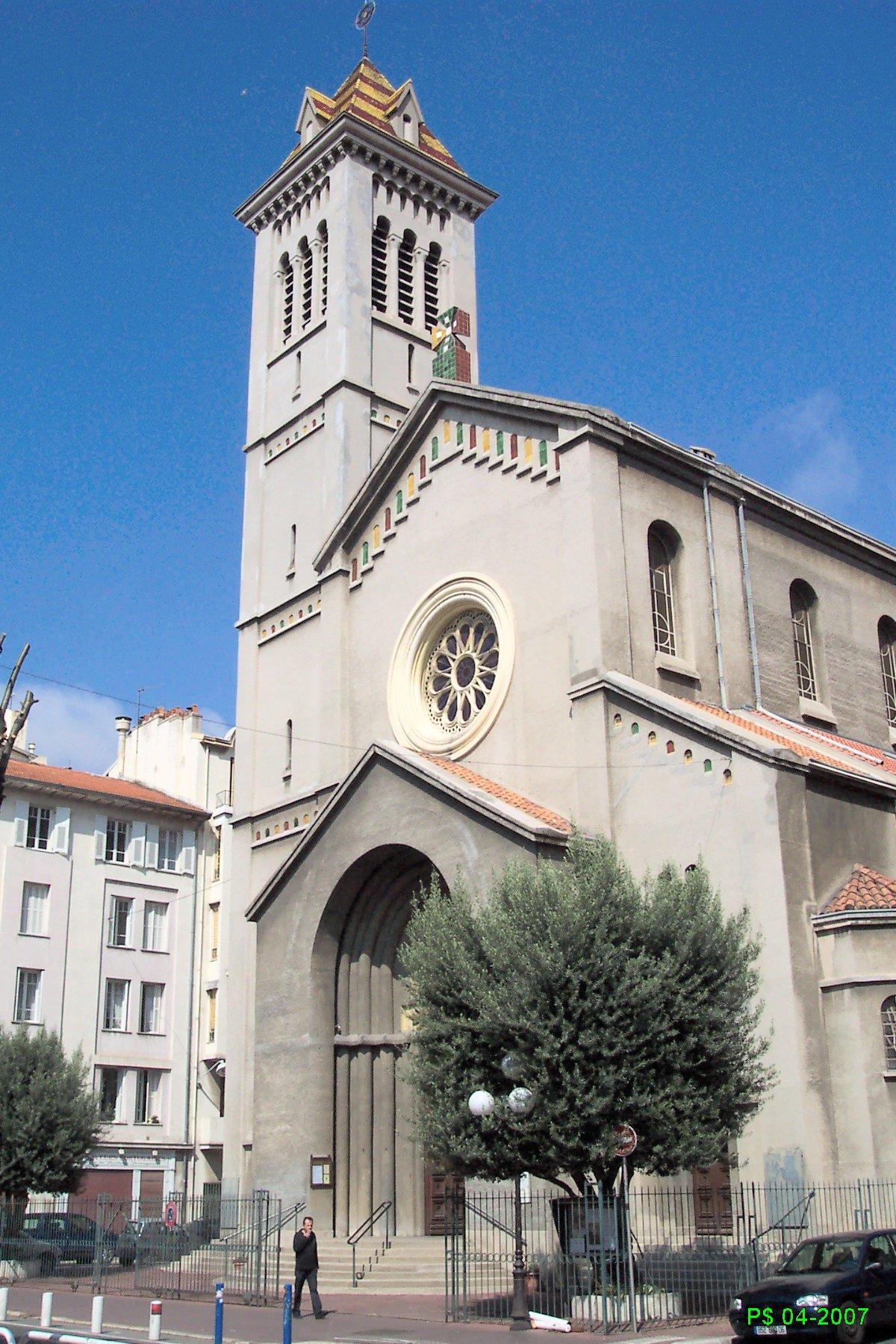
Image: Patrice SemeriaPublic domain
Take this page with you
The myTuur app is free, and once you are standing at a spot its story starts by itself.


Spots like this one are the stops myTuur strings into tours through Nice. In the app, each story begins where you stand: walk up to a spot and it starts, read it on screen or listen as you go, then follow the route to the next one.
What is myTuur?
myTuur is a free city-guide app. Its tours are built from spots, and each spot carries a story that starts when you get there, to read or to listen to as you like.