Palacio Episcopal de Málaga
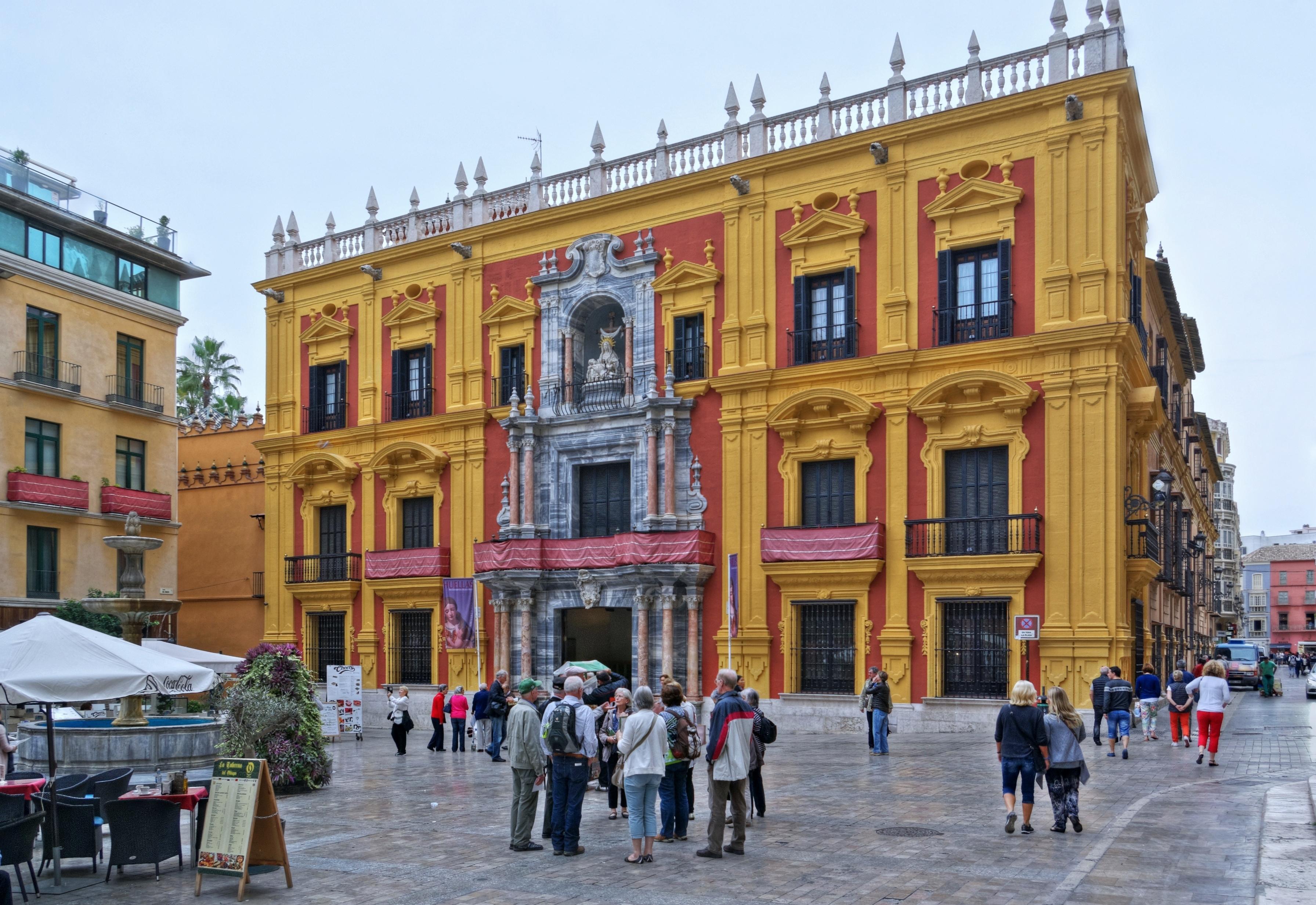
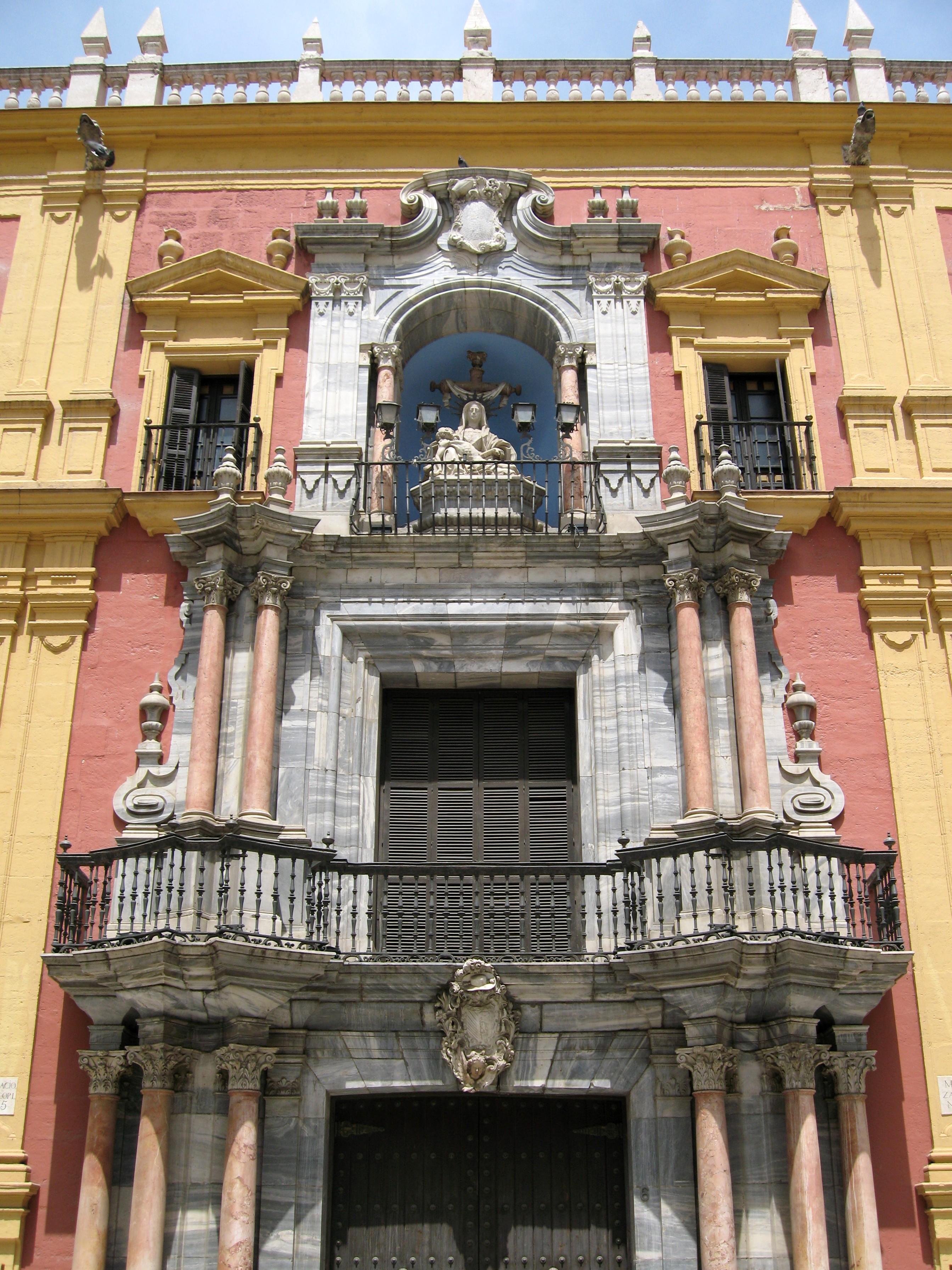
Palacio Episcopal de Málaga stands beside Málaga Cathedral, presenting a major work of the city’s civil architecture. Its baroque classicist façade combines pilasters, balcony-like openings, lower windows, and a stone balustrade above. Gray and pink marble shape the altar-like portal. Above the entrance, an elaborate balcony leads the eye towards coats of arms and a niche containing Fernando Ortiz’s statue of the Virgin of Las Angustias. The building is wheelchair accessible.
Construction began in 1762 under Archbishop José Francisco Lasso de Castilla, with Antonio Ramos directing the design before José Martín de Aldehuela continued it. Two courtyards organize the interior: arcades surround public areas, while open fronts and balconies serve the private quarters. An imperial staircase connects the upper floors, and part of the palace houses the Museo Diocesano del Arte Sacro de Málaga. Damage from anti-clerical attacks in the early 1930s led to reconstruction during the 1940s. The palace later appeared with the Plaza del Obispo and Málaga Cathedral in The Bridge of San Luis Rey, standing in for an eighteenth-century Peruvian city.
- City
- Malaga
- Content updated

Take this page with you
The myTuur app is free, and once you are standing at a spot its story starts by itself.


Spots like this one are the stops myTuur strings into tours through Malaga. In the app, each story begins where you stand: walk up to a spot and it starts, read it on screen or listen as you go, then follow the route to the next one.
What is myTuur?
myTuur is a free city-guide app. Its tours are built from spots, and each spot carries a story that starts when you get there, to read or to listen to as you like.