Kiel-Säule
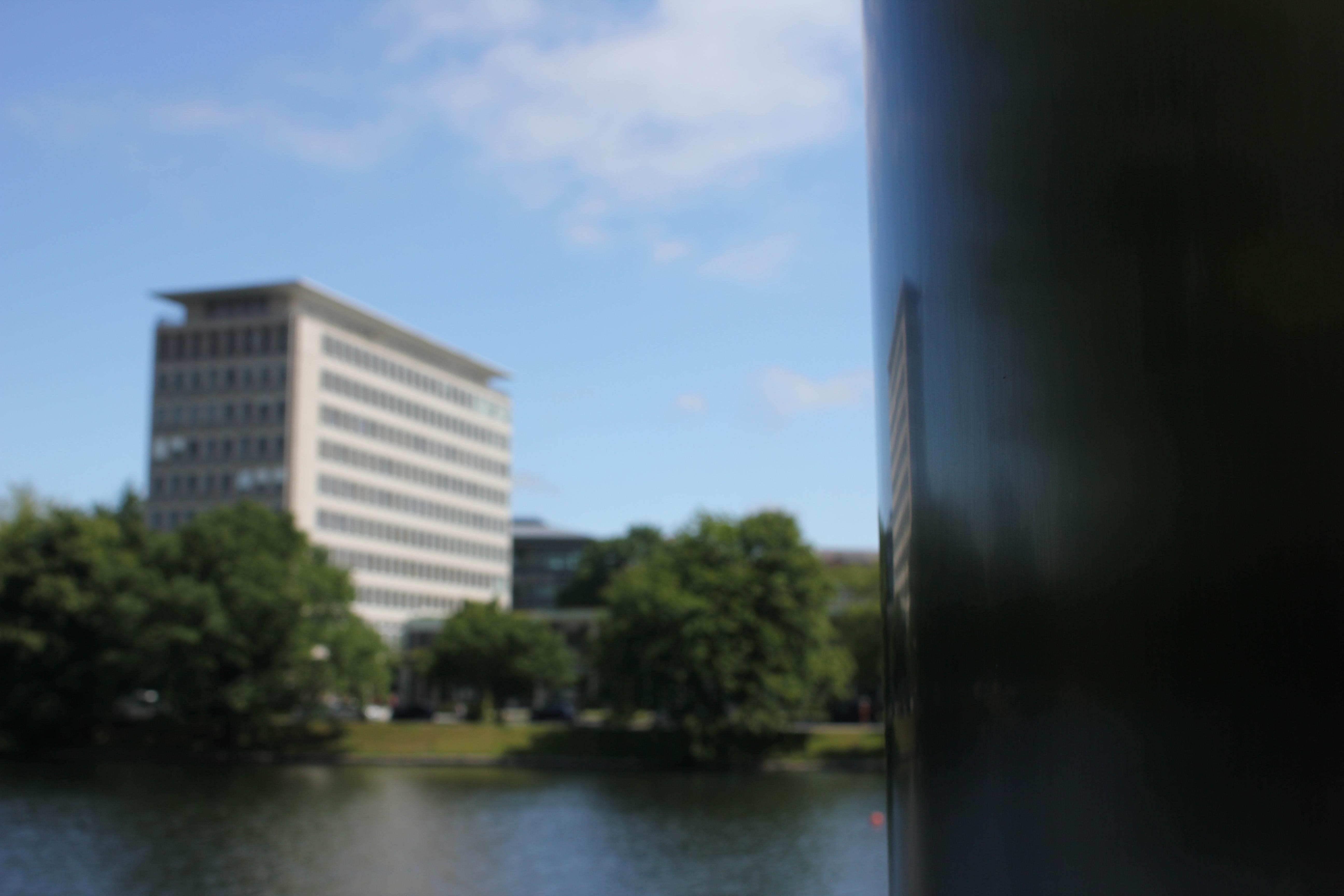
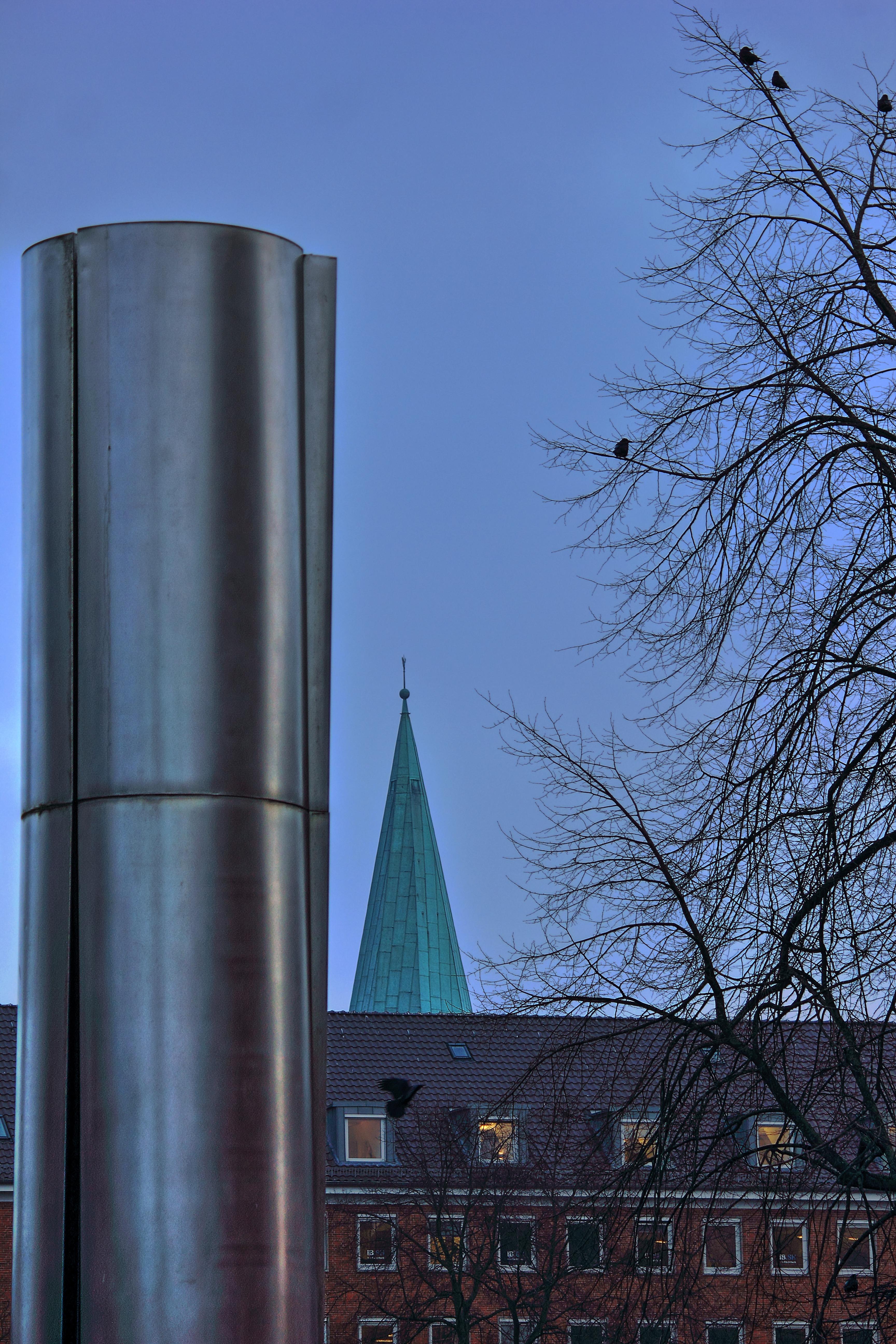
Kiel-Säule rises nine metres beside Kleiner Kiel, directly in front of Kiel Opera House. Its matte stainless-steel surface catches light without losing its technical appearance. A slender cylinder forms the outline, while bends, crevices, openings, compressions, and shifts disrupt its pure geometry. You see the construction most clearly by walking around the sculpture and examining its surface closely.
Erich Hauser installed the sculpture in 1971 after more than one hundred companies supported a fundraising initiative. The campaign formed part of preparations for the 1972 Olympic Games and aimed to give Kiel a major artwork. After debate about its location, the nine-metre form settled beside the water and the opera house. Hauser developed from small constructivist works toward large volumetric tube sculptures, working mainly in steel.
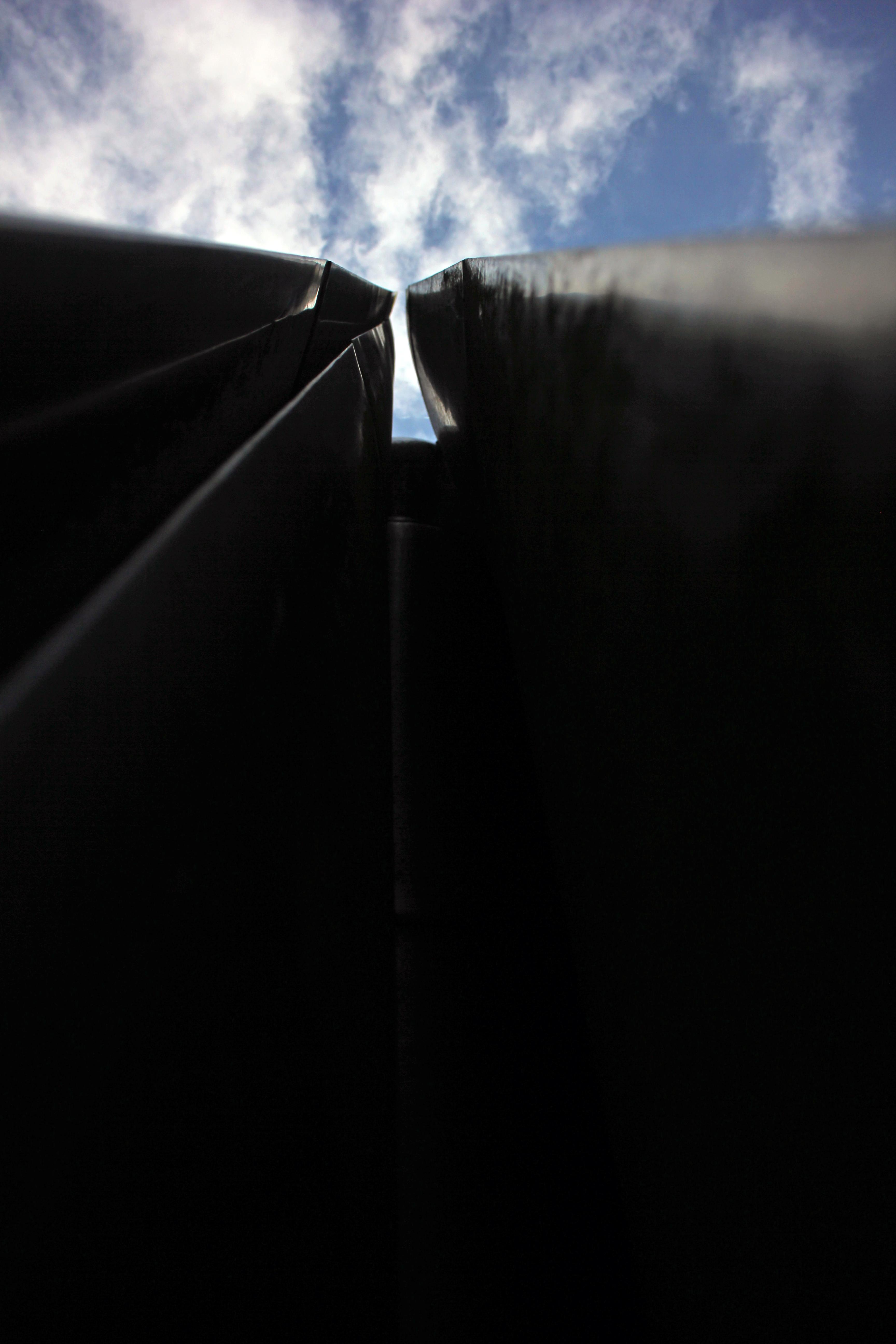
The visible blueprint gives each fold and deep groove a structural role rather than hiding the making process. Hauser created around one thousand works and exhibited at Documenta 3, 4, and 6. Up close, a surface that first seems smooth reveals the sculpture’s bends, cuts, and deep recesses.
- City
- Kiel
- Content updated
Take this page with you
The myTuur app is free, and once you are standing at a spot its story starts by itself.


Spots like this one are the stops myTuur strings into tours through Kiel. In the app, each story begins where you stand: walk up to a spot and it starts, read it on screen or listen as you go, then follow the route to the next one.
What is myTuur?
myTuur is a free city-guide app. Its tours are built from spots, and each spot carries a story that starts when you get there, to read or to listen to as you like.