Marstall
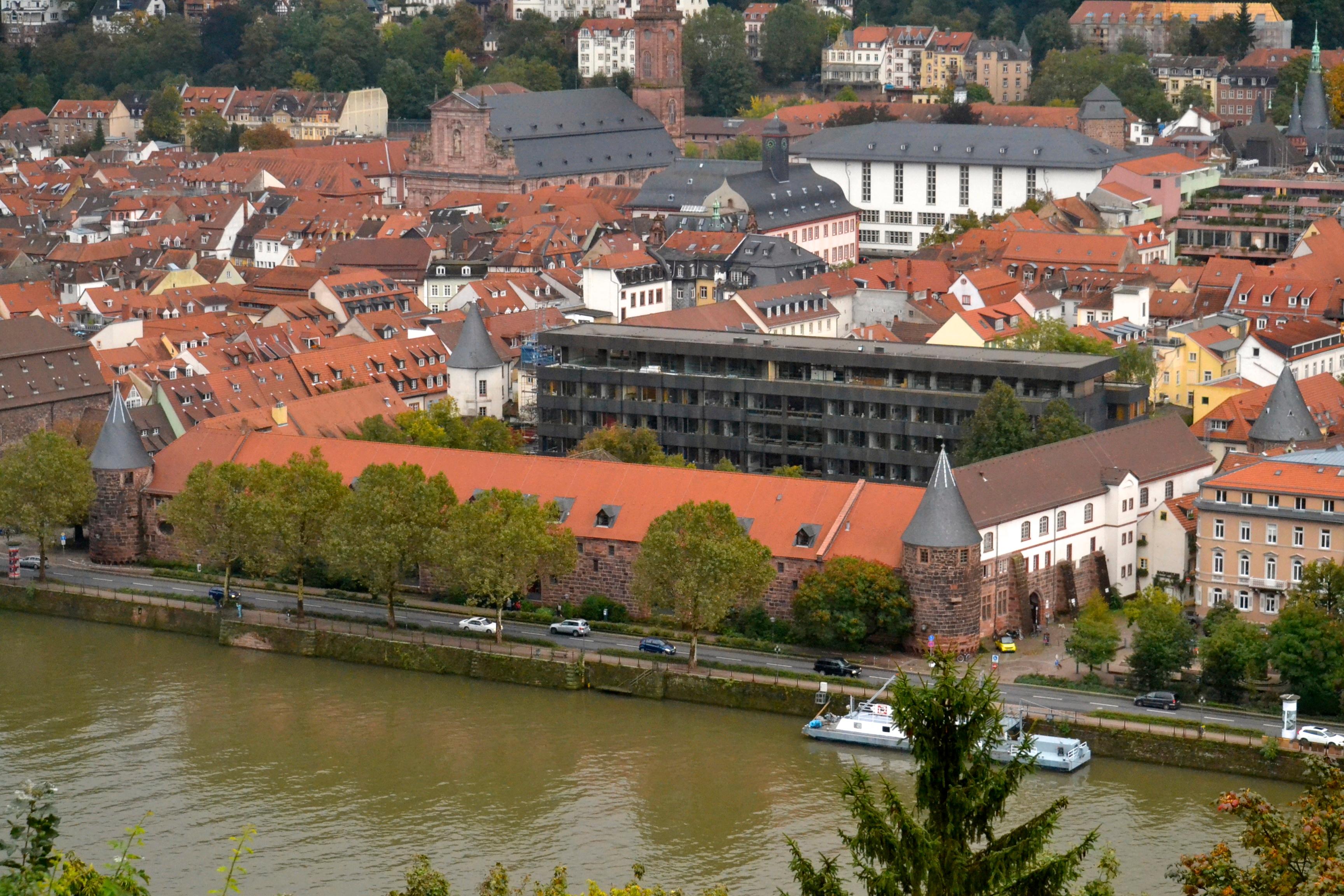
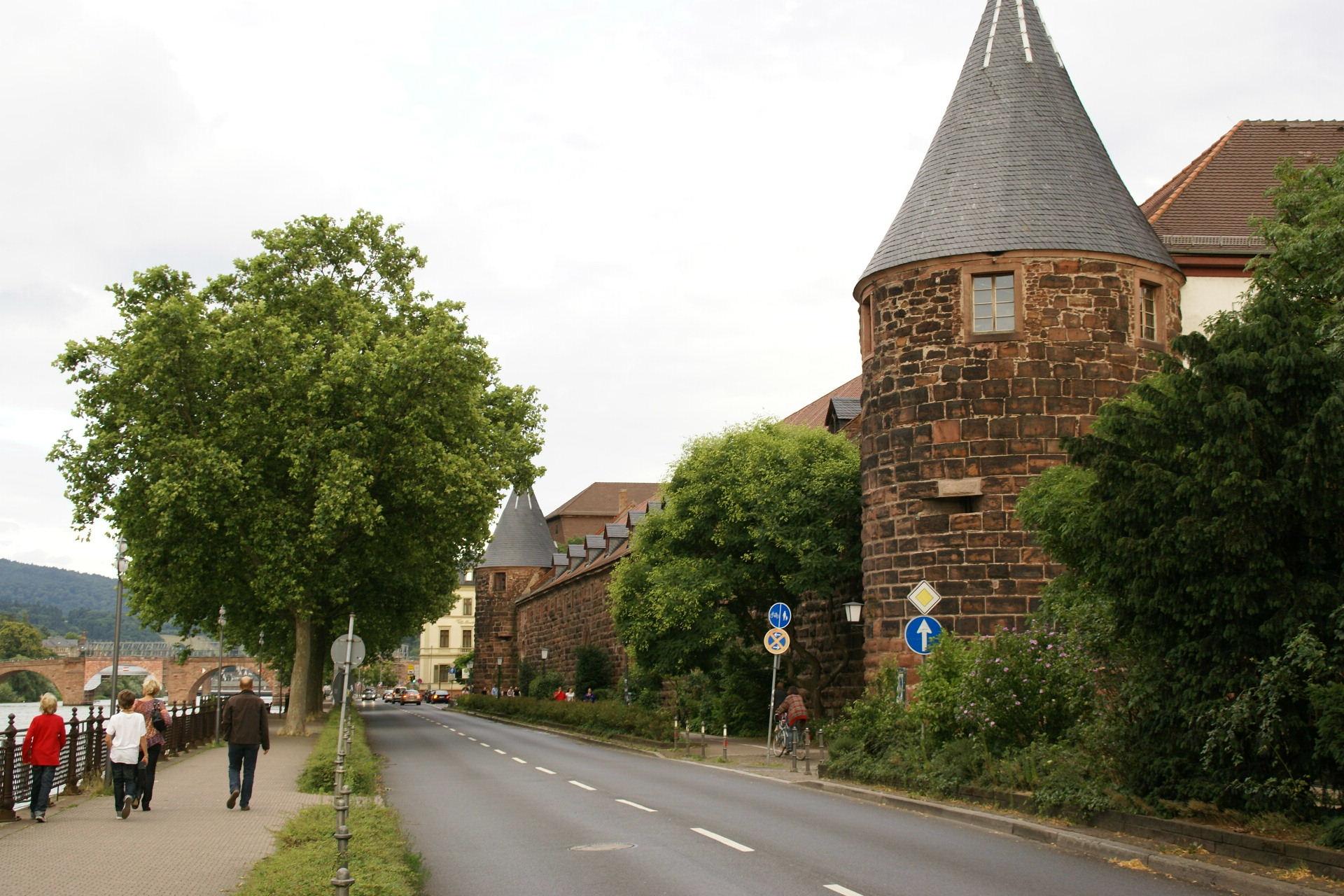
Marstall stands in Heidelberg beside the Neckar, with a 135-metre sandstone façade facing the river. Built around 1510 under Prince Elector Ludwig V, it ranks among the city’s oldest surviving early modern structures. Its original purpose was an armory, positioned beside the city wall after Heidelberg’s siege during the Landshut War of Succession. Lorenz Lechler is considered its architect, and some stones came from the Upper Castle after lightning destroyed it in 1537.
Defensive details still shape the building: watchtowers with firearm embrasures guard both ends. Thick rusticated walls once enclosed the courtyard, while boats could unload through a large arched gate on the north side. The river formerly reached the foundations, linking military storage with direct water transport. A Renaissance stable block stood south of the courtyard from 1590, holding more than one hundred horses before its destruction in 1693.
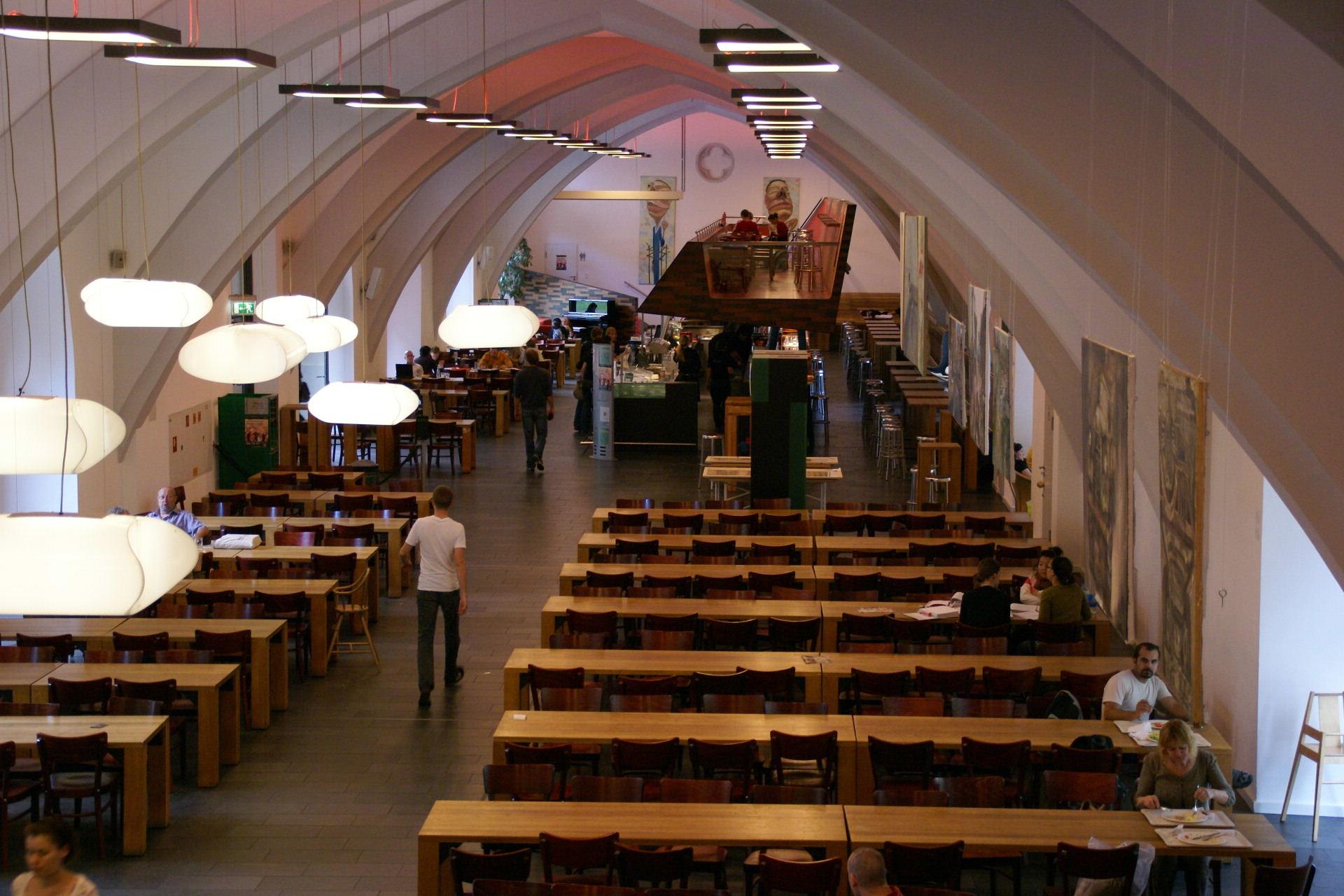
Today, the original sandstone walls surround the university’s Zeughaus-Mensa, event rooms, and student administration. The eastern Heuscheuer completes the ensemble, having served as a hay store, municipal warehouse, and university lecture hall. One glassed-in arch still marks the former river entrance, where supplies once moved directly from boats into the armory.
- City
- Heidelberg
- Content updated
Take this page with you
The myTuur app is free, and once you are standing at a spot its story starts by itself.


Spots like this one are the stops myTuur strings into tours through Heidelberg. In the app, each story begins where you stand: walk up to a spot and it starts, read it on screen or listen as you go, then follow the route to the next one.
What is myTuur?
myTuur is a free city-guide app. Its tours are built from spots, and each spot carries a story that starts when you get there, to read or to listen to as you like.