Studnitz-Pyramide
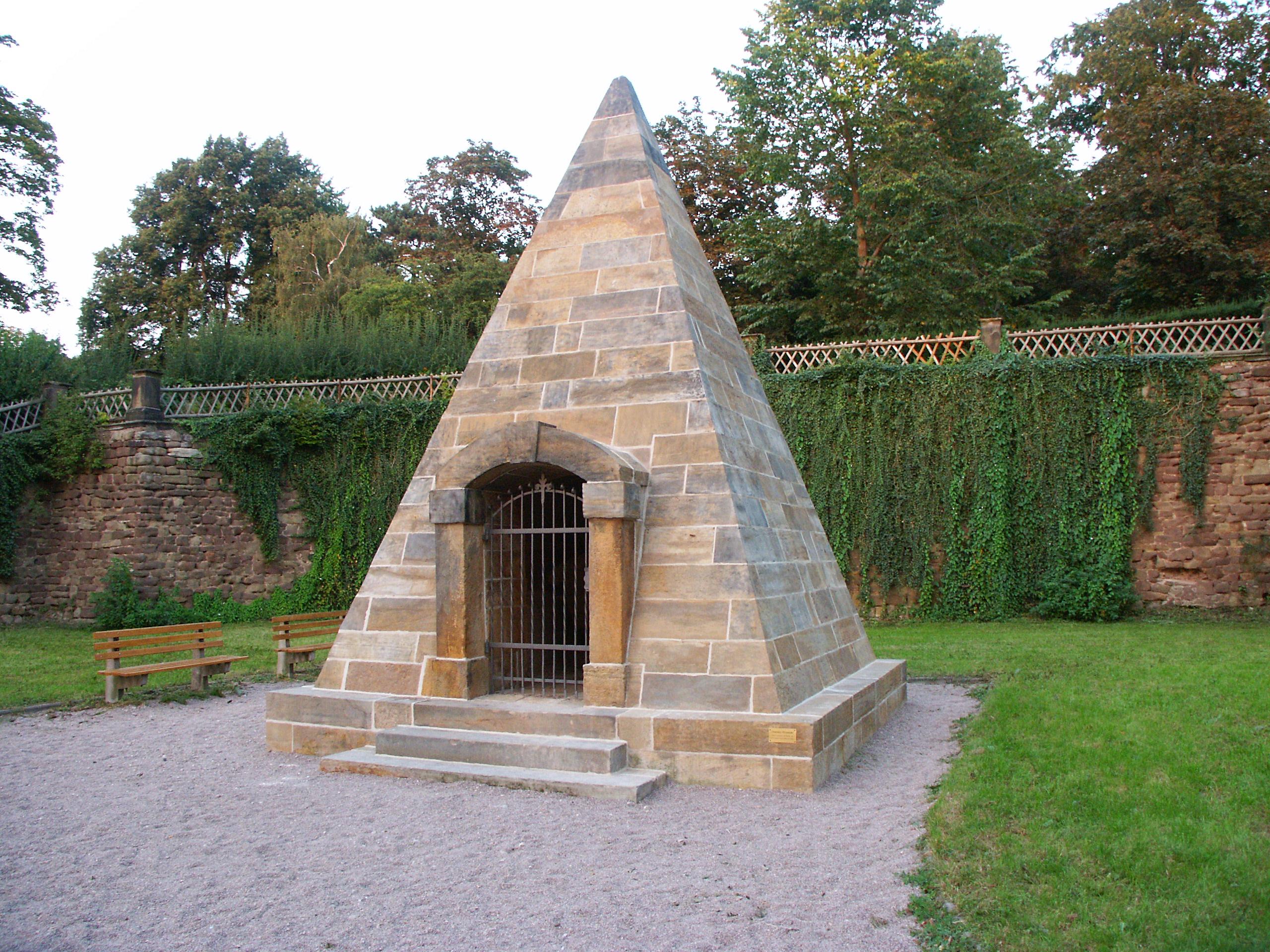
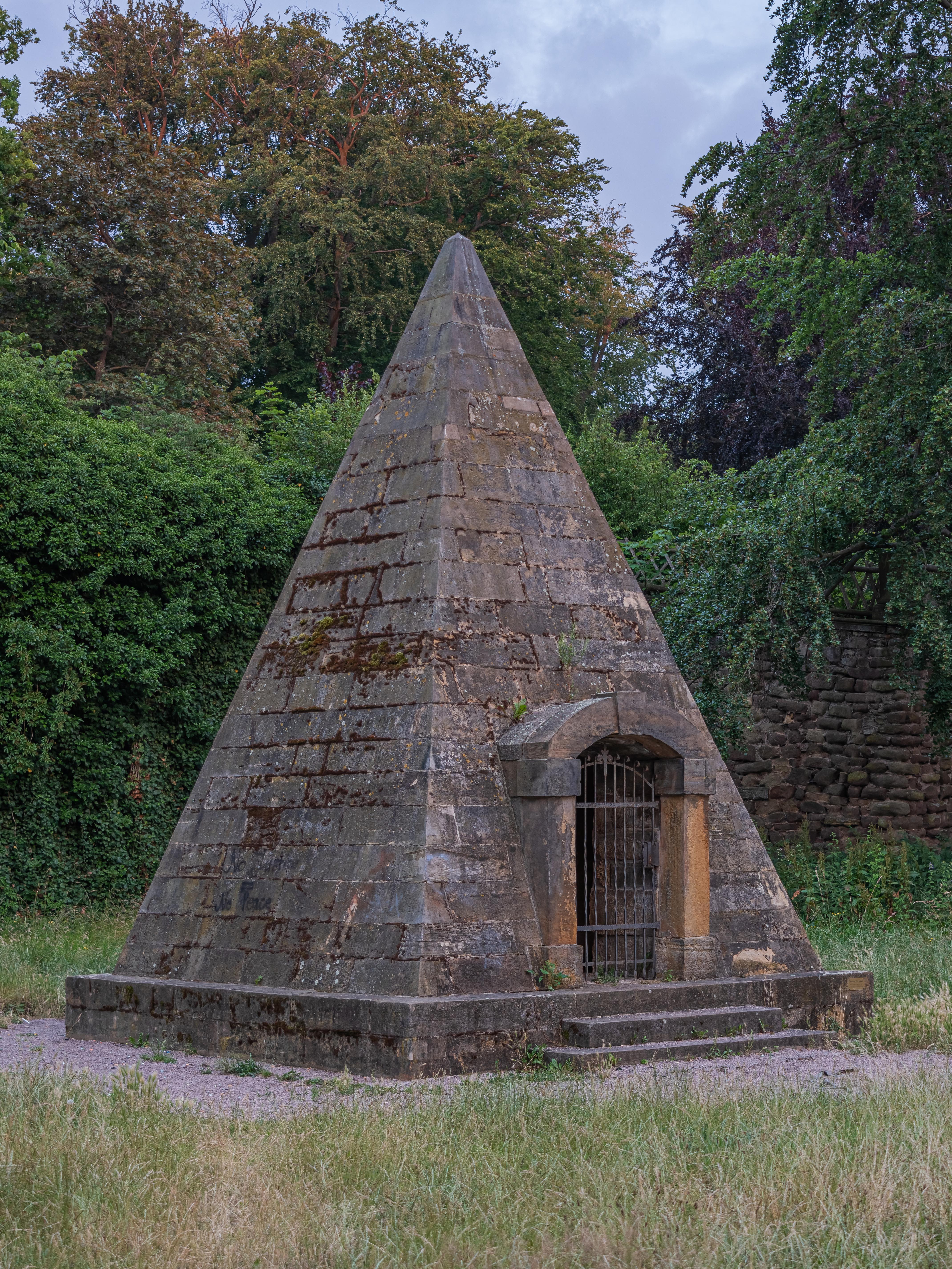
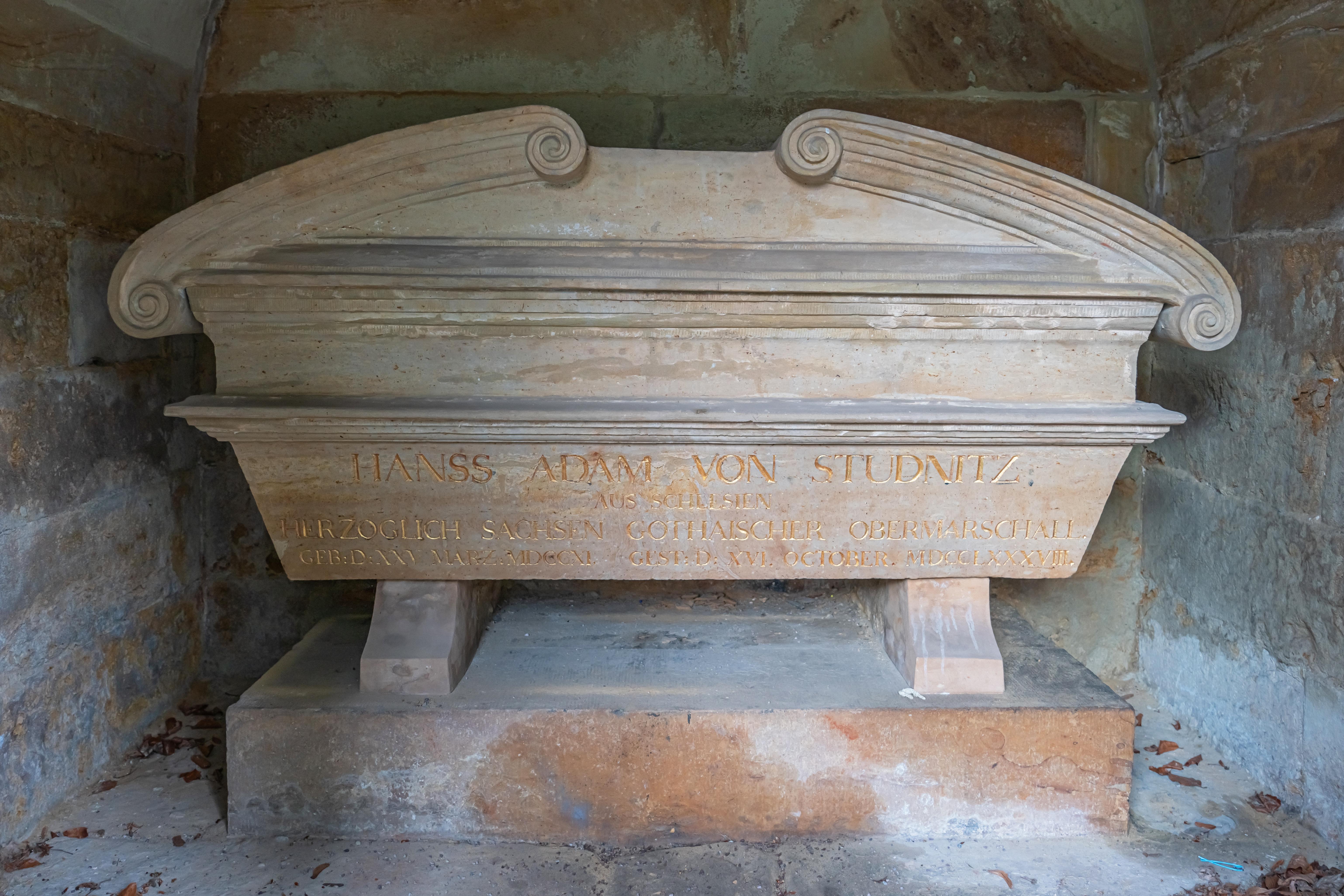
Studnitz-Pyramide rises in Germany as a solitary, sand-coloured mausoleum among modern buildings and traces of a former garden. Its severe pyramid shape recalls ancient tombs. Hans Adam von Studnitz commissioned the structure after 1779, while serving as a powerful court marshal and still alive. Seeberger sandstone gives the walls their pale, warm surface.
A baroque garden once surrounded the pyramid with orderly walls, while a school later covered much of the grounds. Historic drawings preserve the planned relationship between the pyramid and its sarcophagus. Construction most likely involved Friedrich Wilhelm Döll, a sculptor who studied under Jean-Antoine Houdon in Paris. The design appeared before pyramidal tombs became fashionable again.
Restoration in the early twenty-first century secured the monument among the changing surroundings. Remaining garden walls and a modest park now suggest the vanished landscape. The quiet geometry makes an unexpected memorial, linking personal ambition, classical inspiration and centuries of urban change.
- City
- Gotha
- Content updated
Take this page with you
The myTuur app is free, and once you are standing at a spot its story starts by itself.


Spots like this one are the stops myTuur strings into tours through Gotha. In the app, each story begins where you stand: walk up to a spot and it starts, read it on screen or listen as you go, then follow the route to the next one.
What is myTuur?
myTuur is a free city-guide app. Its tours are built from spots, and each spot carries a story that starts when you get there, to read or to listen to as you like.