Sächsisches Ständehaus
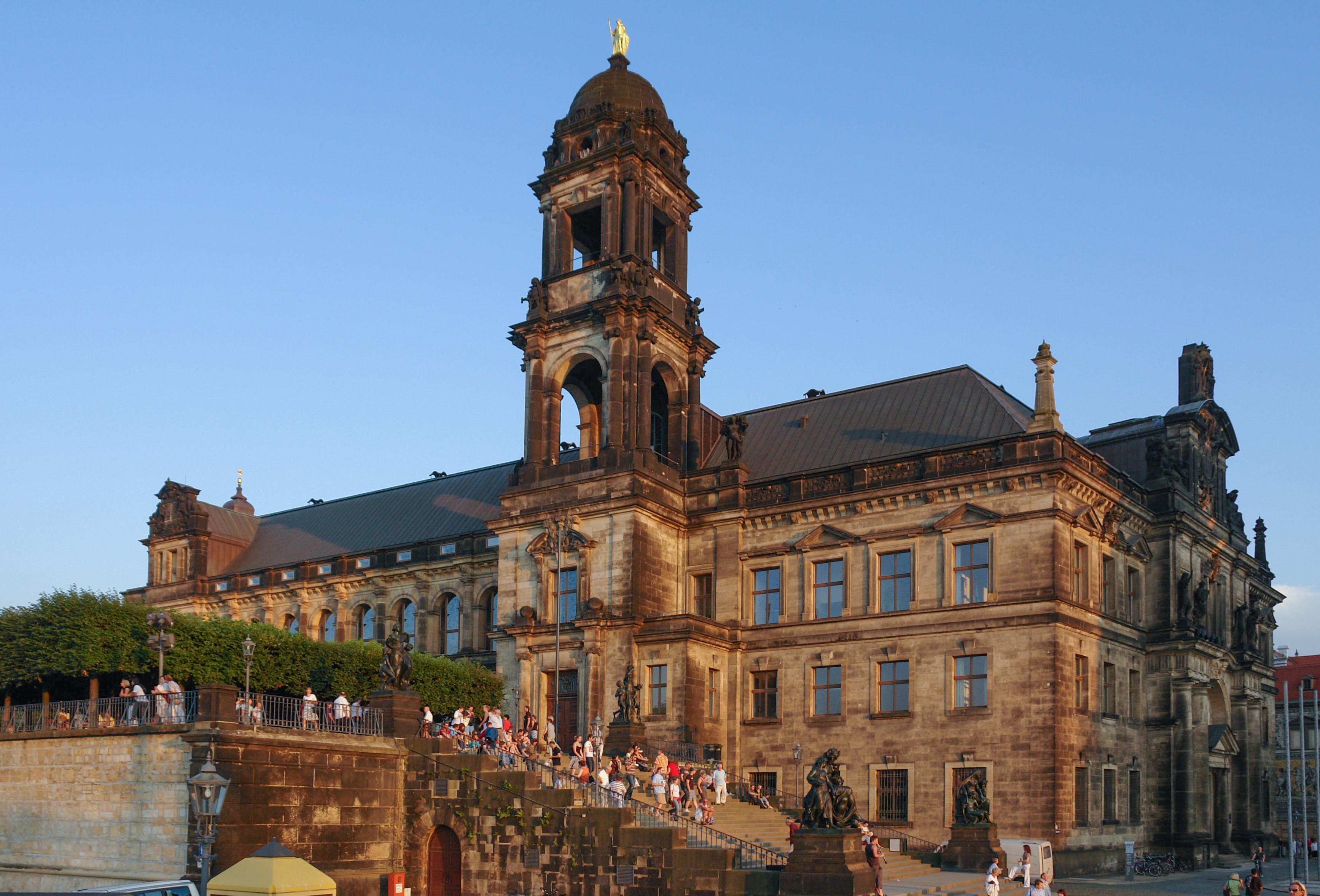
The Sächsisches Ständehaus rises in central Dresden as a three-storey, trapezoidal building clad in sandstone. Paul Wallot designed it between 1901 and 1907 for Saxony’s parliament. Renaissance and Neobaroque forms meet around a 50-metre tower above the city. A golden statue of Saxonia crowns its summit above the sandstone facade.
Three earlier buildings, Brühlsche Palace, Fürstenburgsche House and Charonsche House, occupied this site before construction. The Weimar Republic brought Saxony’s first fully democratically elected parliament here. It met here from 1919 to 1933. Artists including Johannes Schilling, Heinrich Wedemeyer and Heinrich Epler supplied statues and artworks between 1905 and 1907. Air raids in World War II severely damaged the building. Reconstruction followed, and renovation continued from 1996 to 2001.
The Dresden Higher Regional Court and Saxony’s State Office for Monument Preservation work within its rooms. Seven courtrooms support judicial work inside the building. Representative rooms preserve a connection with Saxony’s parliament. The tower’s gilded Saxonia remains the clearest detail against Dresden’s skyline.
- City
- Dresden
- Content updated
Take this page with you
The myTuur app is free, and once you are standing at a spot its story starts by itself.


Spots like this one are the stops myTuur strings into tours through Dresden. In the app, each story begins where you stand: walk up to a spot and it starts, read it on screen or listen as you go, then follow the route to the next one.
What is myTuur?
myTuur is a free city-guide app. Its tours are built from spots, and each spot carries a story that starts when you get there, to read or to listen to as you like.