Discobolus
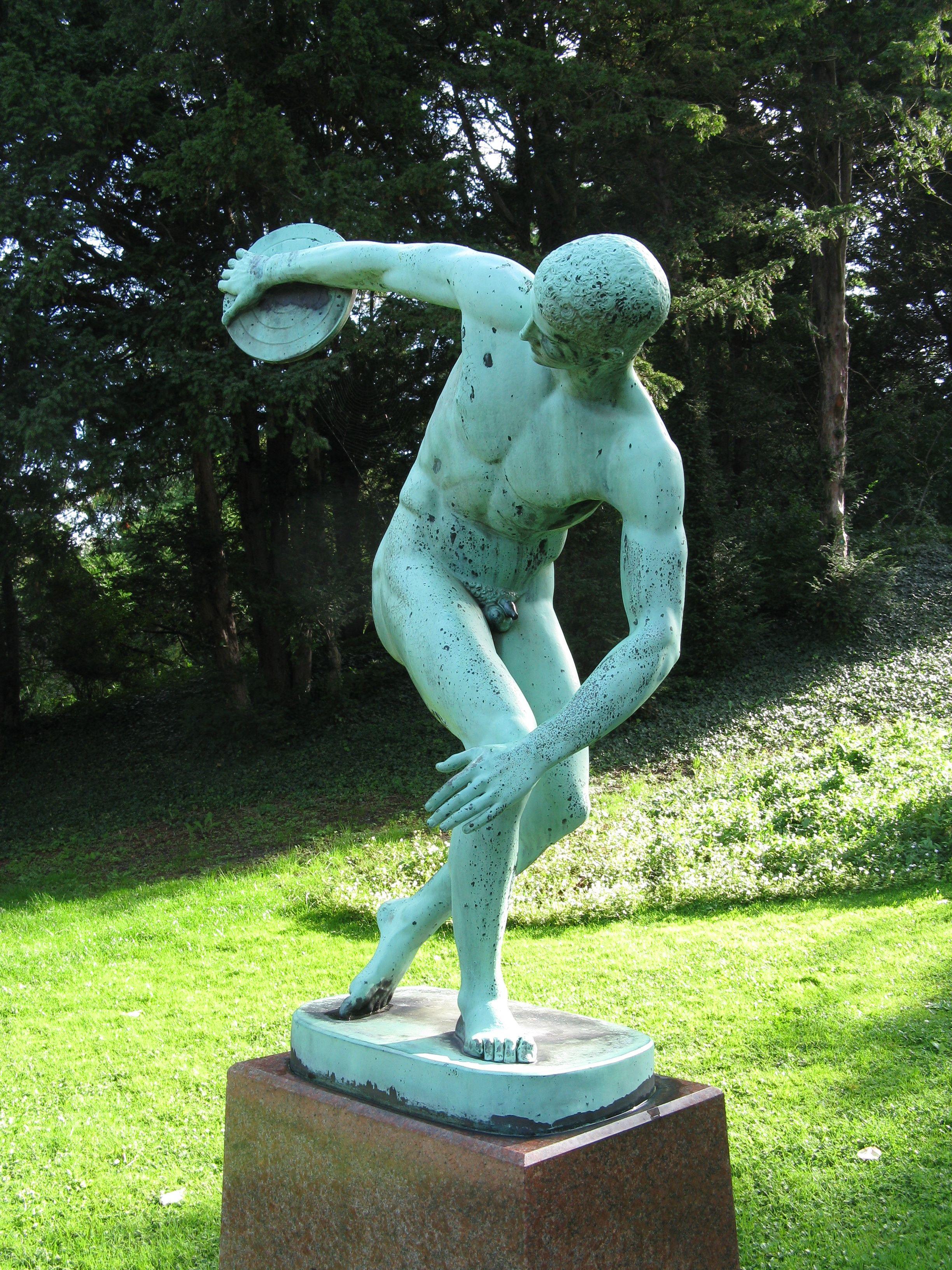
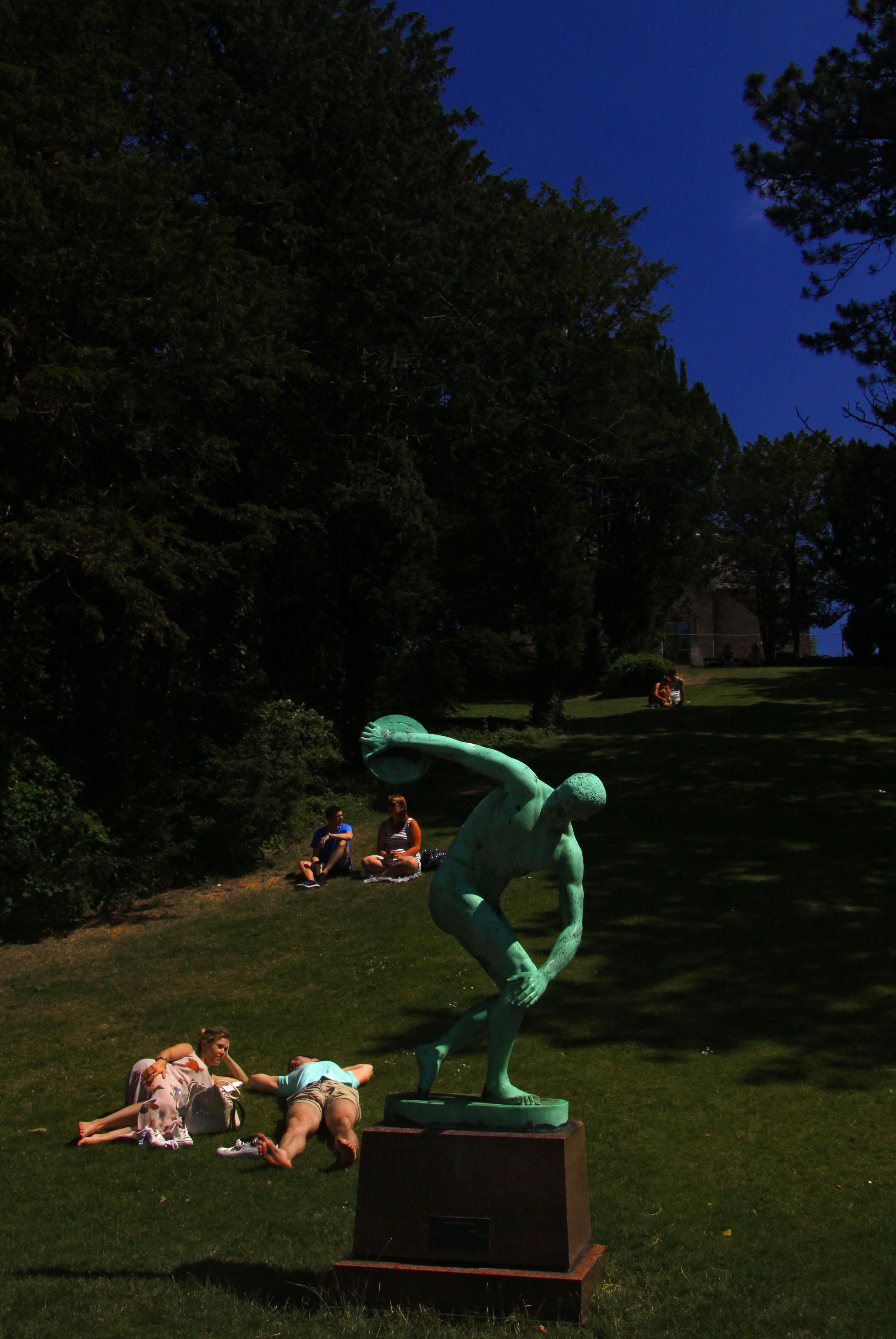
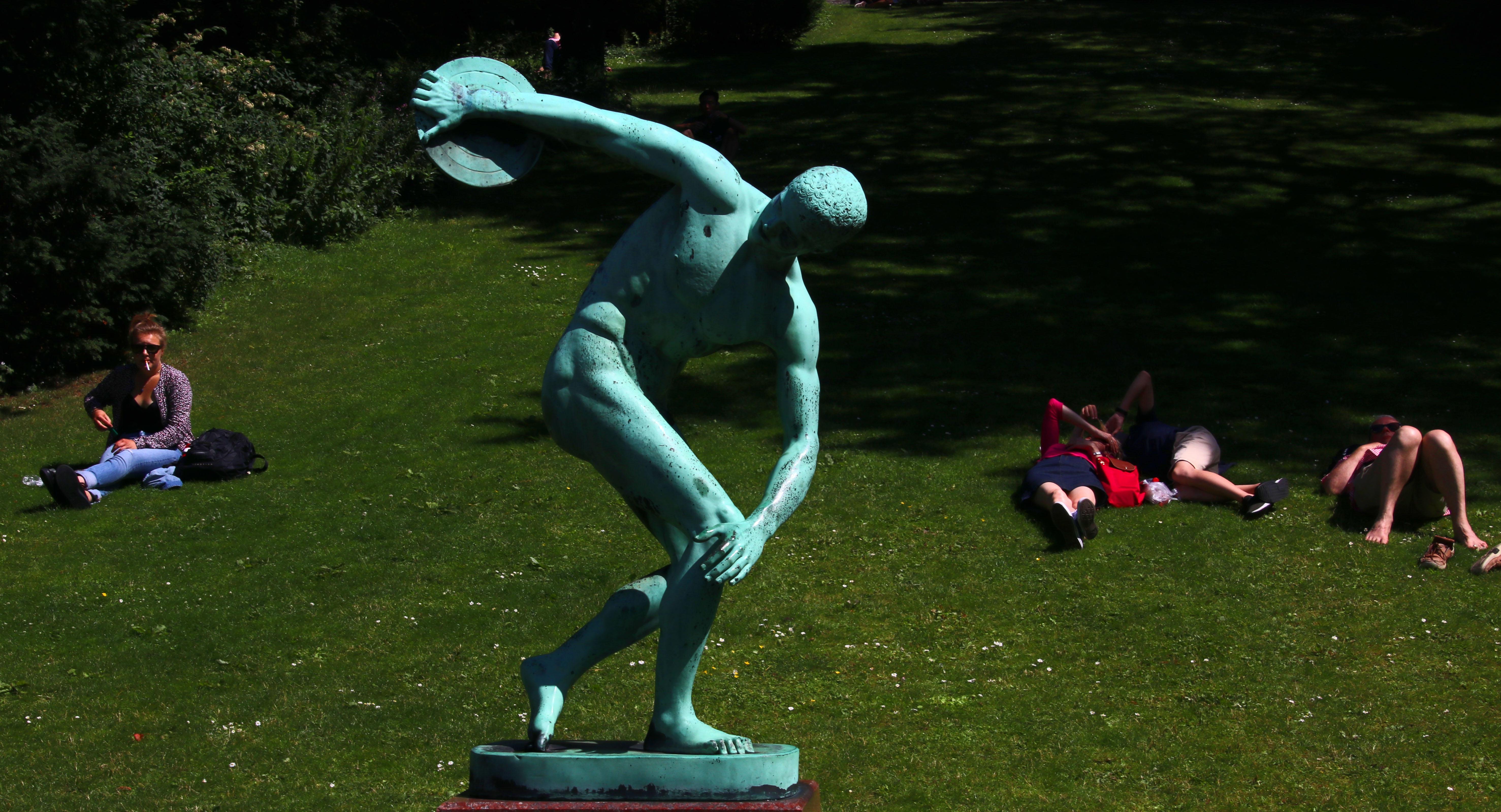
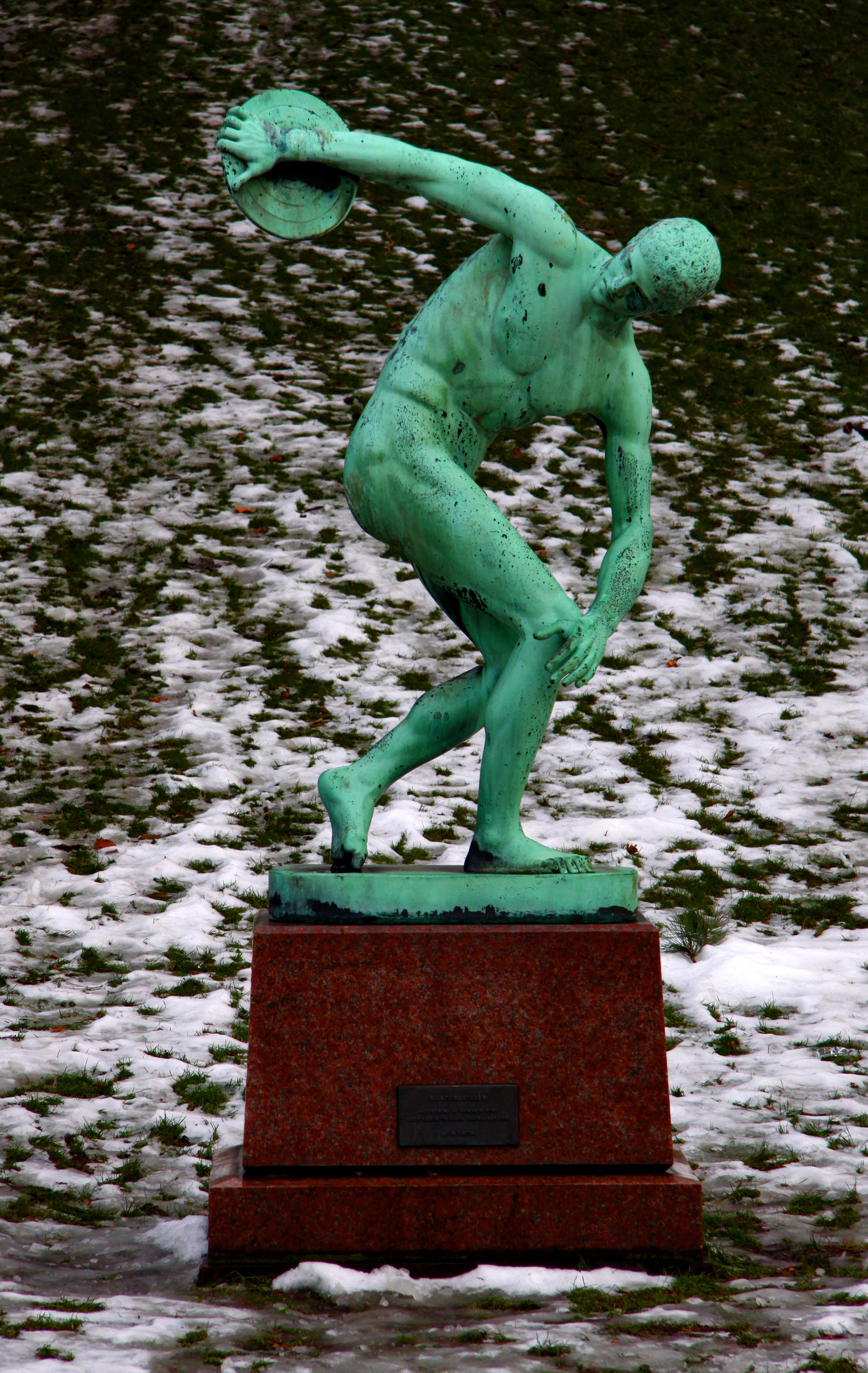
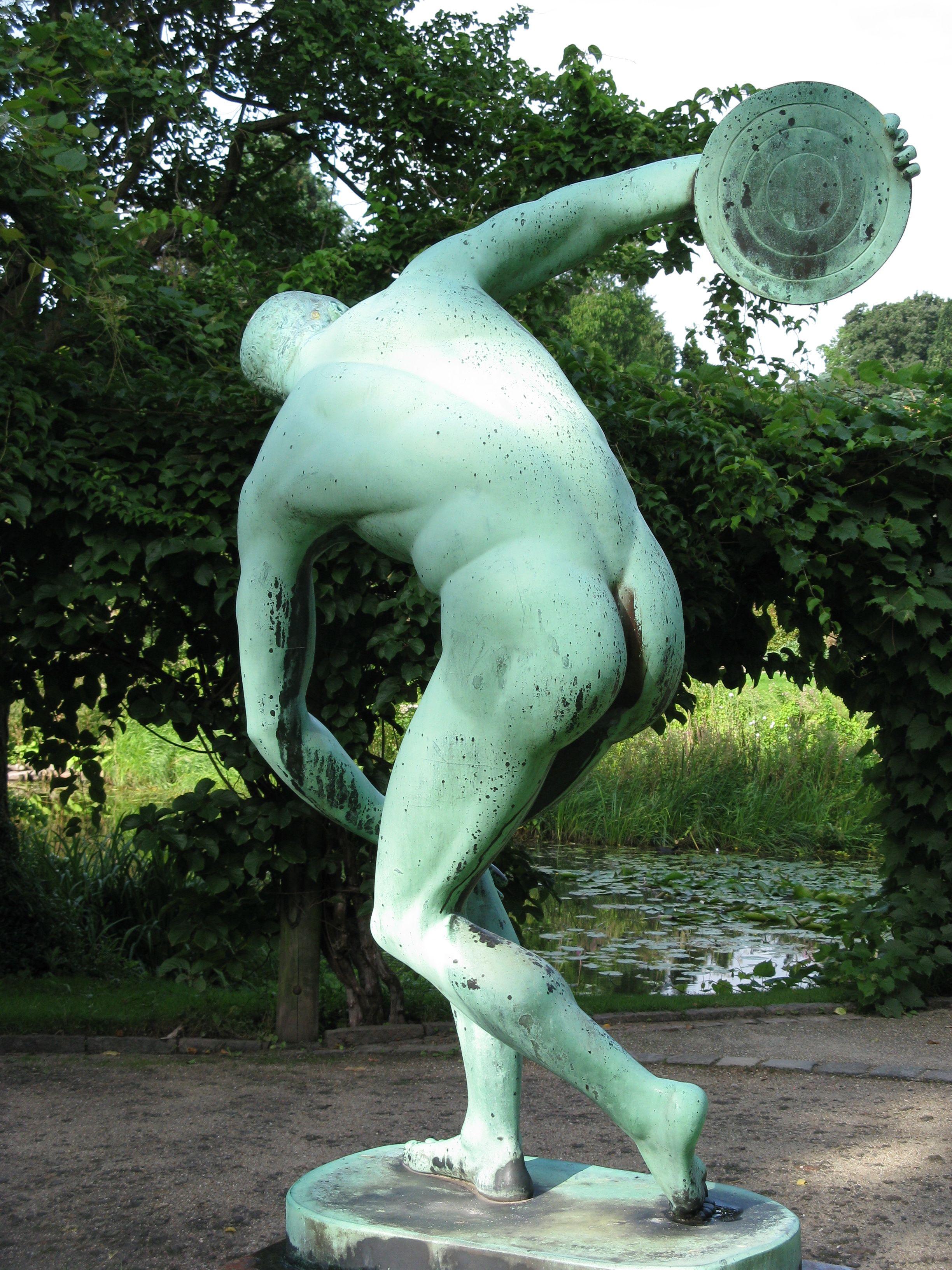
Discobolus stands in Copenhagen as an art statue showing a young athlete just before releasing a discus. It captures a twisted body, a drawn-back right arm, and a left hand resting on the knee. His eyes turn toward the discus, while tension runs through the muscles preparing for movement.
The sculpture follows Myron’s Greek bronze, probably created between 460 and 450 BCE during the Severe period. The original bronze has disappeared, leaving Roman copies as surviving witnesses to Myron’s design. Roman artists reproduced the figure in marble and bronze, making both life-sized versions and smaller reductions. The Copenhagen statue is itself a copy and rises taller than most people, giving the athlete a strong physical presence.
Myron pursued movement when earlier Greek figures often held static poses. Bronze allowed him to balance bodies in dynamic, almost unstable positions, and this pose freezes the instant before release. The sculpture also connects Copenhagen with ancient Greek athletics, Roman reinterpretation, and centuries of artistic attention.
- City
- Copenhagen
- Content updated
Take this page with you
The myTuur app is free, and once you are standing at a spot its story starts by itself.


Spots like this one are the stops myTuur strings into tours through Copenhagen. In the app, each story begins where you stand: walk up to a spot and it starts, read it on screen or listen as you go, then follow the route to the next one.
What is myTuur?
myTuur is a free city-guide app. Its tours are built from spots, and each spot carries a story that starts when you get there, to read or to listen to as you like.