Zeughaus
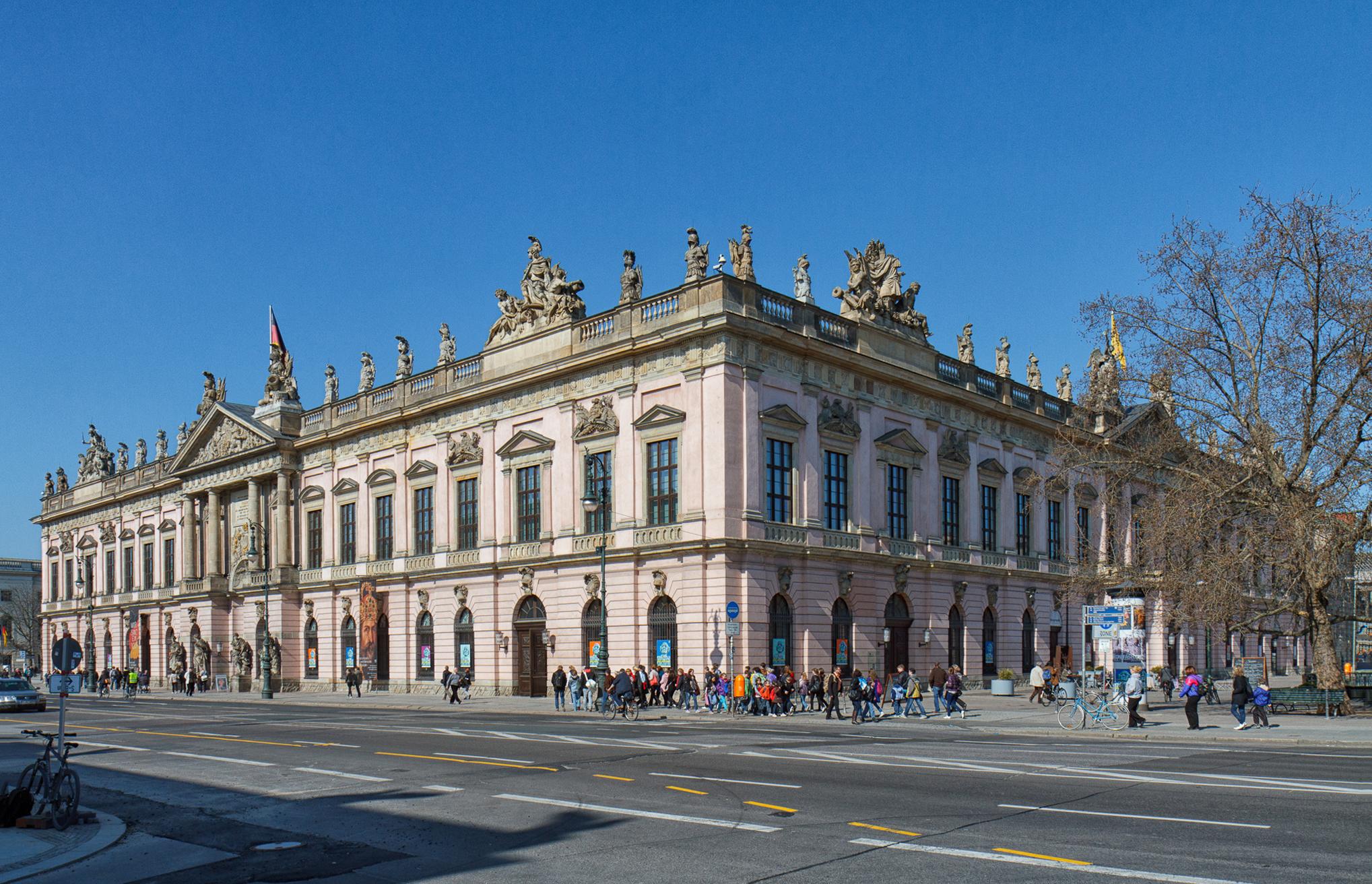
Zeughaus stands in Berlin beside Unter den Linden, the boulevard’s oldest surviving building. Its North German Baroque façade dates from construction between 1695 and 1706. Originally designed as an arsenal, it displayed cannons from Brandenburg and Prussia. Above the windows, carved keystones show giant heads, an unusual detail associated with Andreas Schlüter.
Johann Arnold Nering began the work, while Martin Grünberg and Andreas Schlüter continued it after his death. Jean de Bodt completed the building in 1706, although its interior followed in 1730. The structure later served as a military museum and a Prussian Hall of Fame. In 1875, its military museum presented another chapter in the building’s changing role.
The Deutsches Historisches Museum now occupies the historic structure and presents 1,500 years of German history. Restoration followed serious damage during the Second World War, while the permanent exhibition is being renewed. I. M. Pei’s modern building stands beside it and hosts temporary exhibitions. Together, the Baroque Zeughaus and the angular Pei building place two architectural eras side by side.
- City
- Berlin
- Content updated
Take this page with you
The myTuur app is free, and once you are standing at a spot its story starts by itself.


Spots like this one are the stops myTuur strings into tours through Berlin. In the app, each story begins where you stand: walk up to a spot and it starts, read it on screen or listen as you go, then follow the route to the next one.
What is myTuur?
myTuur is a free city-guide app. Its tours are built from spots, and each spot carries a story that starts when you get there, to read or to listen to as you like.