Het Steen
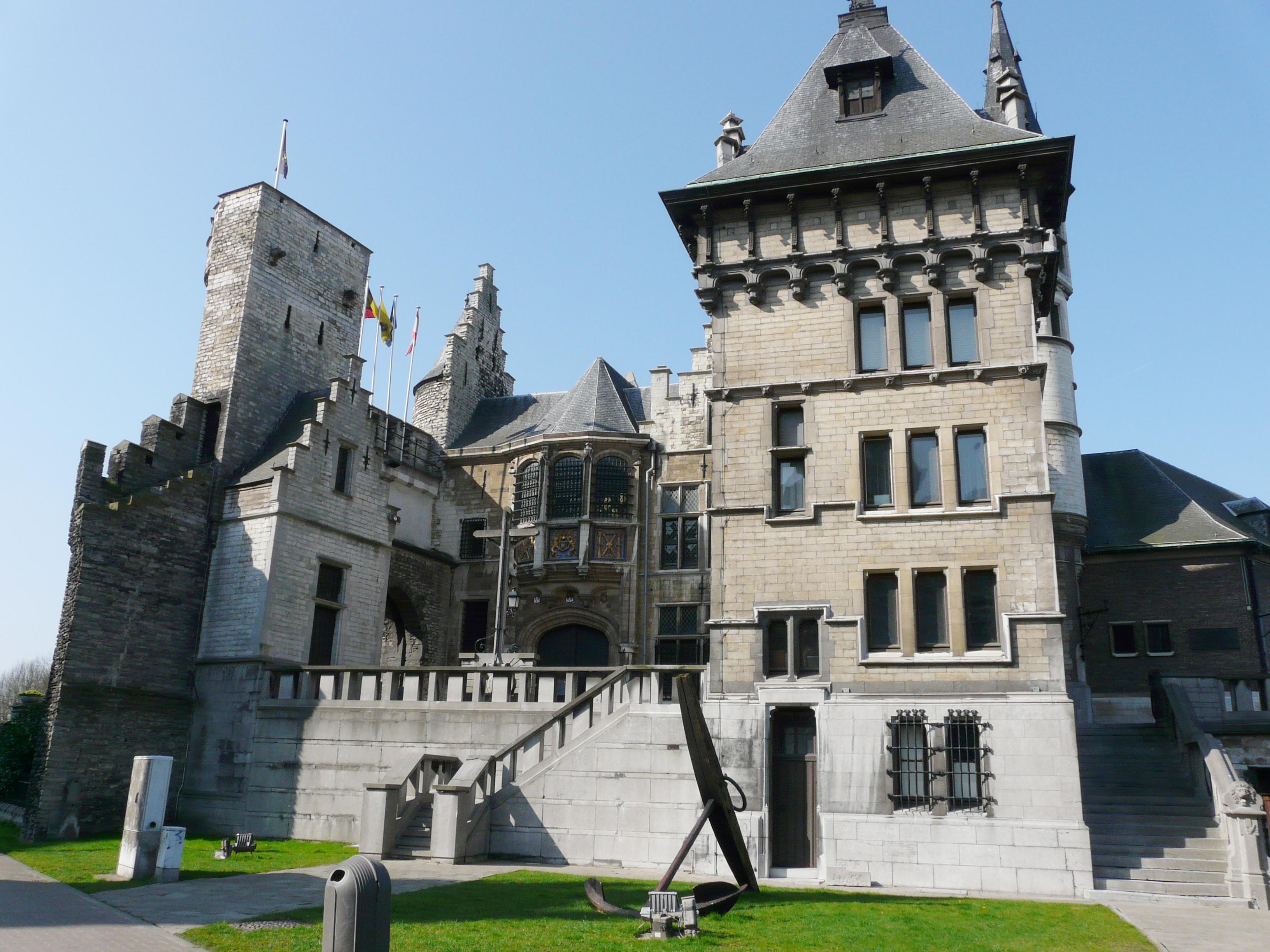
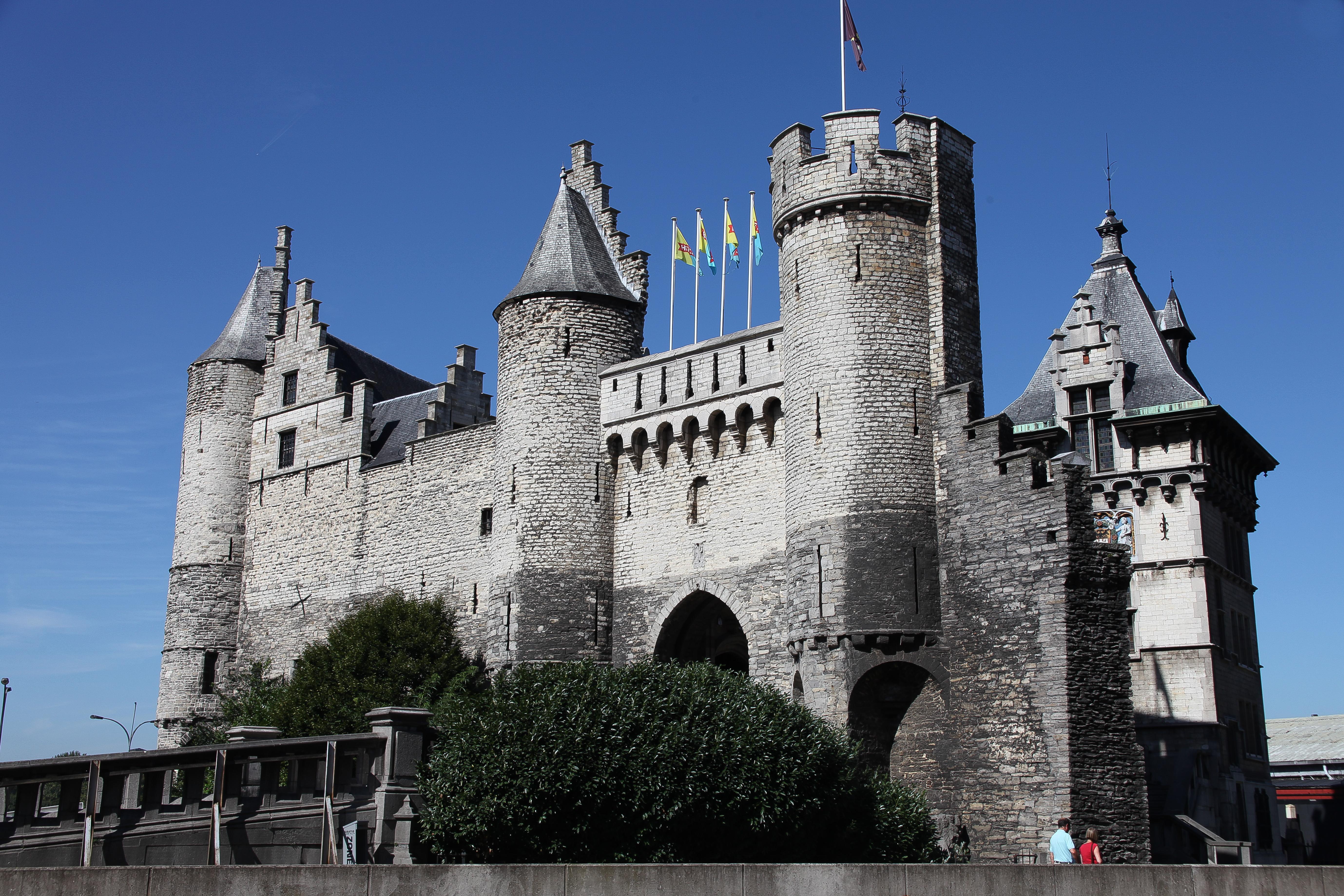
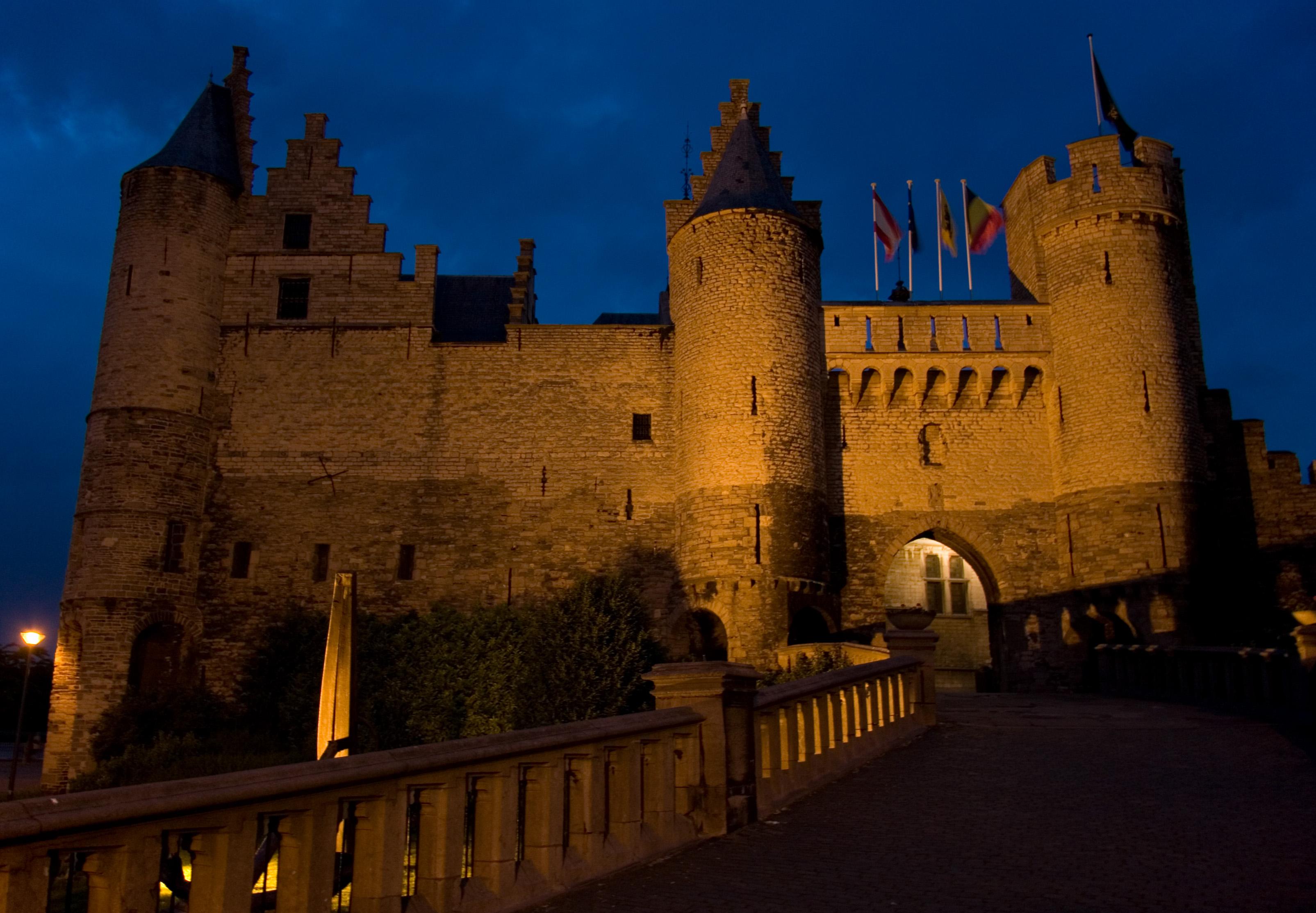
Burg Steen is a medieval fortress beside the Scheldt in Antwerp, and the city’s oldest surviving building. Built between 1200 and 1225, it originally formed the gateway to a larger castle belonging to the Dukes of Brabant. Its stone walls later served as a city hall, court, and prison, with the prison operating from 1303 to 1827.
Much of the surrounding castle and walled city disappeared during nineteenth-century works to straighten the river quays, while this section survived and underwent major alterations. A 1890 archaeology museum and a 1952 maritime-history extension once occupied the site, which now combines a visitor centre with a modern addition, historical exhibits, and a Canadian war memorial. Above the entrance arch, a second-century bas-relief shows Semini, a Scandinavian god associated with youth and fertility.
Lange Wapper, a legendary giant, stands with two human figures on the entrance bridge. The fortress also connects Antwerp’s history with opera: Wagner’s Lohengrin places a scene in Antwerp Castle around 933, inspiring the design of Neuschwanstein through its stage directions.
- City
- Antwerp
- Content updated

Take this page with you
The myTuur app is free, and once you are standing at a spot its story starts by itself.


Spots like this one are the stops myTuur strings into tours through Antwerp. In the app, each story begins where you stand: walk up to a spot and it starts, read it on screen or listen as you go, then follow the route to the next one.
What is myTuur?
myTuur is a free city-guide app. Its tours are built from spots, and each spot carries a story that starts when you get there, to read or to listen to as you like.