رمسيس الثاني
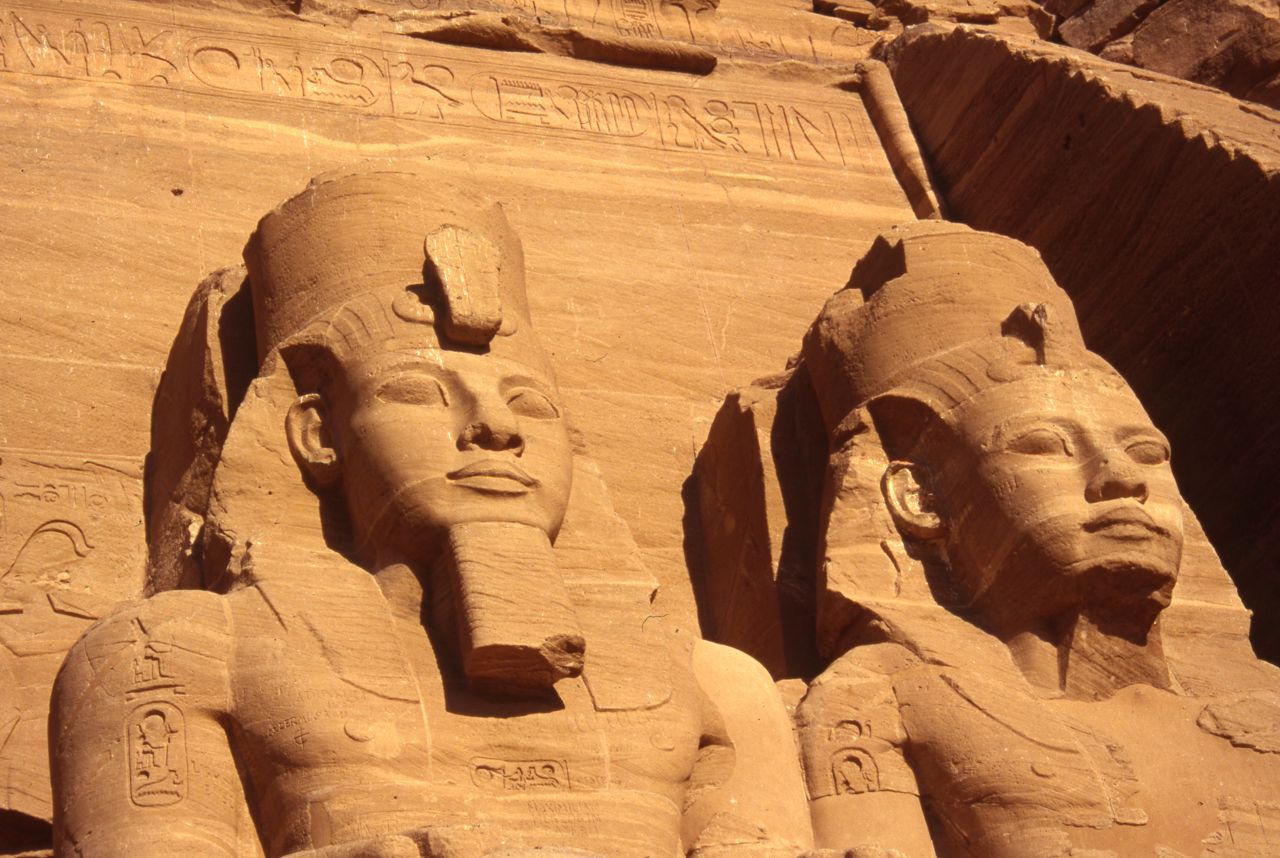
Ramses II stands before the Great Temple of Abu Simbel in Egypt, carved directly into the rock. His seated figure faces the horizon with calm symmetry.
The pharaoh rests his hands on his knees, while smaller family figures gather around his feet. Sunlight gives the stone changing shades.
The statue forms part of a monumental temple façade built during Ramses II’s reign in ancient Nubia. The temple joined worship with royal power.
Precise alignment sends sunlight deep inside the temple and illuminates statues within. The effect connects architecture with solar movement.
When the Aswan High Dam threatened the region with flooding, workers cut the complex into blocks and moved it higher. That relocation preserved the carved stone and its message of endurance.
Abu Simbel City lies beside the Nile, with desert cliffs surrounding the river landscape. The setting places ancient craftsmanship beside warm desert light.
- City
- Abu Simbel City
- Content updated
Take this page with you
The myTuur app is free, and once you are standing at a spot its story starts by itself.


Spots like this one are the stops myTuur strings into tours through Abu Simbel City. In the app, each story begins where you stand: walk up to a spot and it starts, read it on screen or listen as you go, then follow the route to the next one.
What is myTuur?
myTuur is a free city-guide app. Its tours are built from spots, and each spot carries a story that starts when you get there, to read or to listen to as you like.