Latvijas Nacionālais teātris
Latvijas Nacionālais teātris stands beside the Riga Canal, just outside Riga’s Old Town, in a park marking the former Citadel. Its façade combines eclectic, Baroque, and Art Nouveau details. Augusts Reinbergs designed the building, which opened to the public in 1902 as Riga’s Second Russian Theatre. Inside, functional performance spaces carry classical ornaments and decorations.
Latvian independence was proclaimed from this stage in November 1918, linking the building directly to a defining national moment. The event survives in only one photograph taken inside the main hall. After hosting Russian-language theatre and opera, the venue welcomed Latvian plays through the Riga Latvian Society in 1917. Latvian theatre became its public role in 1919. Political changes renamed it Riga’s Dramatic Theatre in 1940, before the original name returned in 1988.
Today, three halls support Latvian classics, new works by Latvian playwrights, and international plays across a professional repertory programme. Children’s performances can also use the fourth hall, the Horror Bus. The Great Hall forms the main interior, while the Actors Hall and LMT New Hall offer smaller settings. A café sits inside for meals before or after performances.
- City
- Riga
- Content updated
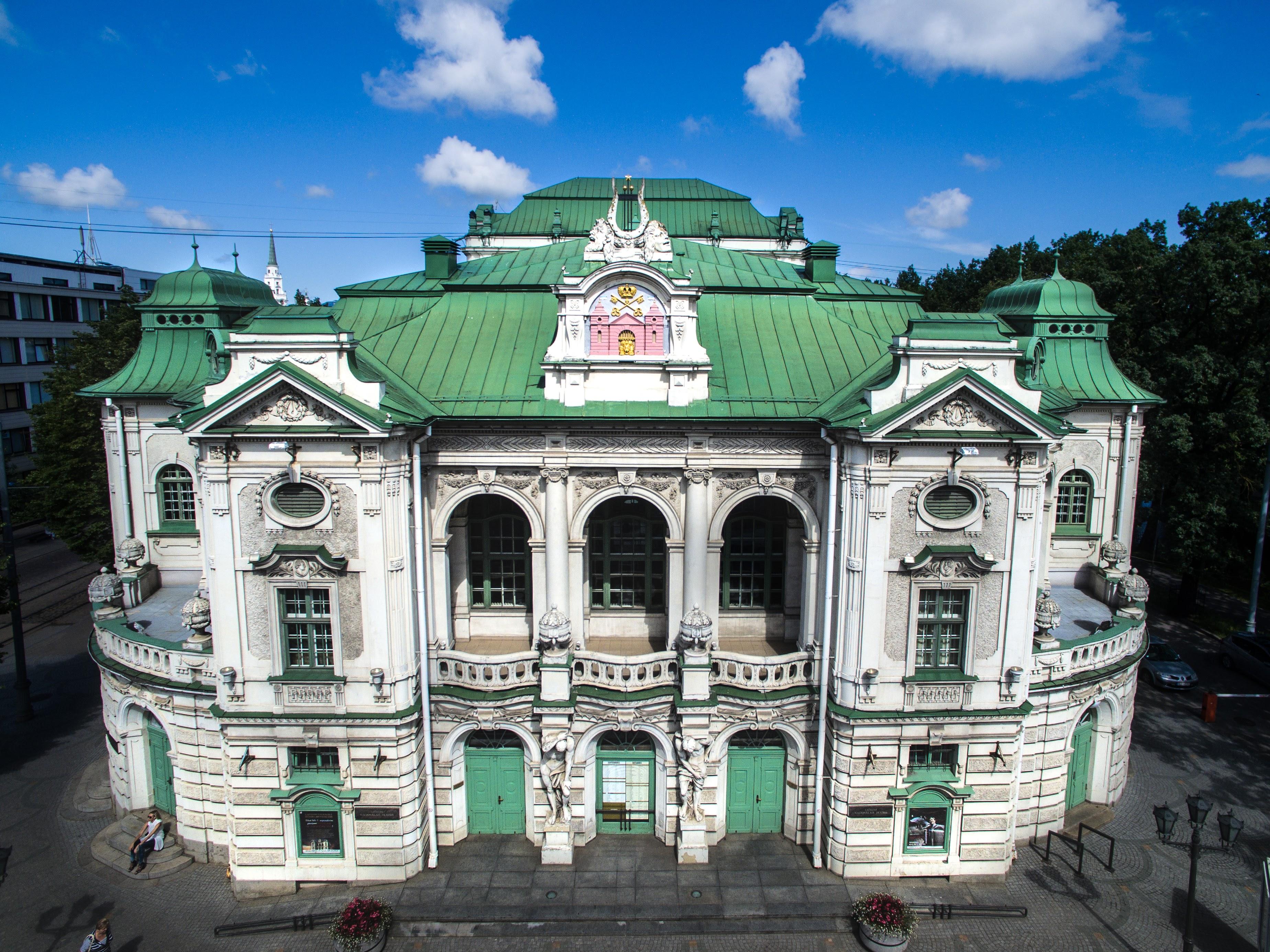
Image: SomynameisCC BY-SA 4.0 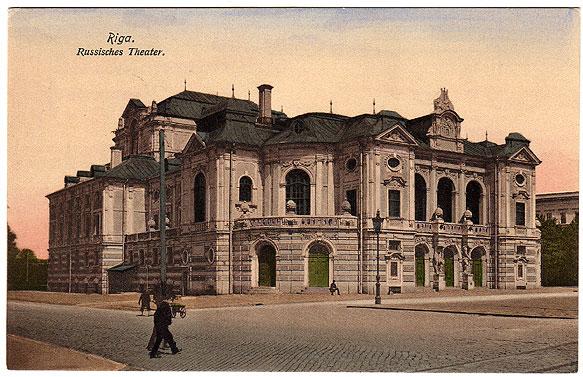
Image: UnknownUnknownPublic domain 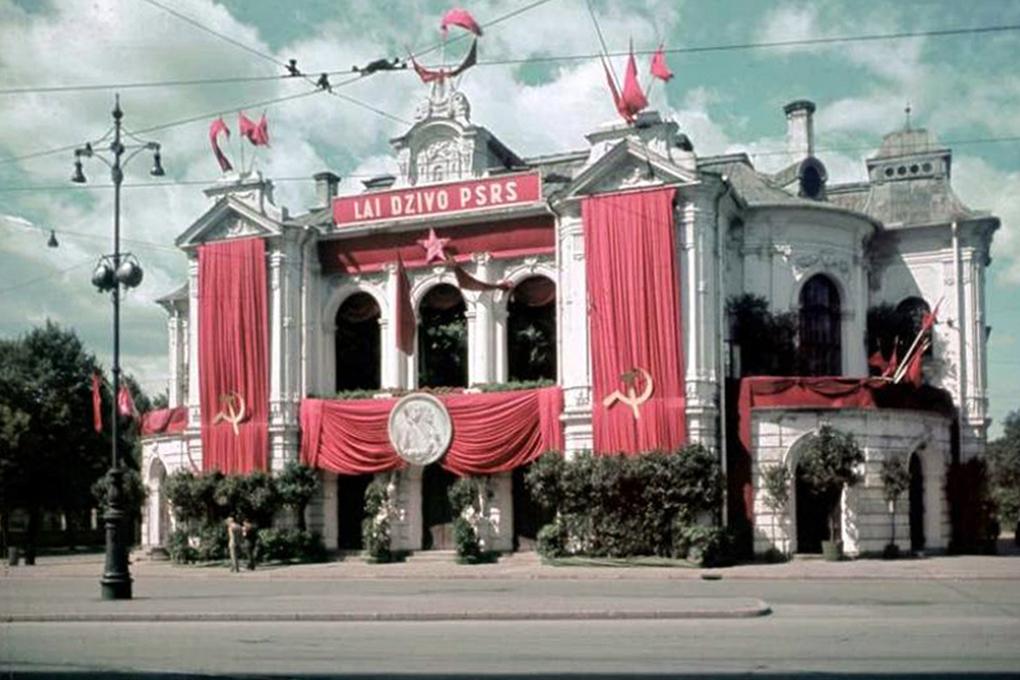
Image: Unknown authorUnknown authorPublic domain
Take this page with you
The myTuur app is free, and once you are standing at a spot its story starts by itself.


Spots like this one are the stops myTuur strings into tours through Riga. In the app, each story begins where you stand: walk up to a spot and it starts, read it on screen or listen as you go, then follow the route to the next one.
What is myTuur?
myTuur is a free city-guide app. Its tours are built from spots, and each spot carries a story that starts when you get there, to read or to listen to as you like.