Orangerieschloss
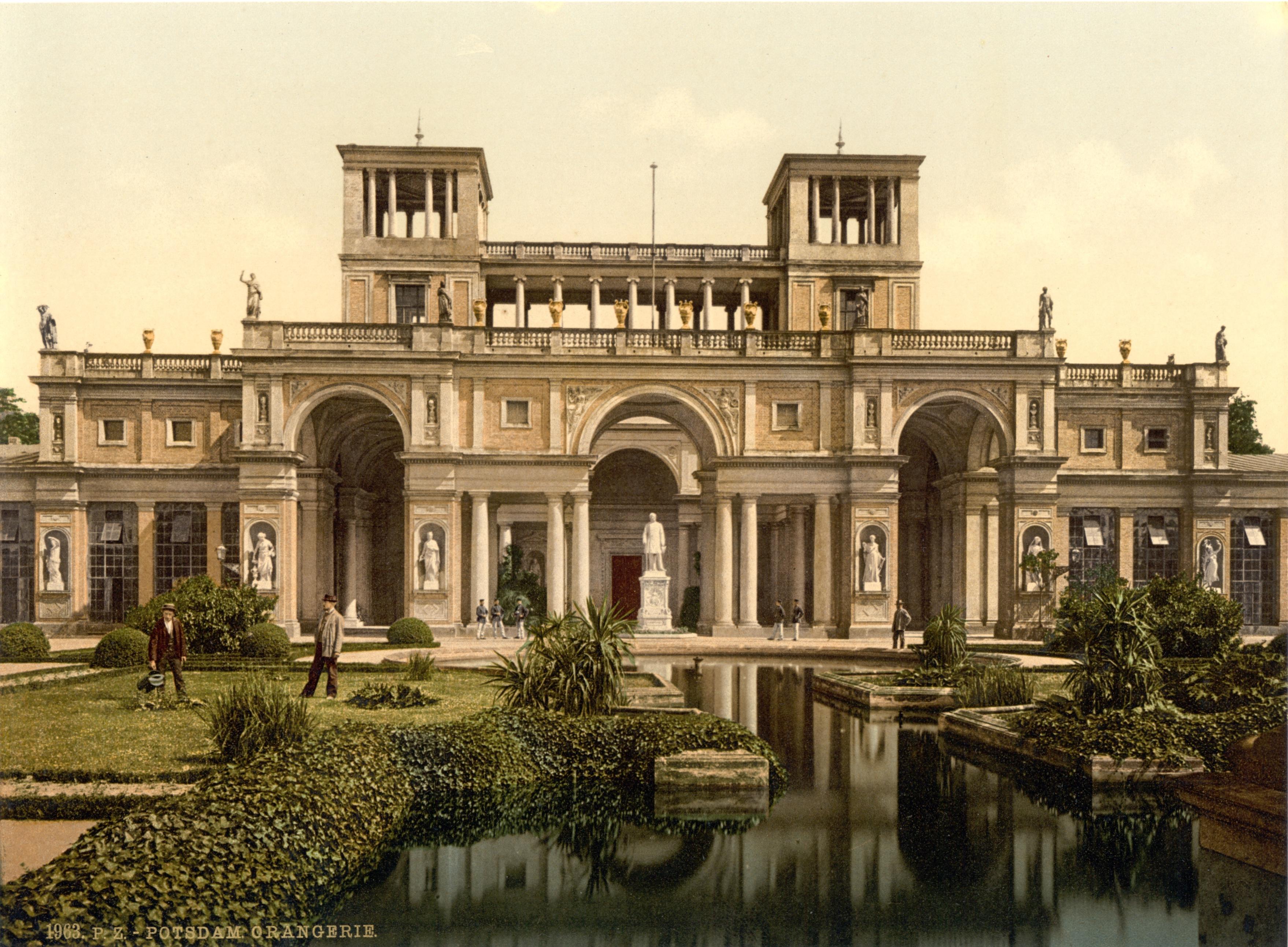
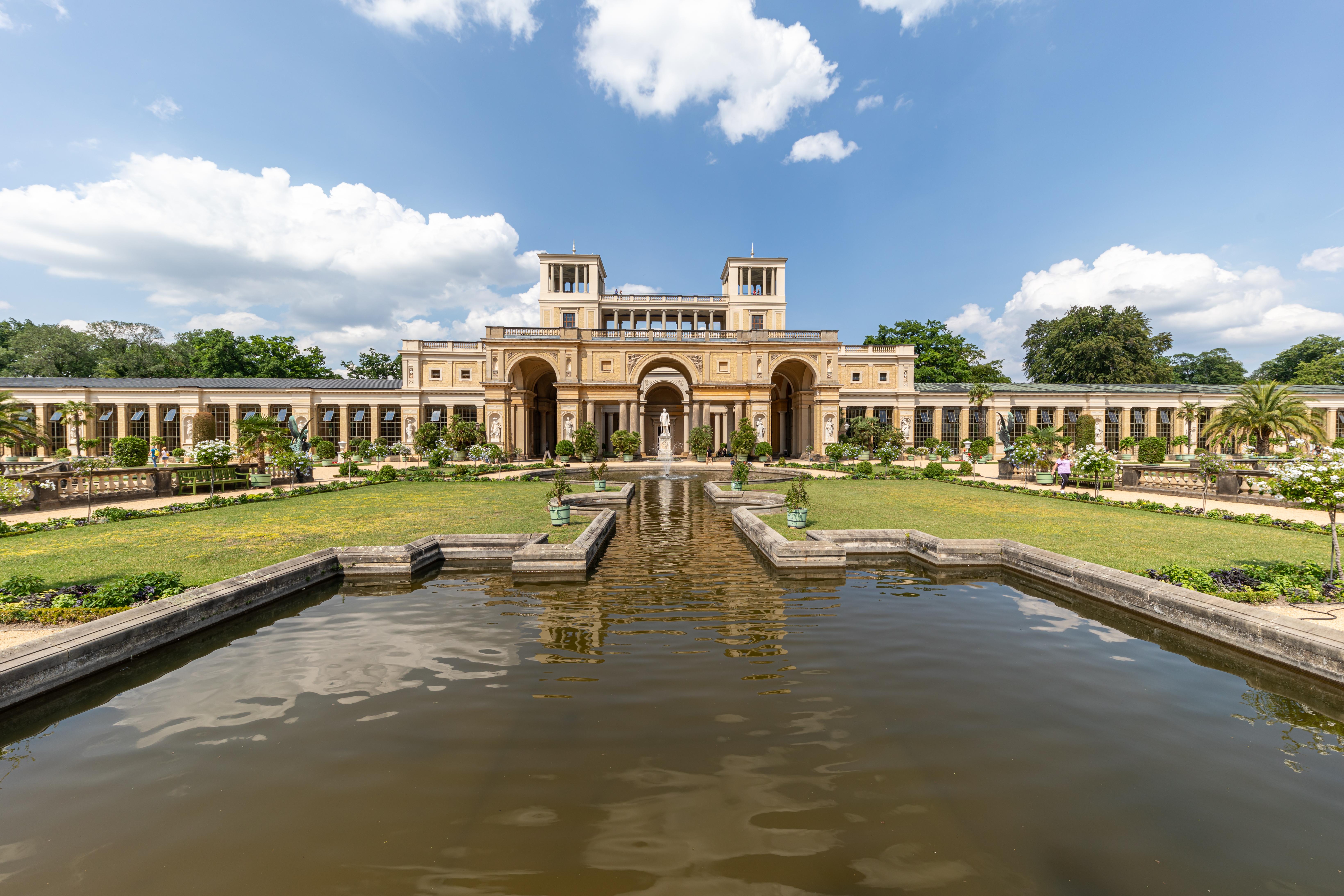
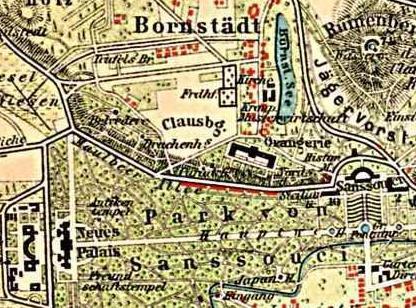
Orangerieschloss stands in Sanssouci Park, Potsdam, as a palace shaped by Italian Renaissance architecture. Its central building rises between twin towers. Built from 1851 to 1864 for King Friedrich Wilhelm IV, it formed part of an unfinished triumphal route. Political unrest and financial limits stopped that larger plan. Friedrich August Stüler, Friedrich Ludwig Persius, and Ludwig Ferdinand Hesse drew on Rome’s Villa Medici and Florence’s Uffizi. Only the palace and a triumphal arch were completed.
Behind the central portico, the Raffael Hall follows the Vatican’s Sala Regia and displays more than fifty Renaissance copies. Royal apartments use the second Rococo style. Plant halls on both sides shelter frost-sensitive plants in winter, while the surrounding gardens follow Peter Joseph Lenné’s Italian Renaissance design. Westward, the Paradise Garden holds exotic flowers and foliage. To the east, Norse and Sicilian gardens contrast pines with tubs of palms. Since 1990, the palace belongs to the UNESCO World Heritage Site Palaces and Parks of Potsdam and Berlin.
- City
- Potsdam
- Content updated
Take this page with you
The myTuur app is free, and once you are standing at a spot its story starts by itself.


Spots like this one are the stops myTuur strings into tours through Potsdam. In the app, each story begins where you stand: walk up to a spot and it starts, read it on screen or listen as you go, then follow the route to the next one.
What is myTuur?
myTuur is a free city-guide app. Its tours are built from spots, and each spot carries a story that starts when you get there, to read or to listen to as you like.