Wildererskreuz
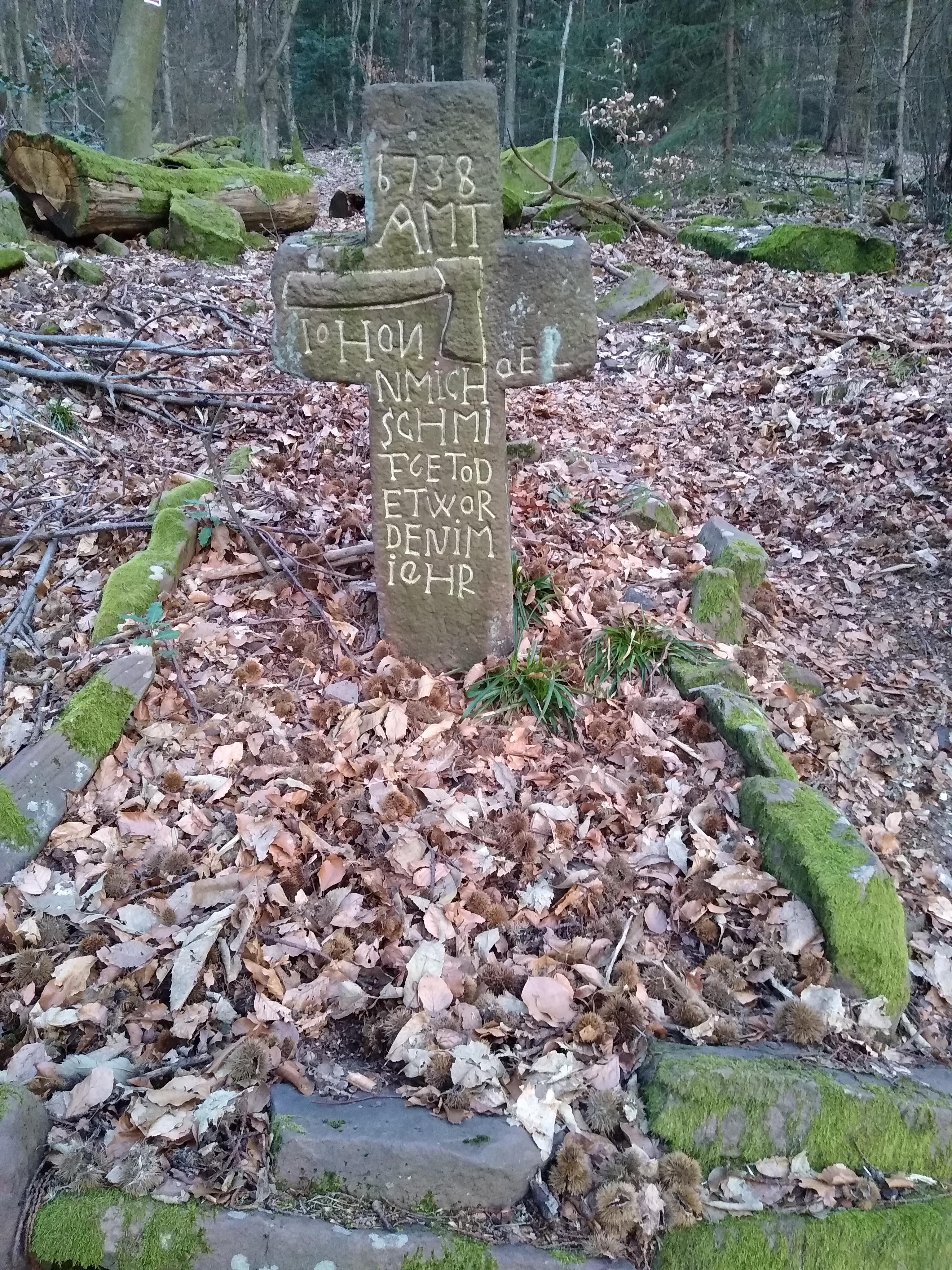
Wildererskreuz stands on the northern slope of the Königstuhl in Heidelberg, within the Neckartal-Odenwald Nature Park. This memorial cross marks a forest setting where natural surroundings meet a documented act of violence. In March 1738, forest guard Johann Michael Schmitt was killed by a poacher while on duty. He was buried on 27 March 1738, in Heidelberg’s Catholic cemetery.
The stone is a Sühnekreuz, an atonement cross traditionally associated with violent deaths and reconciliation. An occupational symbol, an inscription, and the year 1738 are carved into its surface. Several hiking routes connect the site with the Königstuhl, Himmelsleiter, and Wolfsbrunnen. The surrounding trails vary in length and difficulty, bringing the cross into walks through Heidelberg’s city forest.
Among the region’s historic stones and crosses, this one preserves a specific human story in the landscape. Its Christian associations point towards hope, peace, and overcoming death. The carved year 1738 remains the clearest detail linking the woodland path with Schmitt’s fate.
- City
- Heidelberg
- Content updated
Take this page with you
The myTuur app is free, and once you are standing at a spot its story starts by itself.


Spots like this one are the stops myTuur strings into tours through Heidelberg. In the app, each story begins where you stand: walk up to a spot and it starts, read it on screen or listen as you go, then follow the route to the next one.
What is myTuur?
myTuur is a free city-guide app. Its tours are built from spots, and each spot carries a story that starts when you get there, to read or to listen to as you like.