Magnustritt
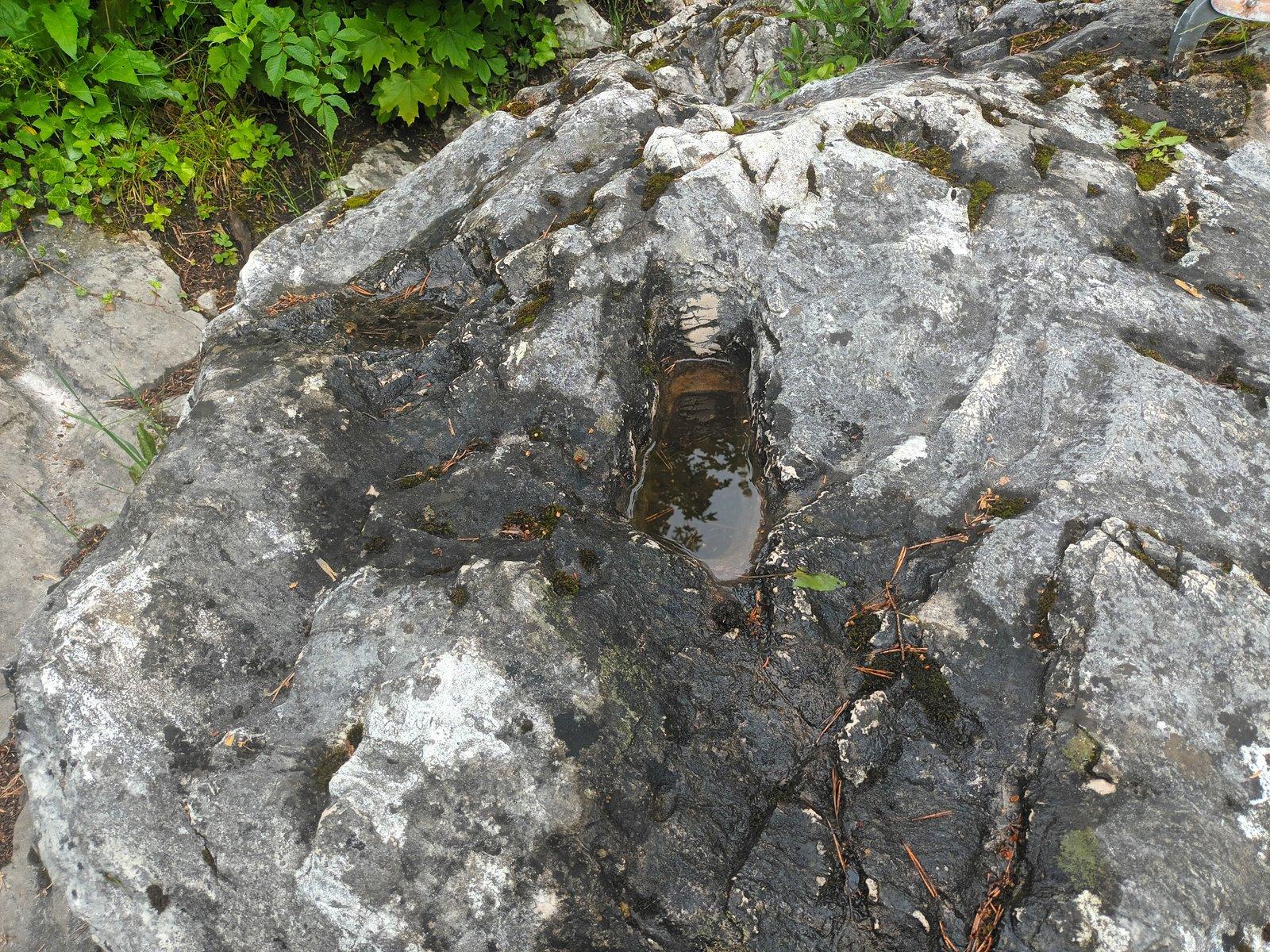
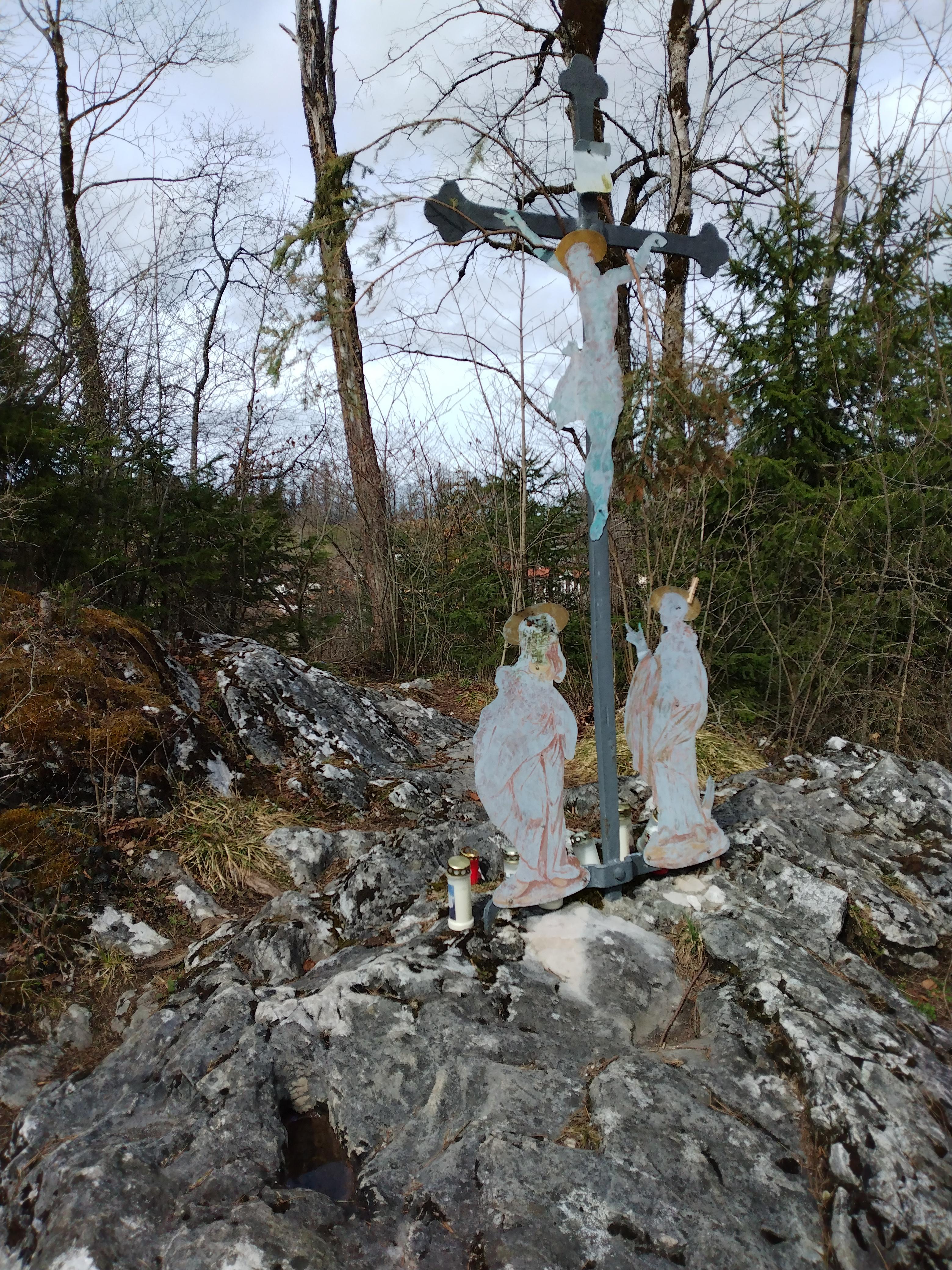
Magnustritt is a shoe-shaped hollow in the Lusalten rock above the Lech Gorge in Füssen, Germany. The Lech rushes below, while the Maxsteg bridge offers a view from beside the Lechfall. A short secured path from Tiroler Straße leads towards the outcrop, where an iron cross stands beside the hollow.
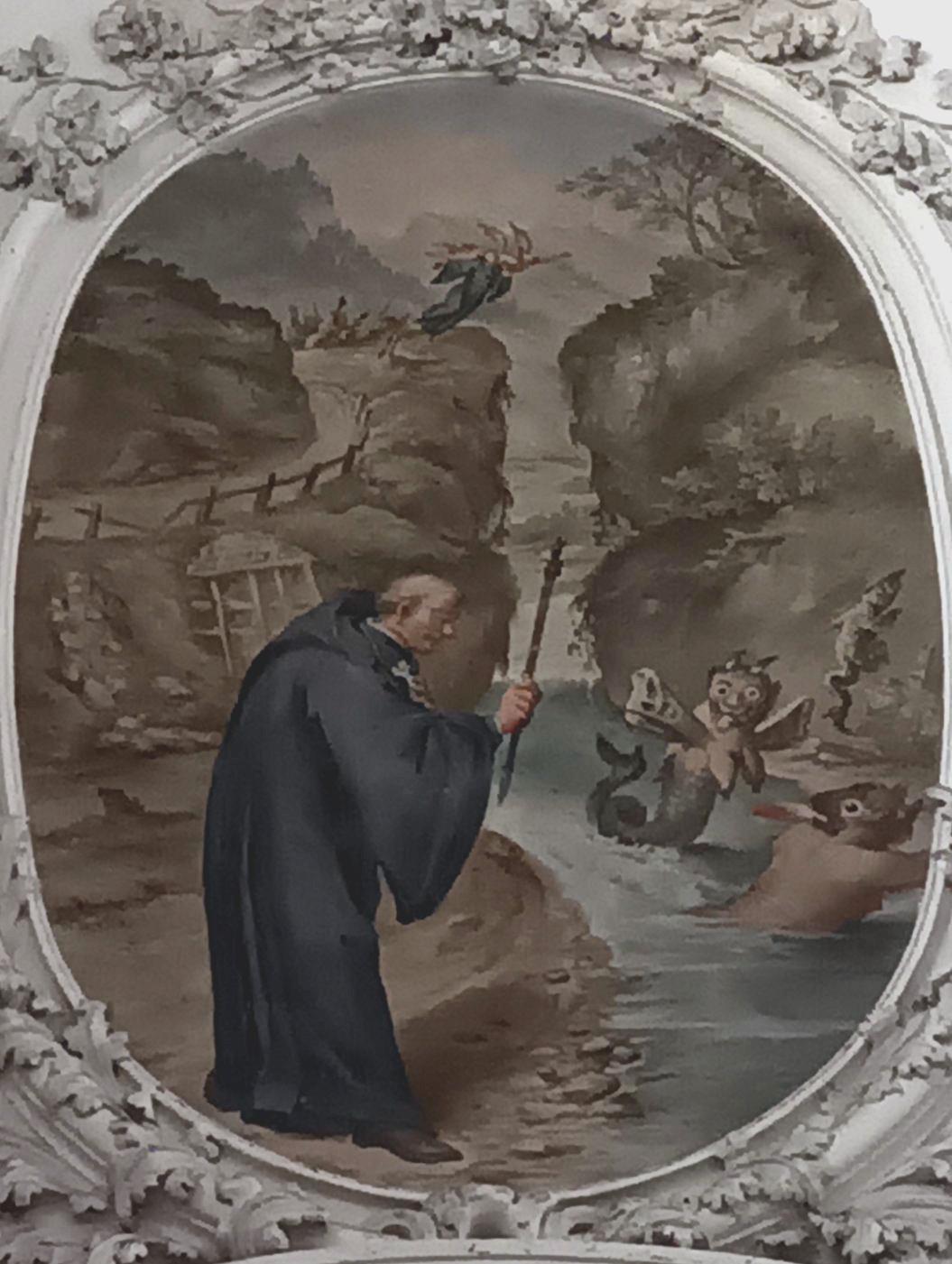
Local legend calls the indentation Saint Magnus’s footprint, made during his escape from demons across the gorge. A tradition recorded in 980 describes Magnus driving demons away at Lusalten, before the leap entered the story. In 1626, a cross appeared there, and reports of miraculous healings followed. Pilgrimages continued until 1920, while older beliefs gave collected rainwater healing powers. Geologists attribute the hollow to weathering around a fossilised giant oyster from the Tertiary period.
The prehistoric name Lusalten and the earlier “Julii saltus” tradition connect the rock with deeper local history. Faded painted figures form a crucifixion group on the wrought-iron cross, marked with 1726 and 1730. Across the gorge, a niche holds a bust of King Maximilian II, donated by Füssen in 1866. The fossil, legend, rushing water and pilgrimage traces meet at this rocky viewpoint.
- City
- Füssen
- Content updated
Take this page with you
The myTuur app is free, and once you are standing at a spot its story starts by itself.


Spots like this one are the stops myTuur strings into tours through Füssen. In the app, each story begins where you stand: walk up to a spot and it starts, read it on screen or listen as you go, then follow the route to the next one.
What is myTuur?
myTuur is a free city-guide app. Its tours are built from spots, and each spot carries a story that starts when you get there, to read or to listen to as you like.