St. Petri-Dom
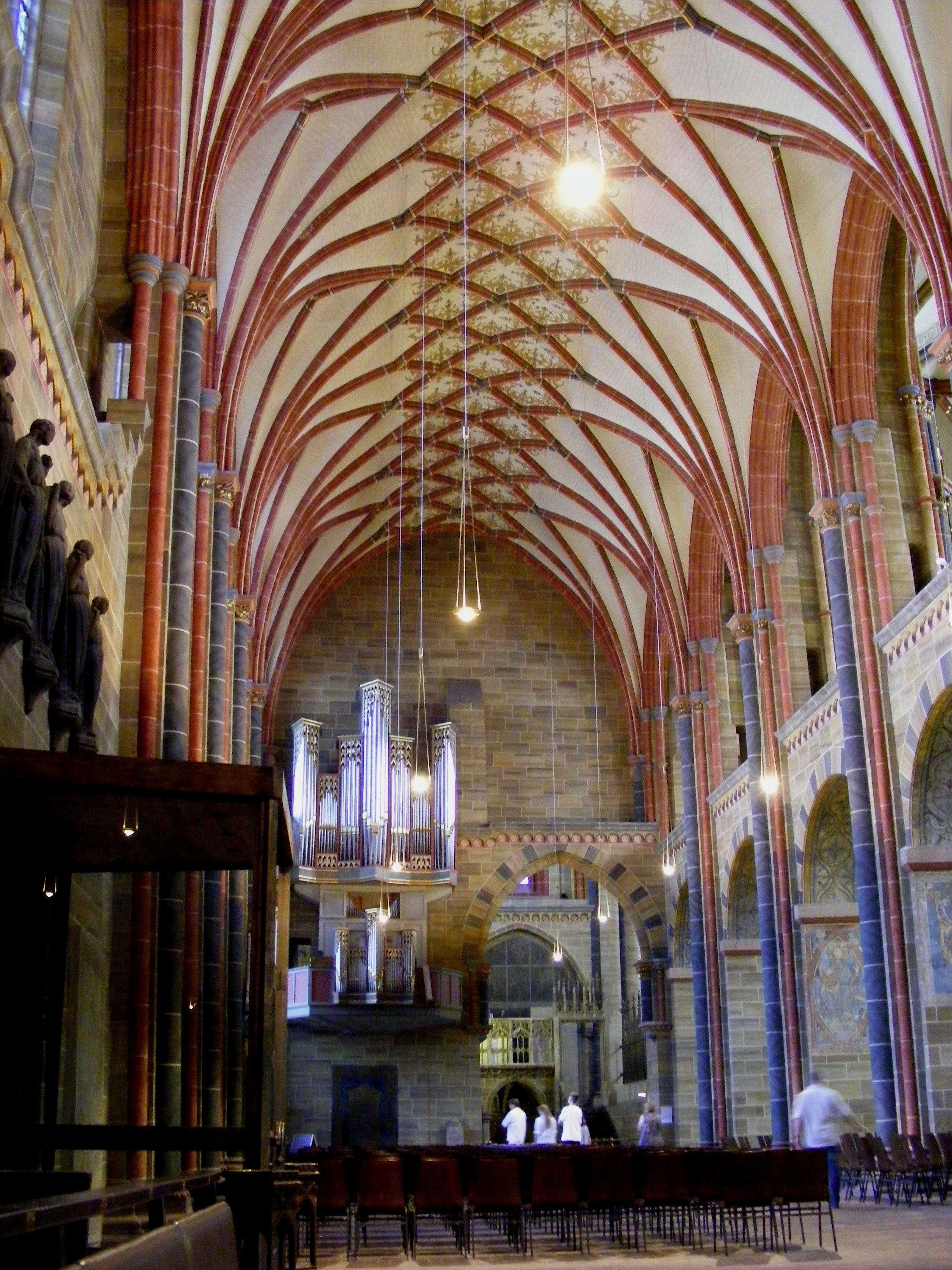
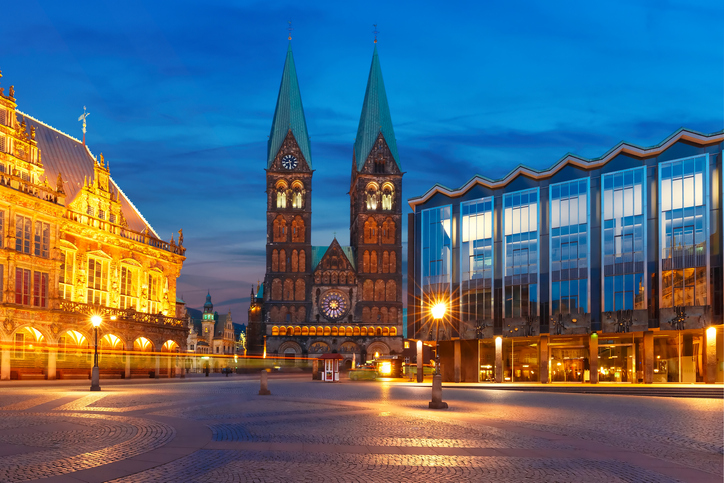
St. Petri-Dom stands in Bremen’s market square, where a Protestant cathedral combines Romanesque sandstone with medieval brick and Gothic vaults. Its western façade rises above two towers, while a rose window and crossing tower shape the view from the square.
The oldest visible spaces are the western and eastern crypts, built during rebuilding after a fire destroyed much of Bremen in 1041. Earlier, a timber church founded around 789 had stood here before Saxon attackers burned it three years later. Construction continued through successive medieval phases, adding Romanesque towers, Gothic vaults, flying buttresses, chapels and a northern nave. A major restoration from 1888 to 1901 rebuilt most of the western façade and towers, while the crossing tower followed the medieval example at Worms Cathedral. Since 1973, monument protection has preserved this layered architecture.
Look closely at the materials: historic brick covers much of the building, yet sandstone remains visible across the lower western façade and towers. The cathedral ranks among Europe’s largest historic brick structures, although its stonework prevents a purely Brick Gothic classification. Inside, galleries once accommodated Bremen’s growing Lutheran congregation, and Arp Schnitger installed a large organ between 1693 and 1698.
- City
- Bremen
- Content updated
Take this page with you
The myTuur app is free, and once you are standing at a spot its story starts by itself.


Spots like this one are the stops myTuur strings into tours through Bremen. In the app, each story begins where you stand: walk up to a spot and it starts, read it on screen or listen as you go, then follow the route to the next one.
What is myTuur?
myTuur is a free city-guide app. Its tours are built from spots, and each spot carries a story that starts when you get there, to read or to listen to as you like.