Pusi i Tophanese
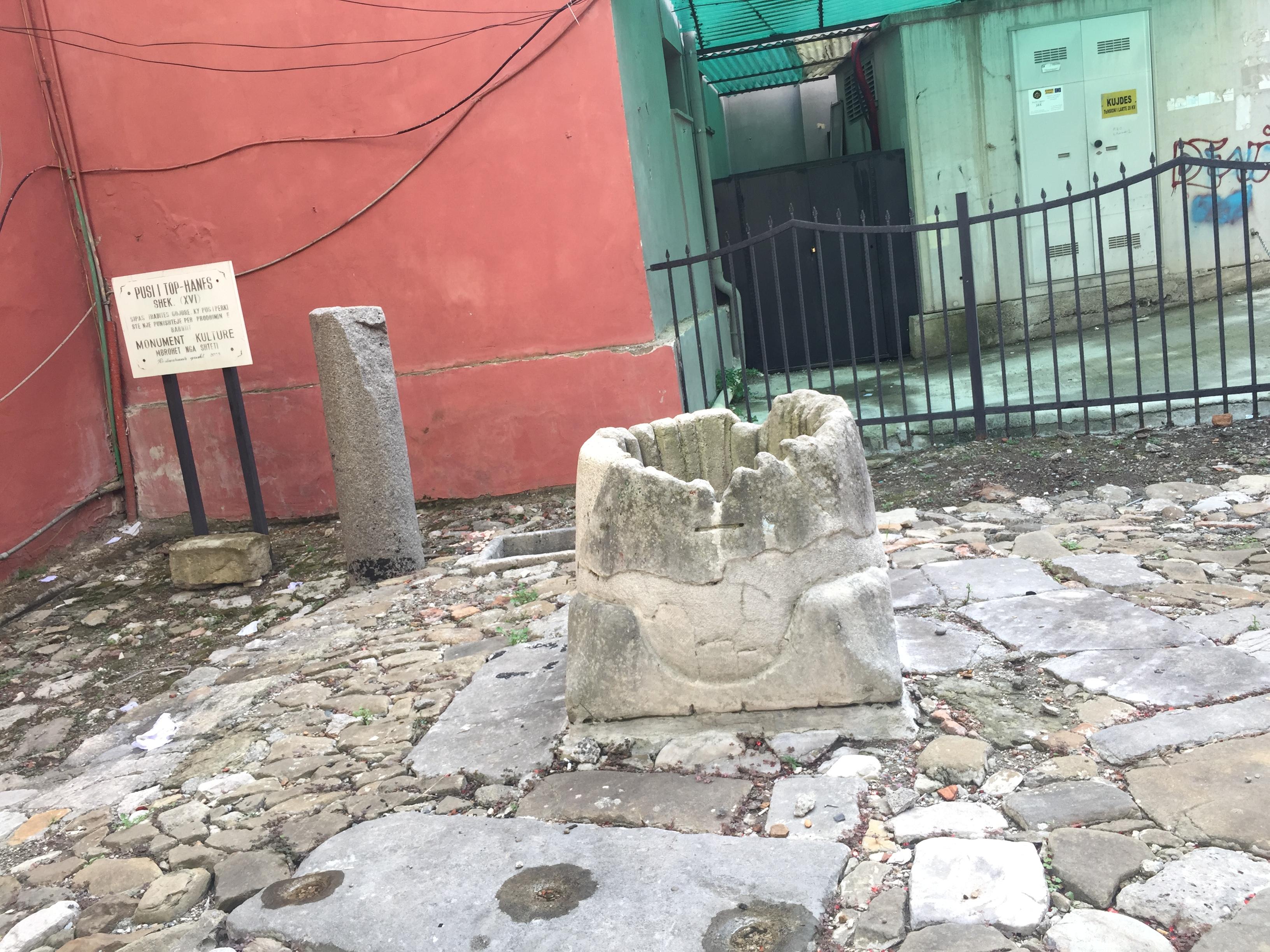
Pusi i Tophanese is a cultural heritage monument in Durrës, Albania, dating from the sixteenth century. The well supplied Durrës’s central neighbourhoods with water.
Its name links the site with a gunpowder workshop, since Tophane refers to cannons or gunpowder. The well remained a local water source until 1970.
Granite columns and large rectangular stones frame the mouth of the well in a cobbled pattern. Those details suggest Venetian-period intervention and the reuse of ancient elements.
Some historians consider the well a possible ancient nymphaeum, a water monument associated with nymphs. The nymphaeum interpretation remains a historical possibility.
In 2005, restoration repositioned the columns and other parts while preserving the monument’s architectural character. The restored structure retains its historical appearance.
Pusi i Tophanese shows how Durrës adapted older structures to meet changing urban needs. Its water served central neighbourhoods until 1970.
The well connects everyday water use with the city’s medieval, Venetian and possibly ancient layers. These layers remain visible in stone and granite.
Durrës’s central setting places this monument within the city’s longer history of practical infrastructure. That history survives through the well’s columns, stones and enduring name.
- City
- Durrës
- Content updated
Take this page with you
The myTuur app is free, and once you are standing at a spot its story starts by itself.


Spots like this one are the stops myTuur strings into tours through Durrës. In the app, each story begins where you stand: walk up to a spot and it starts, read it on screen or listen as you go, then follow the route to the next one.
What is myTuur?
myTuur is a free city-guide app. Its tours are built from spots, and each spot carries a story that starts when you get there, to read or to listen to as you like.