Can Trilla
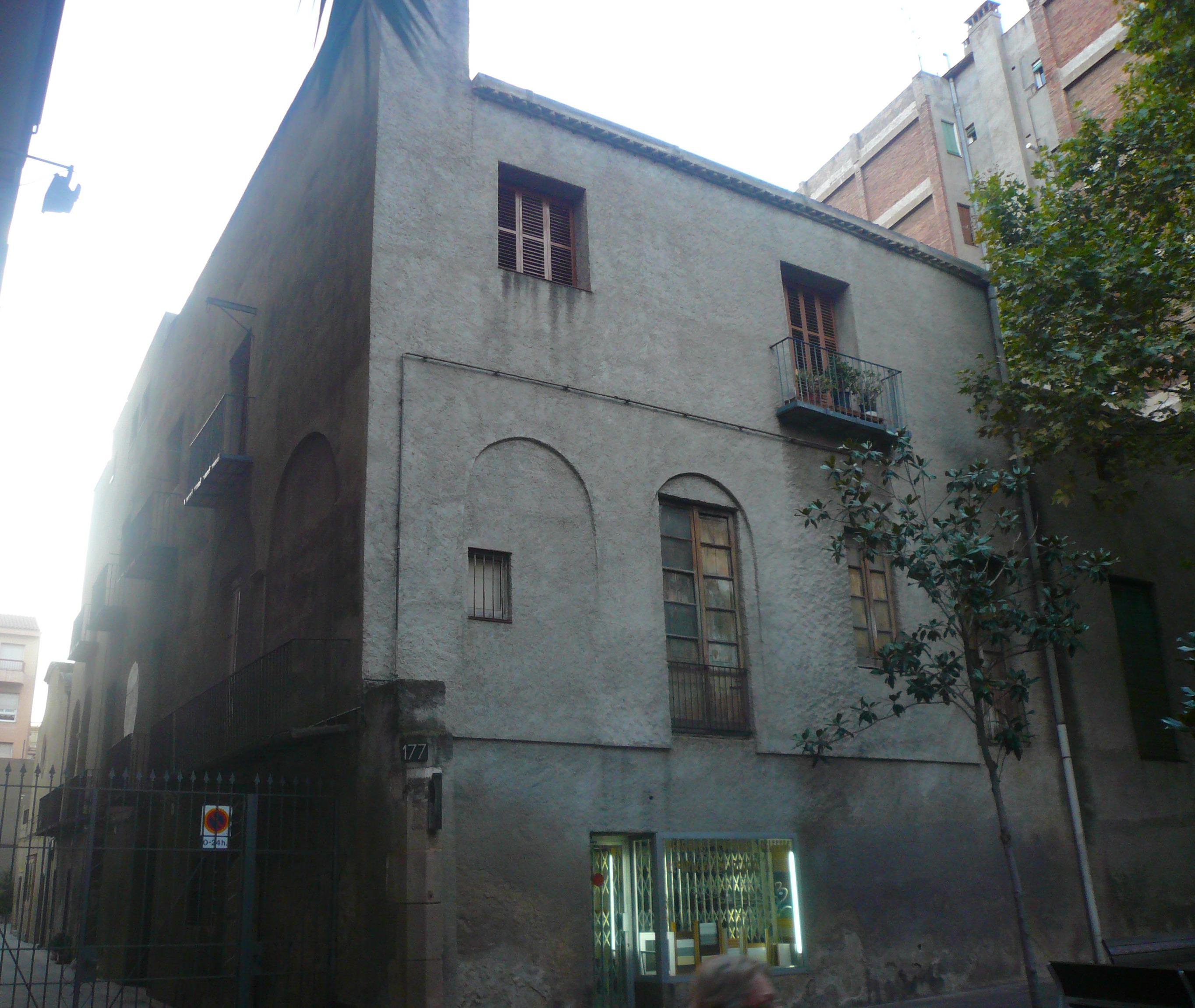
Can Trilla is a historic farmhouse in Barcelona’s Gràcia district, now surrounded by newer urban buildings. Its rectangular structure divides into four sections around a former residence, vaulted cellar, and working spaces. A passageway now faces the main façade, where pointed-arch balconies and an engraved sundial remain visible.
The earliest written record dates to 1728, while the building may reach back to the seventeenth century. An attached baroque chapel dates from the eighteenth century. Its preserved dome paintings show architectural motifs, and the chapel occupies a former wine cellar. Farmland once surrounded the property, with vineyards, olive groves, dry fields, and irrigated fields supporting wine and oil production.
In 1825, Àgueda Badia Puigrodon received permission to develop part of the estate for urban use. Streets including Santa Àgueda and Sant Antoni emerged as the rural landscape became a neighbourhood. The building later housed a school, cinema, social organisations, and the Sisters of Jesus Patient. In 1817, its Mare de Déu d’Agost gathering helped foreshadow Gràcia’s Festa Major. Its old cellar now survives beneath paintings that preserve architectural forms in the chapel’s dome.
- City
- Barcelona
- Content updated
Take this page with you
The myTuur app is free, and once you are standing at a spot its story starts by itself.


Spots like this one are the stops myTuur strings into tours through Barcelona. In the app, each story begins where you stand: walk up to a spot and it starts, read it on screen or listen as you go, then follow the route to the next one.
What is myTuur?
myTuur is a free city-guide app. Its tours are built from spots, and each spot carries a story that starts when you get there, to read or to listen to as you like.