อนุสาวรีย์ประชาธิปไตย
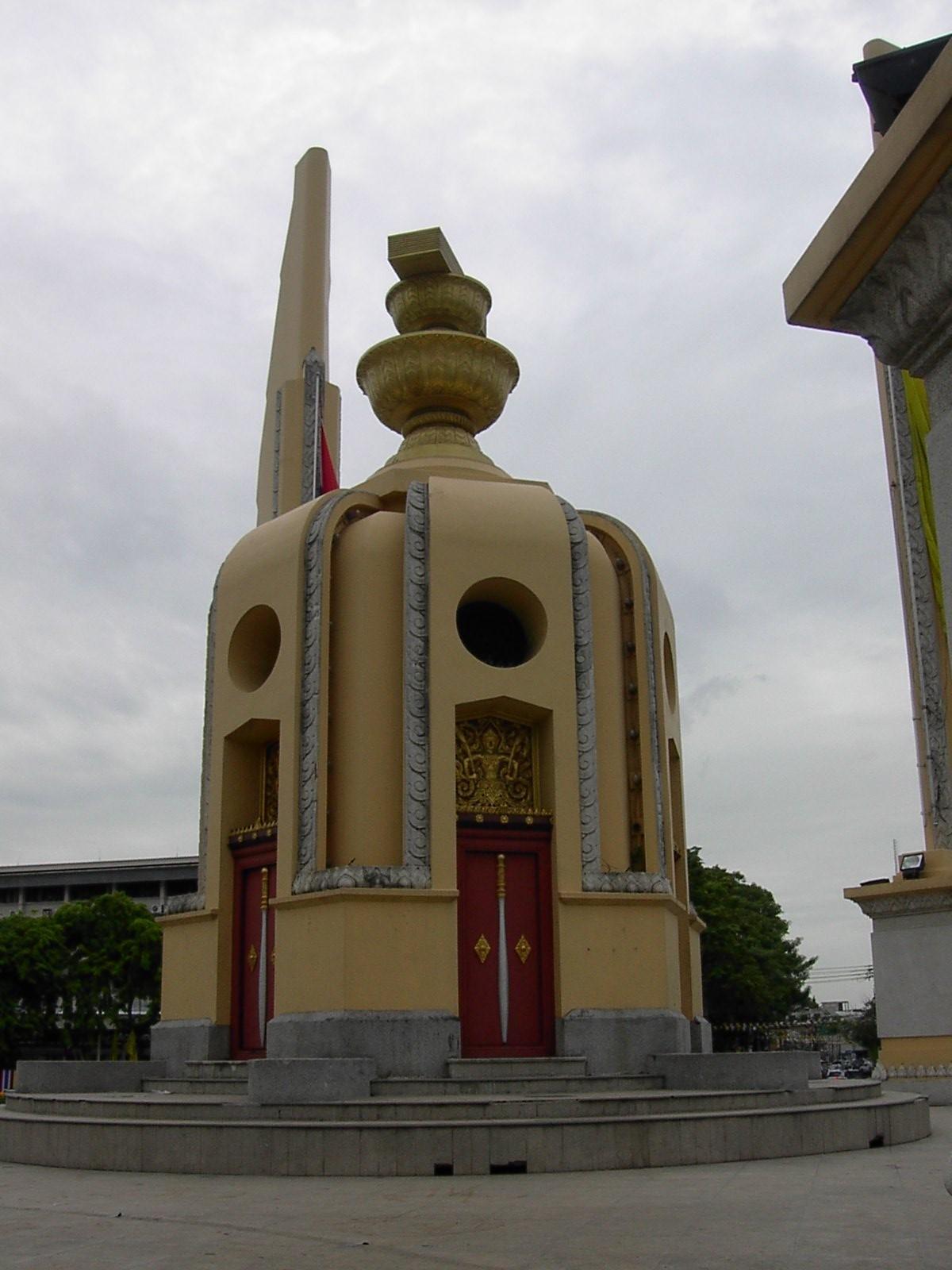
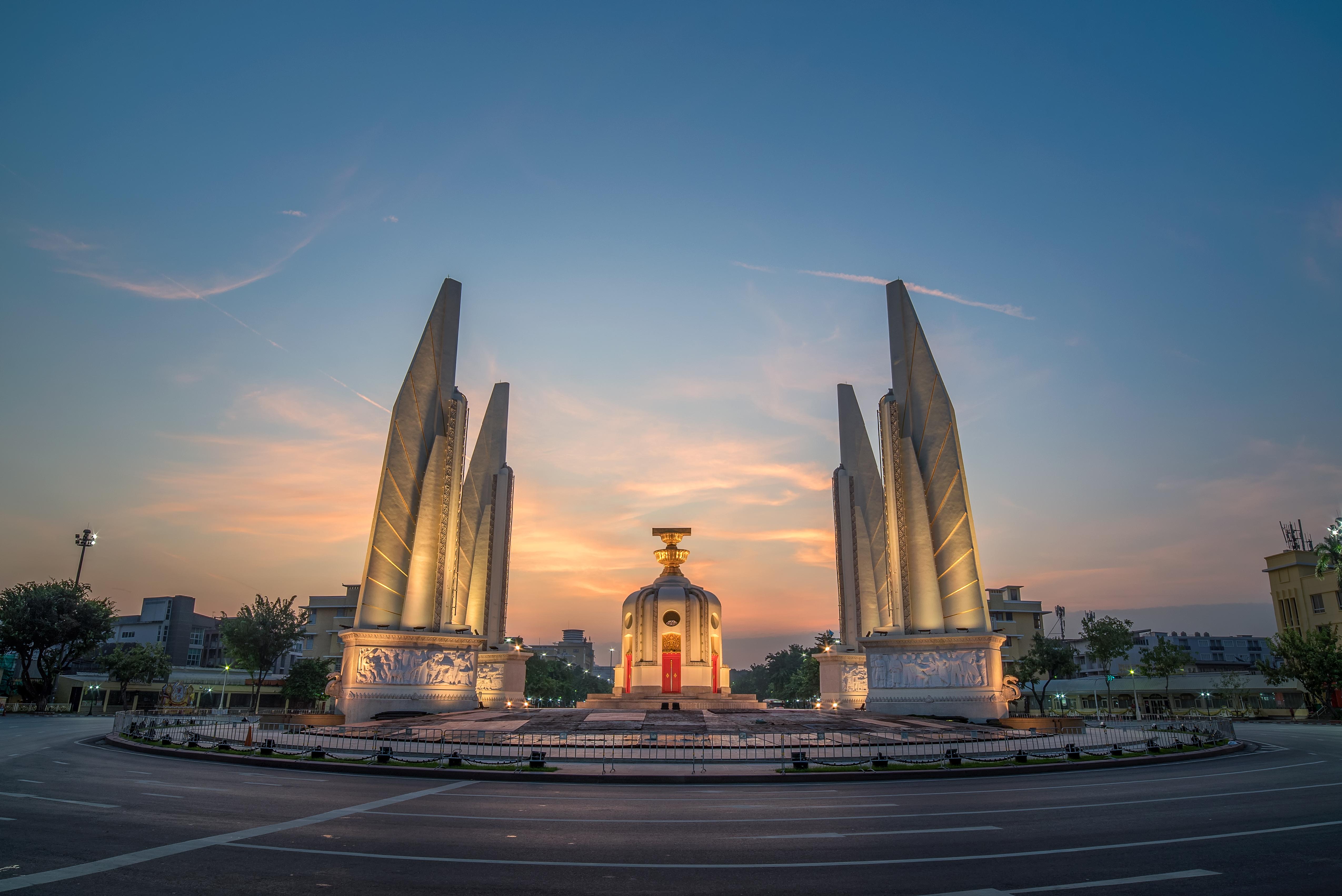
Democracy Monument stands in the centre of a busy traffic circle on Bangkok’s Ratchadamnoen Avenue. Four wing-like structures rise around a central turret, creating a striking urban landmark.
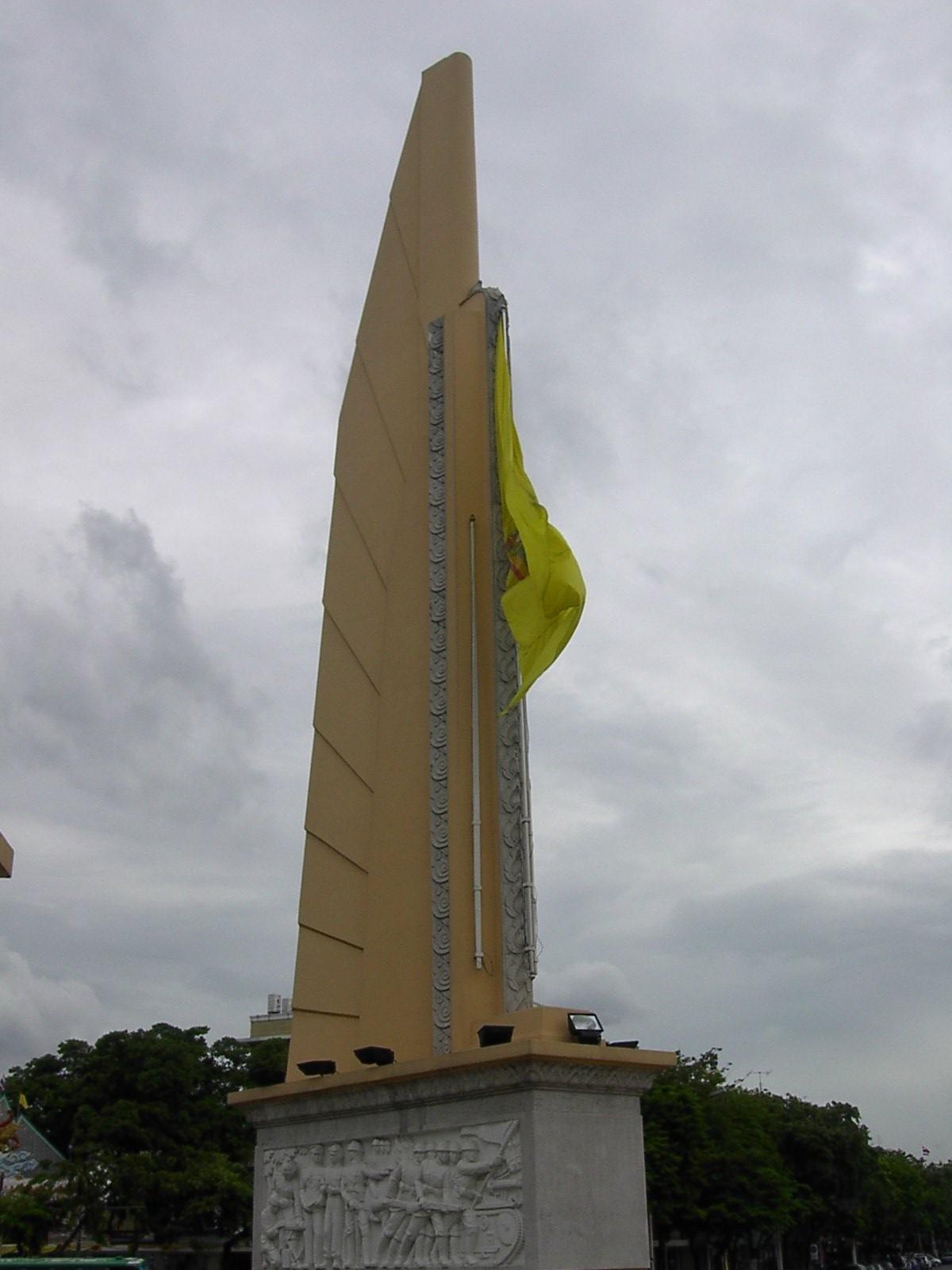
Commissioned in 1939, the monument commemorates the 1932 Siamese coup and Thailand’s transition to constitutional monarchy. Plaek Phibunsongkhram planned it as a centrepiece for a Westernised Bangkok, with Paris’s Arc de Triomphe as a reference. Architect Chitrasen Aphaiwong designed the structure, while Corrado Feroci created its sculptures before becoming a Thai citizen named Silpa Bhirasi. At the centre, a turret represents the Thai Constitution of 1932. Four wings stand 24 metres high, marking the coup’s date.
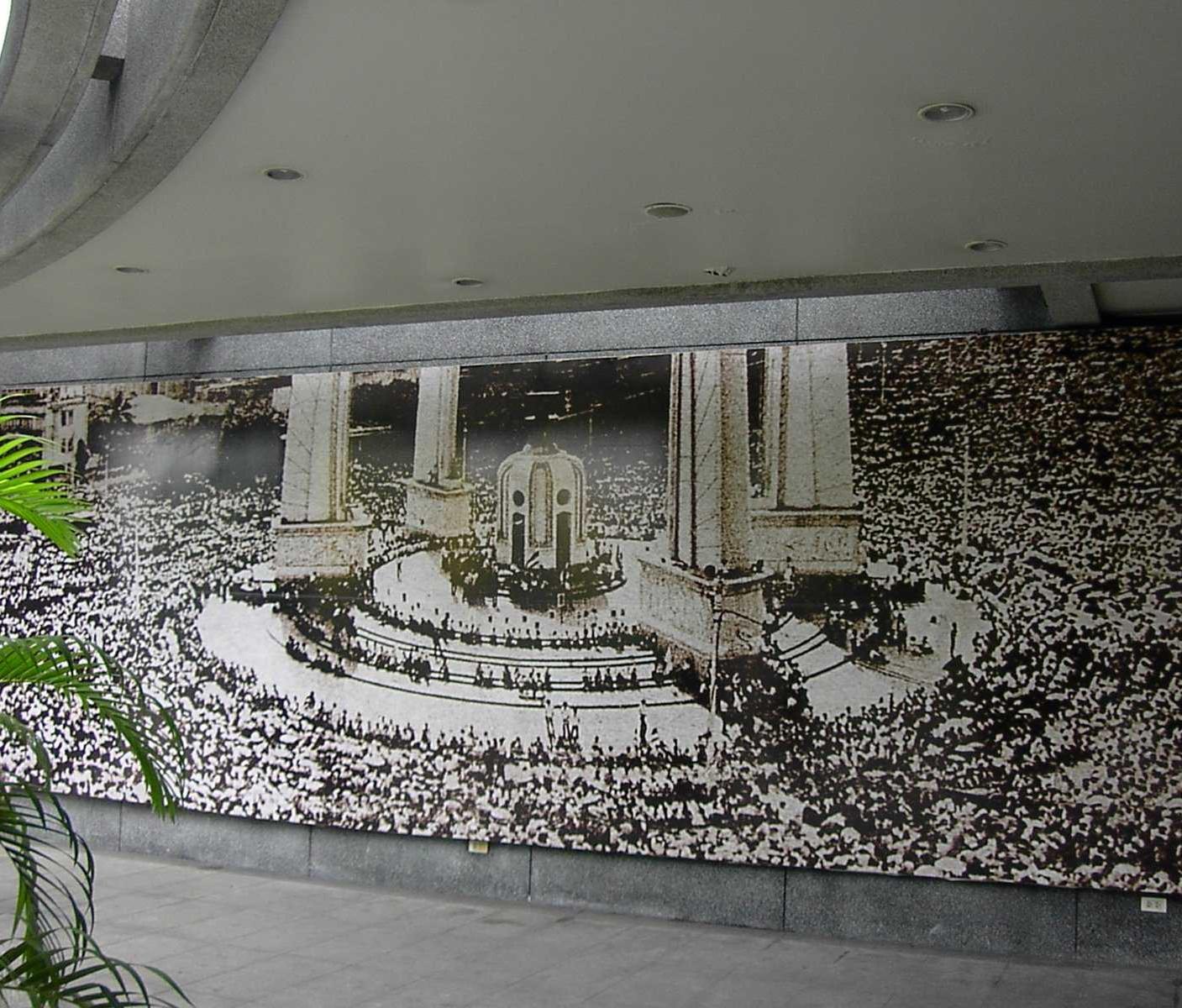
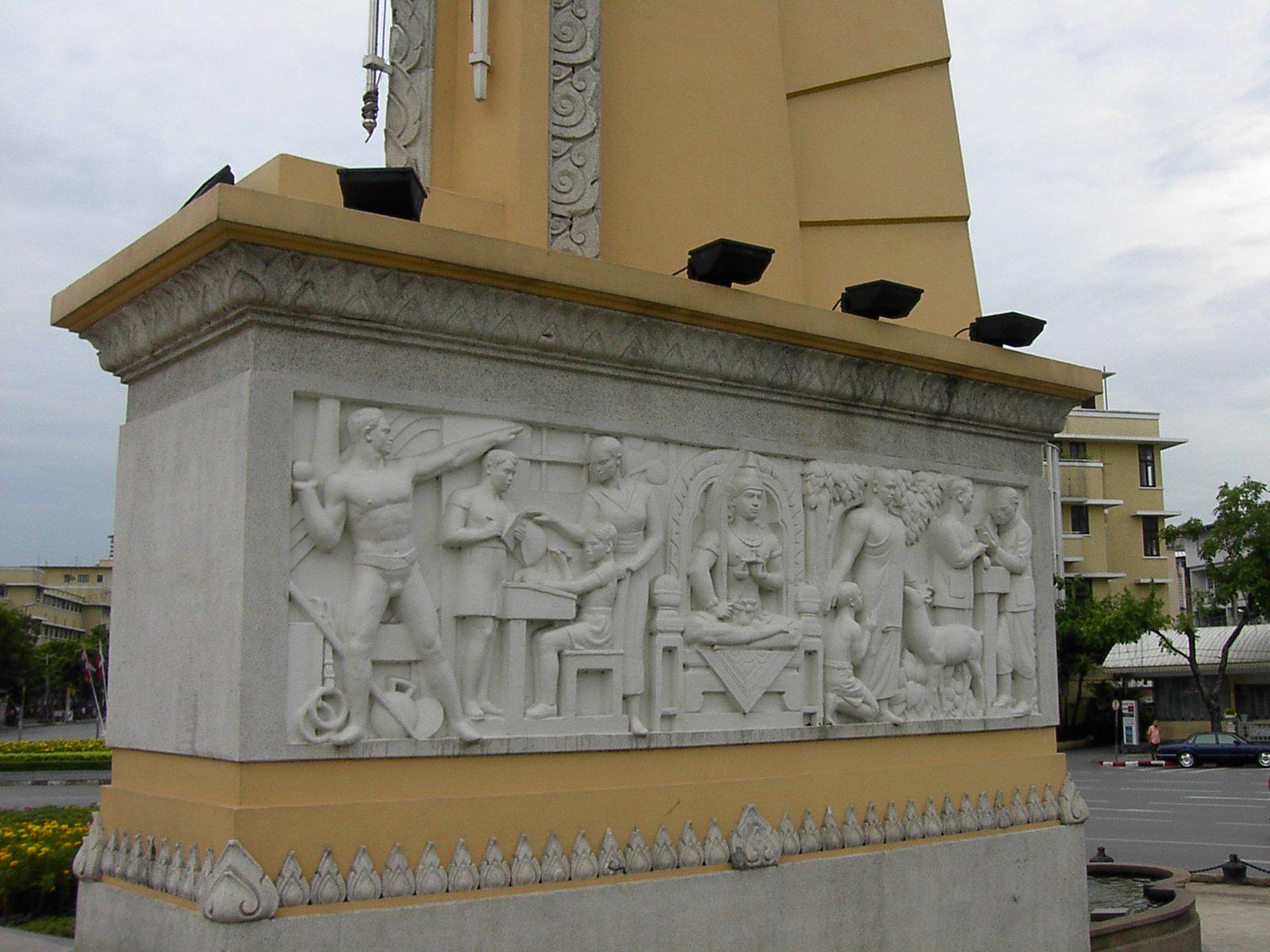
Reliefs at the base portray military and civilian roles in the political change. Their military-centred story also reflects the propaganda of the regime that commissioned the monument. The site later became a gathering point for democracy activists and political expression. Protests in 1973 and 1992 gave the monument a further place in Thailand’s public history.
- City
- Bangkok
- Content updated
Take this page with you
The myTuur app is free, and once you are standing at a spot its story starts by itself.


Spots like this one are the stops myTuur strings into tours through Bangkok. In the app, each story begins where you stand: walk up to a spot and it starts, read it on screen or listen as you go, then follow the route to the next one.
What is myTuur?
myTuur is a free city-guide app. Its tours are built from spots, and each spot carries a story that starts when you get there, to read or to listen to as you like.