Xoʻja Alambardor maqbarasi
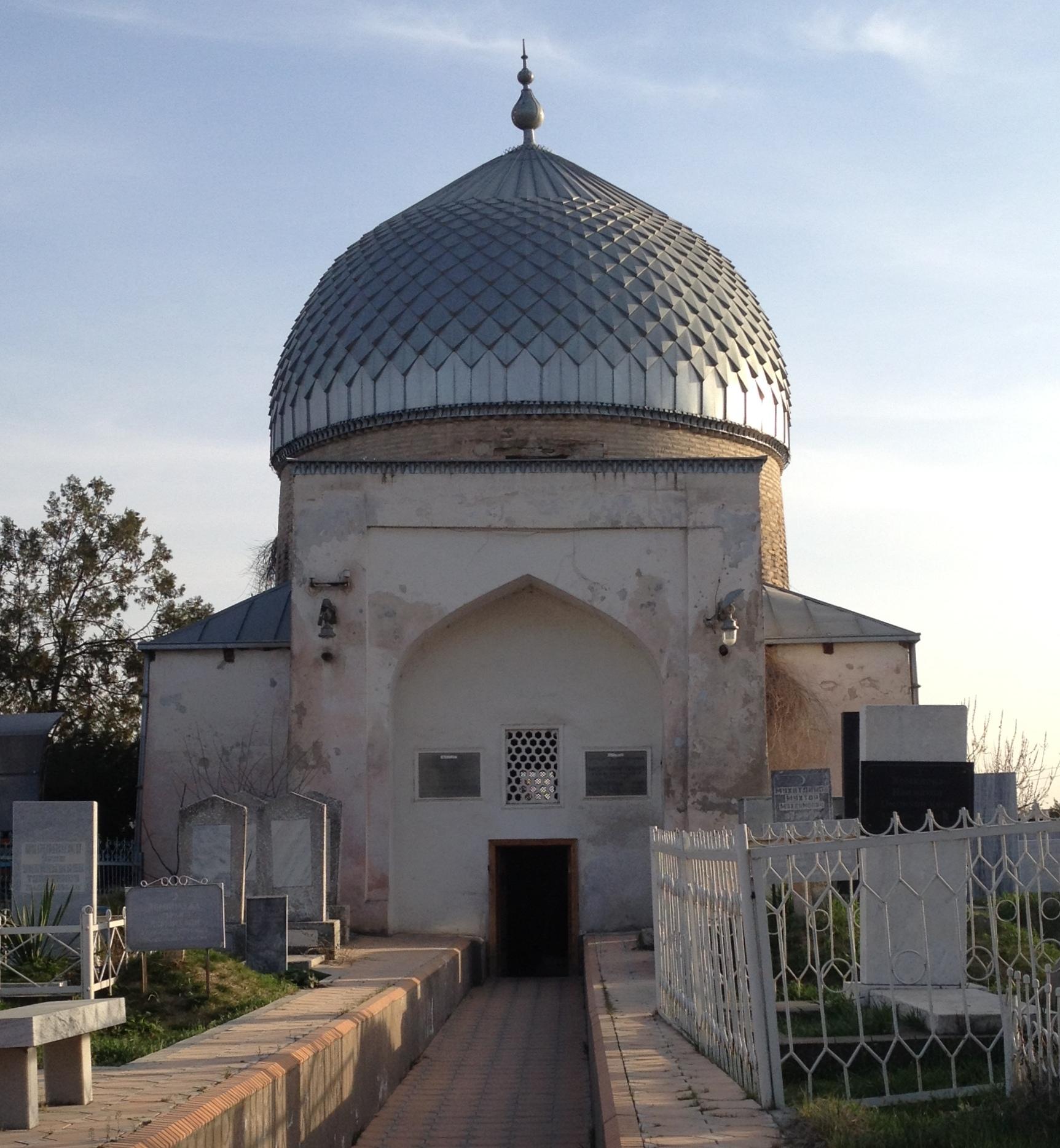
At the Kamalon cemetery in Tashkent stands the Mausoleum of Khoja Alambardor, a shrine to a saint of local legend. Legend sets his death in the tenth century. In those stories he kept company with Abu Bakr Kaffal al Shashi, the well-known Muslim preacher. His title, Alambardor, means standard bearer, and a companion of the Prophet Muhammad carried the same one some three centuries earlier.
Historians find it hard to say who exactly is buried there, because the stories around that title overlap. The building itself came later: researchers date it to the early nineteenth century, on ground already used for burials. In Central Asia oral tradition runs strong. Names, events and times mix, and symbolism can outweigh the exact historical facts.
People have kept returning to the site for generations, because a place chosen for veneration settles into collective memory. Compared with some of Tashkent's other monuments, the building is young. The story around it reaches centuries further back, and that gap between building and legend stays with you.
- City
- Tashkent
- Content updated
Take this page with you
The myTuur app is free, and once you are standing at a spot its story starts by itself.


Spots like this one are the stops myTuur strings into tours through Tashkent. In the app, each story begins where you stand: walk up to a spot and it starts, read it on screen or listen as you go, then follow the route to the next one.
What is myTuur?
myTuur is a free city-guide app. Its tours are built from spots, and each spot carries a story that starts when you get there, to read or to listen to as you like.