Trevi Fountain
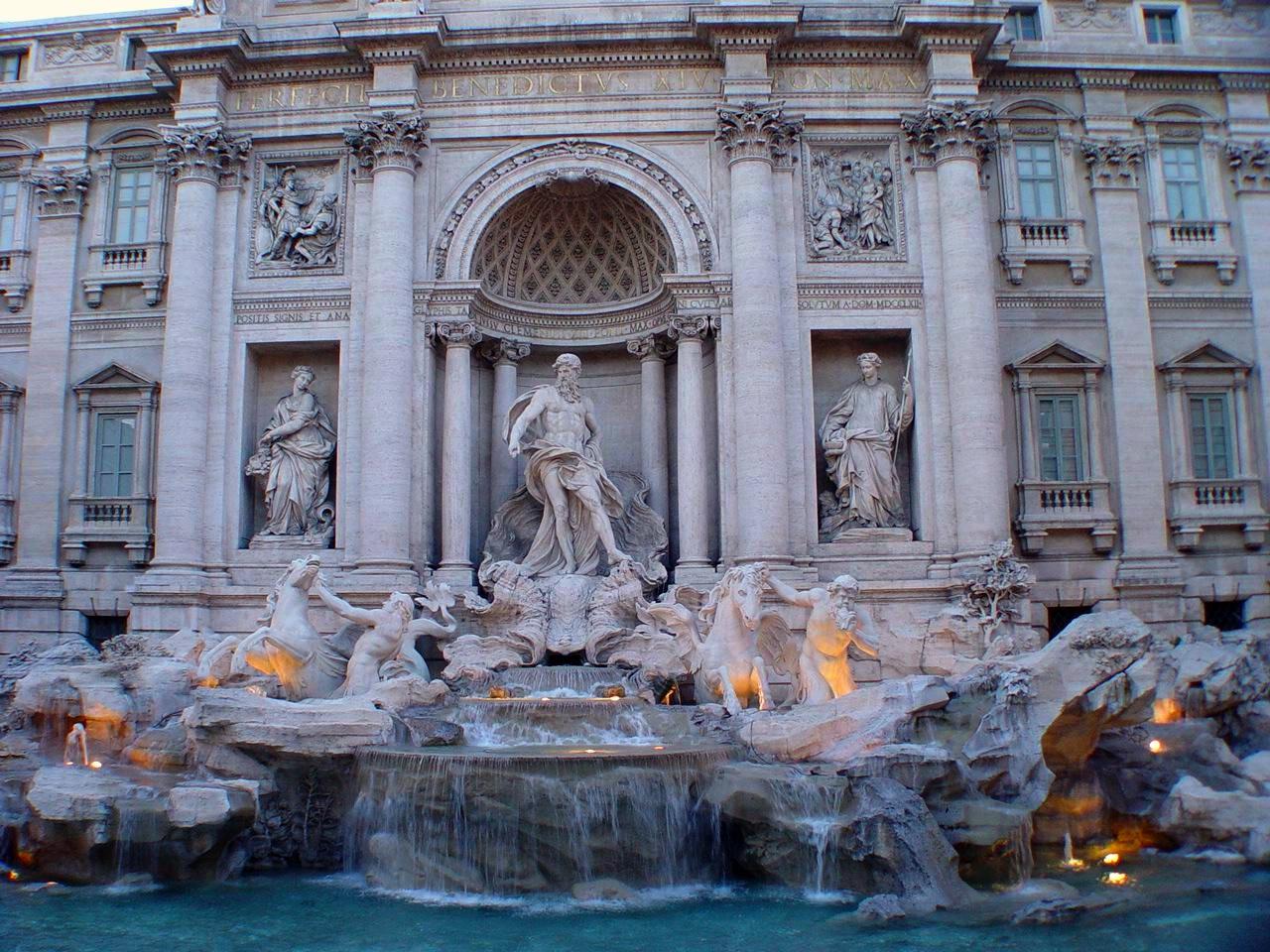
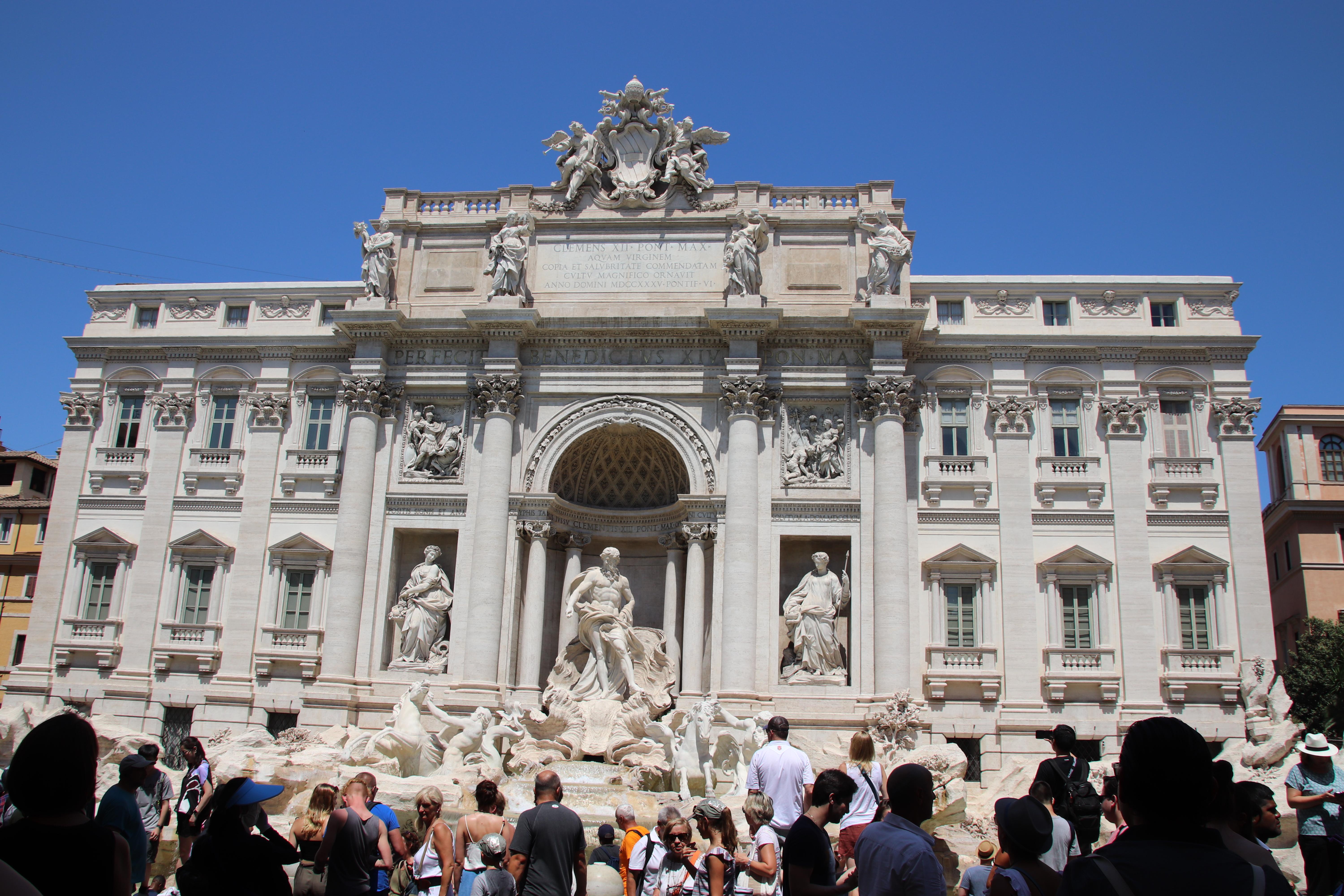
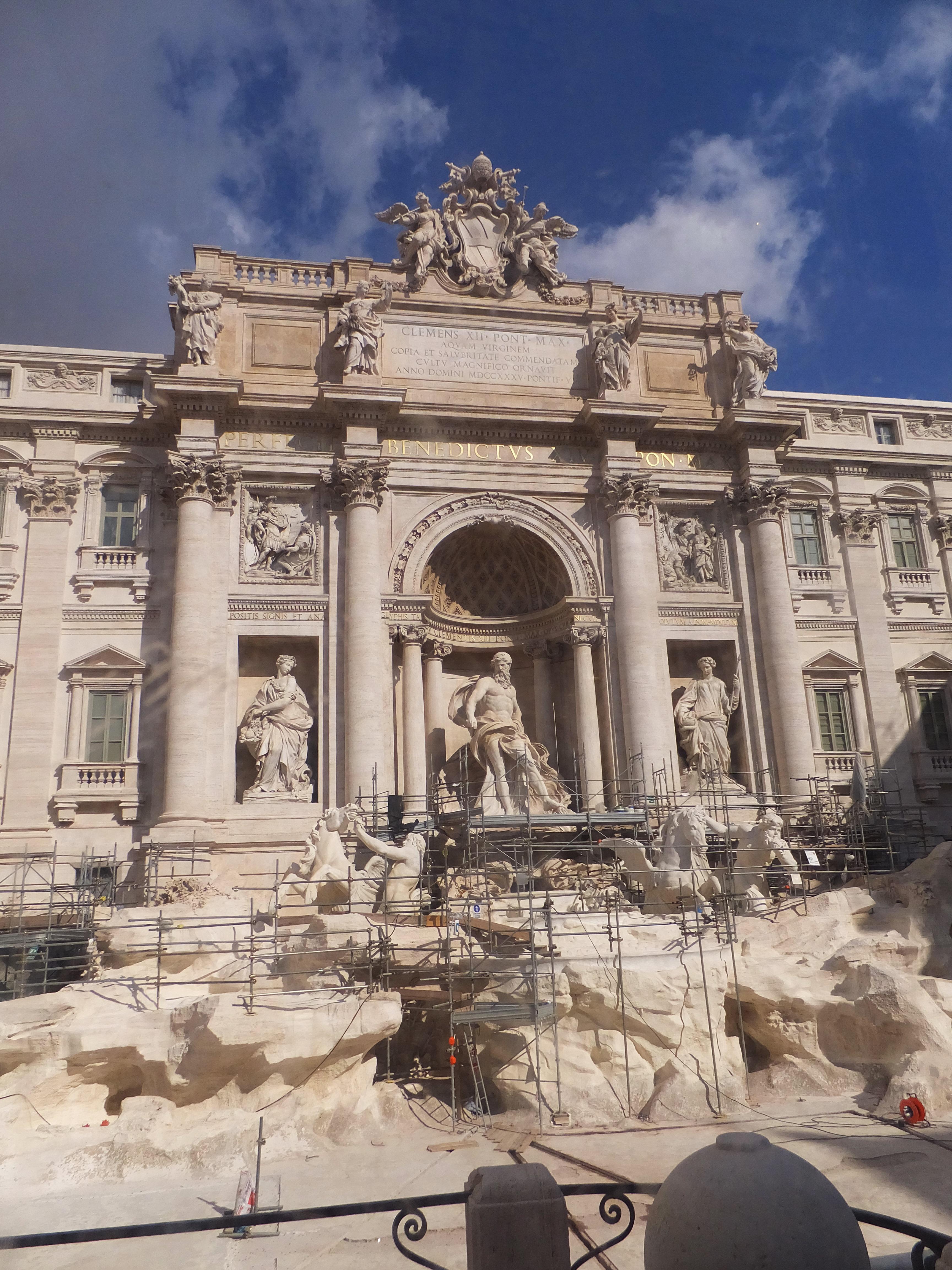
The Fontana di Trevi, known in English as Trevi Fountain, rises against Palazzo Poli in Rome as a Baroque landmark. Water moves across rocks, plants and sculpted figures. It marks the terminus of the ancient Aqua Virgo aqueduct, which remains in use. Nicola Salvi designed the present eighteenth-century composition for the fountain. At the centre, Oceanus rides a shell-shaped chariot while two Tritons lead horses with opposing temperaments. One horse appears calm and obedient beside Oceanus. The other horse shows restless strength, creating a sculptural contrast between the sea’s calm and its force. Reliefs on the façade recall the aqueduct’s origin. Side niches contain allegorical figures for health and abundance, while the water supplies continuous movement beneath the Palazzo Poli façade. To the right stands Fontana degli Innamorati, a small rectangular basin with two water spouts. The coin toss connects the fountain with traditions of return, love and marriage. Federico Fellini placed the fountain in La dolce vita. The Baroque façade, ancient aqueduct, moving water and stone figures give the landmark several connected stories.
- City
- Rome
- Content updated
Take this page with you
The myTuur app is free, and once you are standing at a spot its story starts by itself.


Spots like this one are the stops myTuur strings into tours through Rome. In the app, each story begins where you stand: walk up to a spot and it starts, read it on screen or listen as you go, then follow the route to the next one.
What is myTuur?
myTuur is a free city-guide app. Its tours are built from spots, and each spot carries a story that starts when you get there, to read or to listen to as you like.