Ecce Homo Kapelle
The Ecce Homo Kapelle stands in Niederraunau, Krumbach, as a Catholic chapel with a layered architectural history. Also known as the Leonhardskapelle, it combines an older structure with an eighteenth-century extension. On the exterior, Doric pilasters identify the original building, while the later sections remain largely unadorned. Inside, Corinthian pilasters and obelisks continue the lines of the vaulted ceiling. The chapel’s high interior ceiling creates a strong vertical setting for early classical paintings by Jakob Fröschle. A baroque altar from the late eighteenth century dominates the interior with a larger-than-life Ecce Homo figure. Its columns evoke the temple where Jesus was presented. Saint Leonard and Saint Wendelin replaced Pilate and Longinus beside the central figure. The replacement followed the sale of Pilate and Longinus in the nineteenth century. The chapel’s expansion may have supported pilgrimage to Niederraunau, alongside its elaborate architectural design. The original chapel belongs to the early eighteenth century, before its later enlargement. Its interior joins painted decoration, sculptural figures, and architectural detail in a compact space.
- City
- Krumbach (Schwaben)
- Content updated
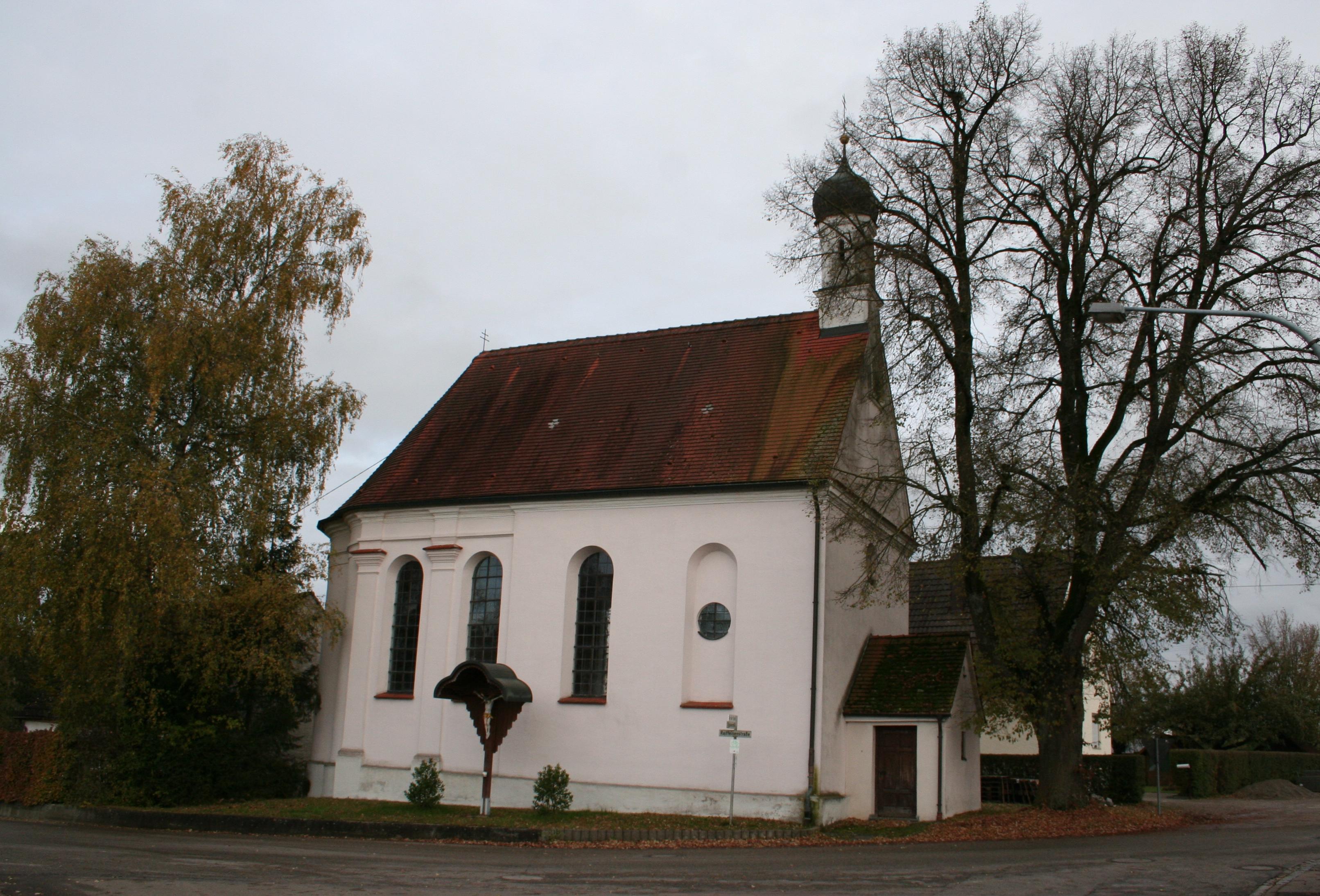
Image: KrumbacherPublic domain
Take this page with you
The myTuur app is free, and once you are standing at a spot its story starts by itself.


Spots like this one are the stops myTuur strings into tours through Krumbach (Schwaben). In the app, each story begins where you stand: walk up to a spot and it starts, read it on screen or listen as you go, then follow the route to the next one.
What is myTuur?
myTuur is a free city-guide app. Its tours are built from spots, and each spot carries a story that starts when you get there, to read or to listen to as you like.